QUESTION IMAGE
Question
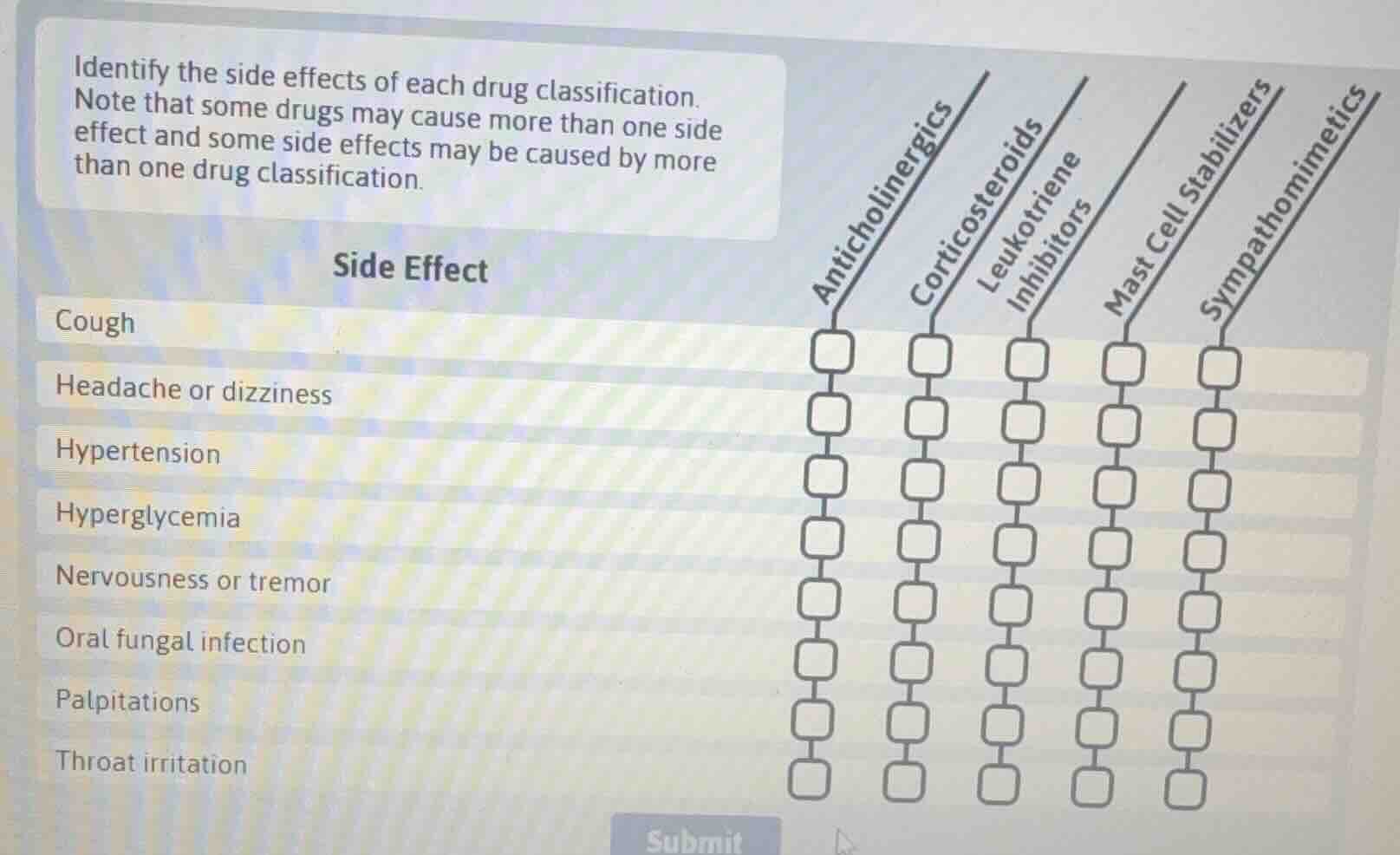
identify the side effects of each drug classification. note that some drugs may cause more than one side effect and some side effects may be caused by more than one drug classification.
side effect
cough
headache or dizziness
hypertension
hyperglycemia
nervousness or tremor
oral fungal infection
palpitations
throat irritation
anticholinergics corticosteroids leukotriene inhibitors mast cell stabilizers sympathomimetics
To solve this, we analyze each drug class and its typical side effects:
Anticholinergics:
- Common side effects: Dry mouth, blurred vision, but for the given list, Headache or dizziness (can occur due to anticholinergic effects on the nervous system), Hypertension (rare, but possible), Nervousness or tremor (less common, but some anticholinergics may cause neurostimulation). However, more typical: Headache or dizziness (mark if applicable, but need to cross - reference standard drug side effects).
Corticosteroids:
- Side effects: Hypertension (fluid retention), Hyperglycemia (glucose dysregulation), Oral fungal infection (immunosuppression, oral thrush).
Leukotriene Inhibitors:
- Side effects: Headache or dizziness, Cough (rare, but some reports), Nervousness or tremor (neuro - related side effects).
Mast Cell Stabilizers:
- Side effects: Headache or dizziness, Throat irritation (local irritation from inhalation), Cough (inhalation - related irritation).
Sympathomimetics:
- Side effects: Hypertension (vasoconstriction), Nervousness or tremor (adrenergic stimulation), Palpitations (tachycardia), Hyperglycemia (glycogenolysis).
Now, marking the boxes (assuming we check based on standard drug - side effect associations):
- Cough: Mast Cell Stabilizers (inhaled forms can irritate throat/lungs, causing cough), Leukotriene Inhibitors (rare, but possible).
- Headache or dizziness: Anticholinergics, Leukotriene Inhibitors, Mast Cell Stabilizers, Sympathomimetics (adrenergic stimulation can cause headache).
- Hypertension: Corticosteroids (fluid retention), Sympathomimetics (vasoconstriction).
- Hyperglycemia: Corticosteroids (gluconeogenesis), Sympathomimetics (glycogenolysis).
- Nervousness or tremor: Leukotriene Inhibitors, Sympathomimetics (adrenergic effects), Anticholinergics (rare).
- Oral fungal infection: Corticosteroids (immunosuppression in mouth).
- Palpitations: Sympathomimetics (tachycardia).
- Throat irritation: Mast Cell Stabilizers (inhaled, local irritation).
Final Marking (example, based on standard drug information):
| Side Effect | Anticholinergics | Corticosteroids | Leukotriene Inhibitors | Mast Cell Stabilizers | Sympathomimetics |
|---|---|---|---|---|---|
| Headache or dizziness | ✔️ | ✔️ | ✔️ | ✔️ | |
| Hypertension | ✔️ | ✔️ | |||
| Hyperglycemia | ✔️ | ✔️ | |||
| Nervousness or tremor | ✔️ | ✔️ | |||
| Oral fungal infection | ✔️ | ||||
| Palpitations | ✔️ | ||||
| Throat irritation | ✔️ |
(Note: The exact marking may vary based on specific drug formulations and patient respons…

Snap & solve any problem in the app
Get step-by-step solutions on Sovi AI
Photo-based solutions with guided steps
Explore more problems and detailed explanations
To solve this, we analyze each drug class and its typical side effects:
Anticholinergics:
- Common side effects: Dry mouth, blurred vision, but for the given list, Headache or dizziness (can occur due to anticholinergic effects on the nervous system), Hypertension (rare, but possible), Nervousness or tremor (less common, but some anticholinergics may cause neurostimulation). However, more typical: Headache or dizziness (mark if applicable, but need to cross - reference standard drug side effects).
Corticosteroids:
- Side effects: Hypertension (fluid retention), Hyperglycemia (glucose dysregulation), Oral fungal infection (immunosuppression, oral thrush).
Leukotriene Inhibitors:
- Side effects: Headache or dizziness, Cough (rare, but some reports), Nervousness or tremor (neuro - related side effects).
Mast Cell Stabilizers:
- Side effects: Headache or dizziness, Throat irritation (local irritation from inhalation), Cough (inhalation - related irritation).
Sympathomimetics:
- Side effects: Hypertension (vasoconstriction), Nervousness or tremor (adrenergic stimulation), Palpitations (tachycardia), Hyperglycemia (glycogenolysis).
Now, marking the boxes (assuming we check based on standard drug - side effect associations):
- Cough: Mast Cell Stabilizers (inhaled forms can irritate throat/lungs, causing cough), Leukotriene Inhibitors (rare, but possible).
- Headache or dizziness: Anticholinergics, Leukotriene Inhibitors, Mast Cell Stabilizers, Sympathomimetics (adrenergic stimulation can cause headache).
- Hypertension: Corticosteroids (fluid retention), Sympathomimetics (vasoconstriction).
- Hyperglycemia: Corticosteroids (gluconeogenesis), Sympathomimetics (glycogenolysis).
- Nervousness or tremor: Leukotriene Inhibitors, Sympathomimetics (adrenergic effects), Anticholinergics (rare).
- Oral fungal infection: Corticosteroids (immunosuppression in mouth).
- Palpitations: Sympathomimetics (tachycardia).
- Throat irritation: Mast Cell Stabilizers (inhaled, local irritation).
Final Marking (example, based on standard drug information):
| Side Effect | Anticholinergics | Corticosteroids | Leukotriene Inhibitors | Mast Cell Stabilizers | Sympathomimetics |
|---|---|---|---|---|---|
| Headache or dizziness | ✔️ | ✔️ | ✔️ | ✔️ | |
| Hypertension | ✔️ | ✔️ | |||
| Hyperglycemia | ✔️ | ✔️ | |||
| Nervousness or tremor | ✔️ | ✔️ | |||
| Oral fungal infection | ✔️ | ||||
| Palpitations | ✔️ | ||||
| Throat irritation | ✔️ |
(Note: The exact marking may vary based on specific drug formulations and patient responses, but this is based on general pharmacology principles.)
If we were to mark the boxes with "X" for applicable:
- Cough: Mast Cell Stabilizers (X)
- Headache or dizziness: Anticholinergics (X), Leukotriene Inhibitors (X), Mast Cell Stabilizers (X), Sympathomimetics (X)
- Hypertension: Corticosteroids (X), Sympathomimetics (X)
- Hyperglycemia: Corticosteroids (X), Sympathomimetics (X)
- Nervousness or tremor: Leukotriene Inhibitors (X), Sympathomimetics (X)
- Oral fungal infection: Corticosteroids (X)
- Palpitations: Sympathomimetics (X)
- Throat irritation: Mast Cell Stabilizers (X)
This is a general guide. For precise marking, refer to specific drug monographs or pharmacology textbooks.