QUESTION IMAGE
Question
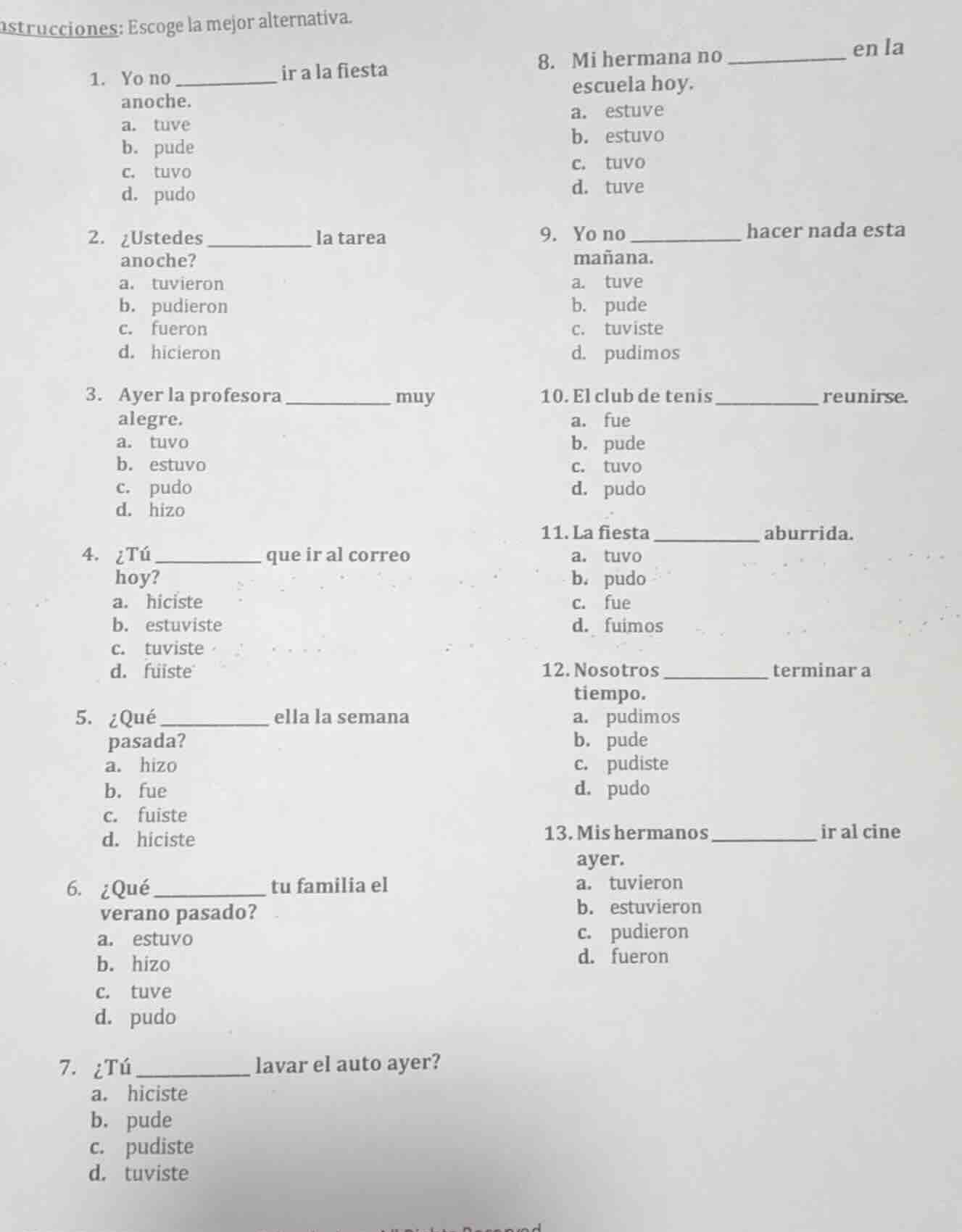
instrucciones: escoge la mejor alternativa.
- yo no ______ ir a la fiesta anoche.
a. tuve
b. pude
c. tuvo
d. pudo
- ¿ustedes ______ la tarea anoche?
a. tuvieron
b. pudieron
c. fueron
d. hicieron
- ayer la profesora ______ muy alegre.
a. tuvo
b. estuvo
c. pudo
d. hizo
- ¿tú ______ que ir al correo hoy?
a. hiciste
b. estuviste
c. tuviste
d. fuiste
- ¿qué ______ ella la semana pasada?
a. hizo
b. fue
c. fuiste
d. hiciste
- ¿qué ______ tu familia el verano pasado?
a. estuvo
b. hizo
c. tuve
d. pudo
- ¿tú ______ lavar el auto ayer?
a. hiciste
b. pude
c. pudiste
d. tuviste
- mi hermana no ______ en la escuela hoy.
a. estuve
b. estuvo
c. tuvo
d. tuve
- yo no ______ hacer nada esta mañana.
a. tuve
b. pude
c. tuviste
d. pudimos
- el club de tenis ______ reunirse.
a. fue
b. pude
c. tuvo
d. pudo
- la fiesta ______ aburrida.
a. tuvo
b. pudo
c. fue
d. fuimos
- nosotros ______ terminar a tiempo.
a. pudimos
b. pude
c. pudiste
d. pudo
- mis hermanos ______ ir al cine ayer.
a. tuvieron
b. estuvieron
c. pudieron
d. fueron
Question 1
The sentence means "I couldn't go to the party last night." "Poder" (to be able to) in the preterite tense for "yo" (I) is "pude". But since it's negative "no pude" but wait, the options: "tuve" (had), "pude" (could), "tuvo" (he/she had), "pudo" (he/she could). Wait, the subject is "yo", so the correct form for "poder" preterite is "pude", but wait the negative is "no pude", but the options: let's check. Wait, maybe I made a mistake. Wait, "ir a la fiesta" with "poder" (be able to go). The preterite of "poder" for "yo" is "pude". But the options: option b is "pude", option d is "pudo" (él/ella). Wait, the subject is "yo", so the correct answer should be b? Wait no, wait the sentence is "Yo no ____ ir a la fiesta anoche." So "poder" in preterite: yo pude, tú pudiste, él/ella pudo, nosotros pudimos, vosotros pudisteis, ellos pudieron. So "yo no pude" but the options: option b is "pude", option d is "pudo". Wait, maybe the verb is "tener que" (have to)? No, "ir a la fiesta" with "poder". Wait, maybe the correct answer is d? No, "pudo" is for él/ella. Wait, maybe I messed up. Wait, let's re-examine. The options: a. tuve (yo tuve), b. pude (yo pude), c. tuvo (él/ella tuvo), d. pudo (él/ella pudo). The subject is "yo", so the verb should be in first person singular. So "yo no pude ir..." but the options: b is "pude", so the answer is b? Wait, no, maybe the verb is "tener" + "que"? No, "tener que" would be "tuve que ir", but the options don't have "que". Wait, maybe the correct answer is b? Wait, no, let's check again. The sentence is "Yo no ____ ir a la fiesta anoche." The correct verb is "poder", preterite, first person singular: "pude". So the answer is b. Wait, but maybe I'm wrong. Alternatively, maybe the verb is "tener" (to have), but "tener ir" doesn't make sense. So the correct answer is b.
The sentence is "Did you (plural) do the homework last night?" "Hacer la tarea" (do the homework). The preterite of "hacer" for "ustedes" (you plural) is "hicieron". So option d is "hicieron". Let's check other options: a. tuvieron (had), b. pudieron (could), c. fueron (were). So the correct answer is d.
The sentence is "Yesterday the teacher was very happy." "Estar" (to be) in preterite for "ella" (she) is "estuvo". So option b is "estuvo". Other options: a. tuvo (had), c. pudo (could), d. hizo (did). So the correct answer is b.

Snap & solve any problem in the app
Get step-by-step solutions on Sovi AI
Photo-based solutions with guided steps
Explore more problems and detailed explanations
b. pude