QUESTION IMAGE
Question
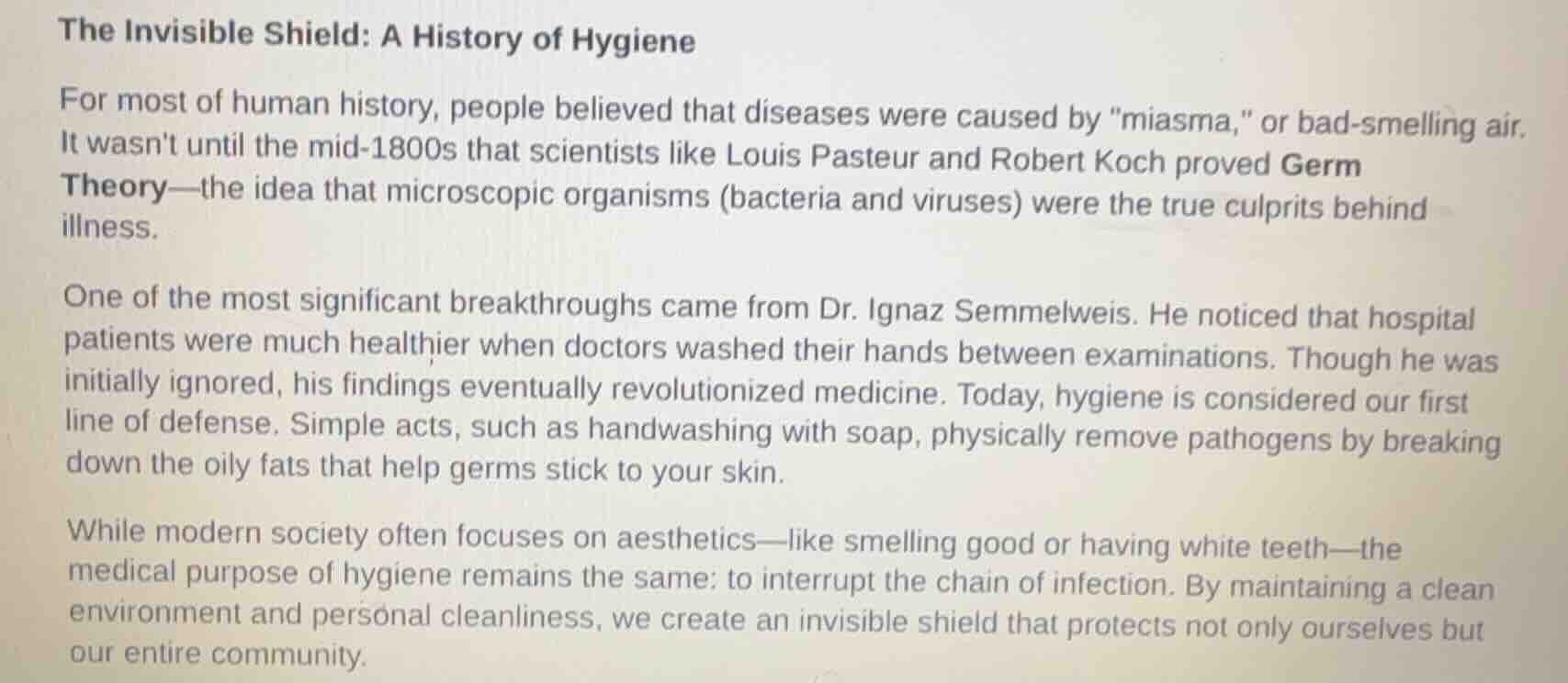
the invisible shield: a history of hygiene
for most of human history, people believed that diseases were caused by \miasma,\ or bad - smelling air.
it wasnt until the mid - 1800s that scientists like louis pasteur and robert koch proved germ theory—the idea that microscopic organisms (bacteria and viruses) were the true culprits behind illness.
one of the most significant breakthroughs came from dr. ignaz semmelweis. he noticed that hospital patients were much healthier when doctors washed their hands between examinations. though he was initially ignored, his findings eventually revolutionized medicine. today, hygiene is considered our first line of defense. simple acts, such as handwashing with soap, physically remove pathogens by breaking down the oily fats that help germs stick to your skin.
while modern society often focuses on aesthetics—like smelling good or having white teeth—the medical purpose of hygiene remains the same: to interrupt the chain of infection. by maintaining a clean environment and personal cleanliness, we create an invisible shield that protects not only ourselves but our entire community.
Since no specific question is provided about the text, it's not possible to give a targeted answer. If you want to ask about the main idea, the historical development of hygiene understanding, or the role of specific scientists in the text, please clarify your question so that I can assist you using the appropriate format (either Step - by - Step for analytical questions or Answer - Explanation for descriptive ones).

Snap & solve any problem in the app
Get step-by-step solutions on Sovi AI
Photo-based solutions with guided steps
Explore more problems and detailed explanations
Since no specific question is provided about the text, it's not possible to give a targeted answer. If you want to ask about the main idea, the historical development of hygiene understanding, or the role of specific scientists in the text, please clarify your question so that I can assist you using the appropriate format (either Step - by - Step for analytical questions or Answer - Explanation for descriptive ones).