QUESTION IMAGE
Question
kansas - nebraska act (1854)
instructions
- examine the context and political cartoon for analyzing the kansas - nebraska act (1854) below.
- answer the analysis questions that follow using information from the context and primary source document.
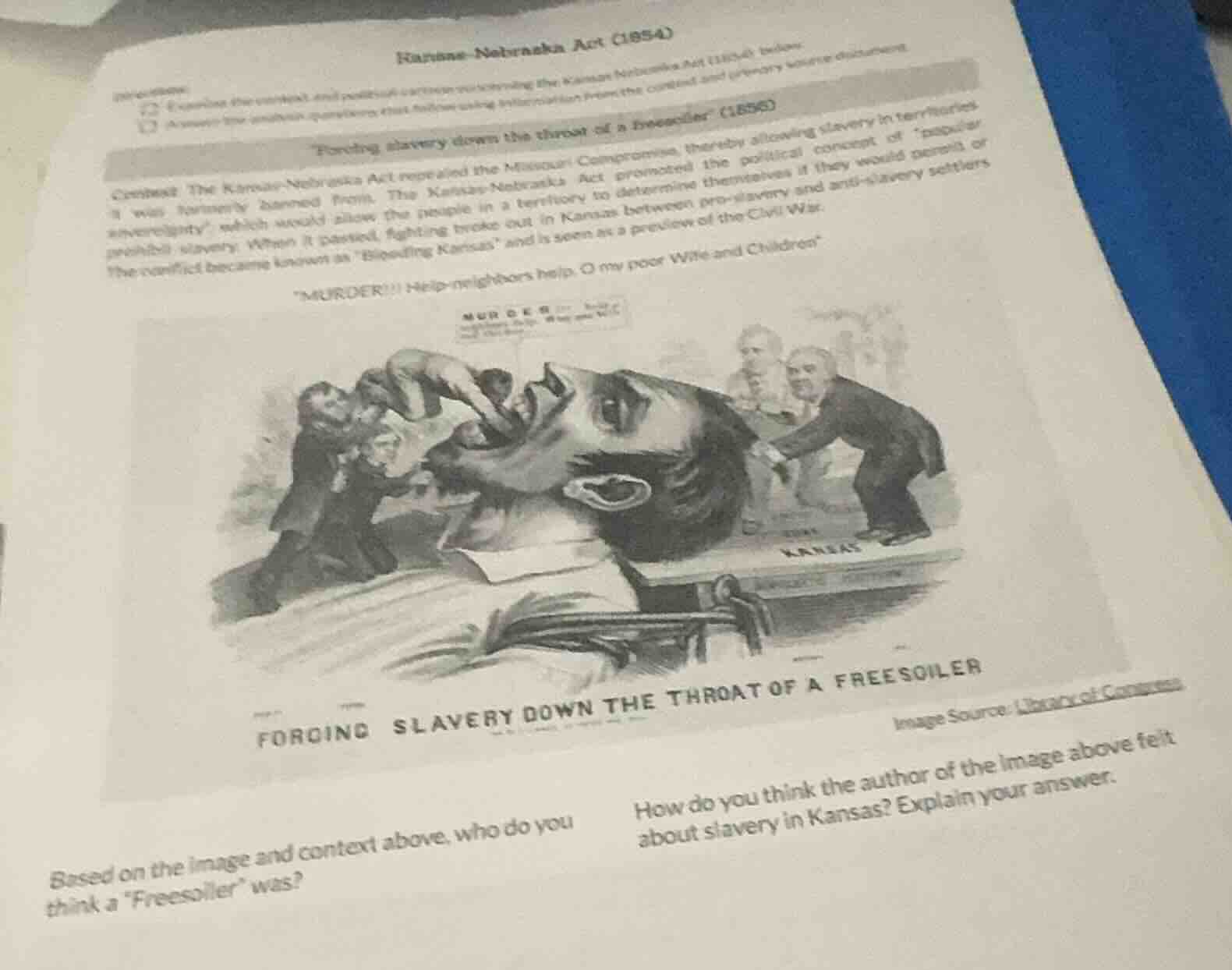
forcing slavery down the throat of a freesoiler (1856)
context: the kansas - nebraska act repealed the missouri compromise, thereby allowing slavery in territories it was formerly banned from. the kansas - nebraska act promoted the political concept of “popular sovereignty”, which would allow the people in a territory to determine themselves if they would permit or prohibit slavery. when it passed, fighting broke out in kansas between pro - slavery and anti - slavery settlers. the conflict became known as “bleeding kansas” and is seen as a preview of the civil war.
\murder!!! help - neighbors help. o my poor wife and children\
forcing slavery down the throat of a freesoiler
image source: library of congress
based on the image and context above, who do you think a freesoiler was?
how do you think the author of the image above felt about slavery in kansas? explain your answer.
- For the identity of a Freesoiler: The context notes the Kansas-Nebraska Act led to conflict between pro-slavery and anti-slavery settlers. The cartoon shows "slavery" being forced on a Freesoiler, so Freesoilers were people opposed to the expansion of slavery into Kansas, likely Northern anti-slavery settlers who wanted Kansas to be a free state.
- For the author's feelings: The cartoon depicts the violent, forced imposition of slavery on a Freesoiler, with the Freesoiler crying out in distress. This visual imagery, paired with the caption about forcing slavery down a Freesoiler's throat, shows the author viewed the spread of slavery into Kansas as cruel, unjust, and oppressive, and opposed the idea of slavery being forced on anti-slavery settlers there.

Snap & solve any problem in the app
Get step-by-step solutions on Sovi AI
Photo-based solutions with guided steps
Explore more problems and detailed explanations
- A "Freesoiler" was an anti-slavery settler (or person opposed to the expansion of slavery) who wanted Kansas to be established as a free state, not allowing slavery within its borders.
- The author of the image felt strongly opposed to slavery being imposed on Kansas. The cartoon's violent, distressing depiction of slavery being forced down the throat of a Freesoiler (who cries out for help) conveys that the author saw the spread of slavery into Kansas as a cruel, unjust, and oppressive act, and sympathized with anti-slavery settlers in the region.