QUESTION IMAGE
Question
language arts 12 lifetech academy ic sem a
analyzing the use of rhetoric, part 2
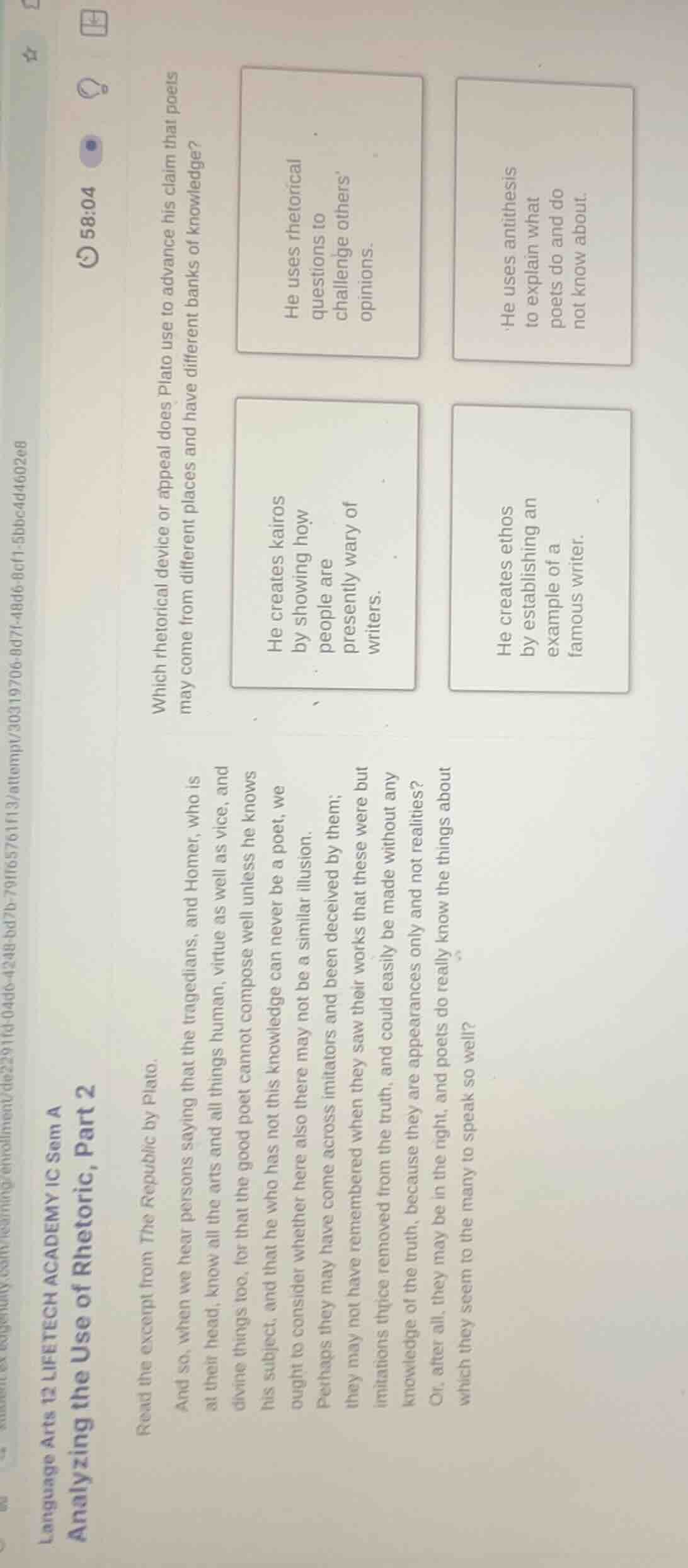
read the excerpt from the republic by plato.
and so, when we hear persons saying that the tragedians, and homer, who is at their head, know all the arts and all things human, virtue as well as vice, and divine things too, for that the good poet cannot compose well unless he knows his subject, and that he who has not this knowledge can never be a poet, we ought to consider whether here also there may not be a similar illusion.
perhaps they may have come across imitators and been deceived by them; they may not have remembered when they saw their works that these were but imitations thrice removed from the truth, and could easily be made without any knowledge of the truth, because they are appearances only and not realities?
or, after all, they may be in the right, and poets do really know the things about which they seem to the many to speak so well?
which rhetorical device or appeal does plato use to advance his claim that poets may come from different places and have different banks of knowledge?
he uses rhetorical questions to challenge others opinions.
he creates kairos by showing how people are presently wary of writers.
he creates ethos by establishing an example of a famous writer.
he uses antithesis to explain what poets do and do not know about.
Plato uses rhetorical questions here to challenge the common belief that poets have broad, deep knowledge. He poses critical, probing questions about whether poets' works are based on actual truth or just imitations of appearances, pushing readers to question the validity of poets' claimed knowledge. The other options are incorrect: he does not use kairos (timing context), ethos (establishing his own credibility via a famous writer example), or antithesis (direct contrasting ideas to explain poets' ignorance) in this excerpt.

Snap & solve any problem in the app
Get step-by-step solutions on Sovi AI
Photo-based solutions with guided steps
Explore more problems and detailed explanations
He uses rhetorical questions to challenge others' opinions.