QUESTION IMAGE
Question
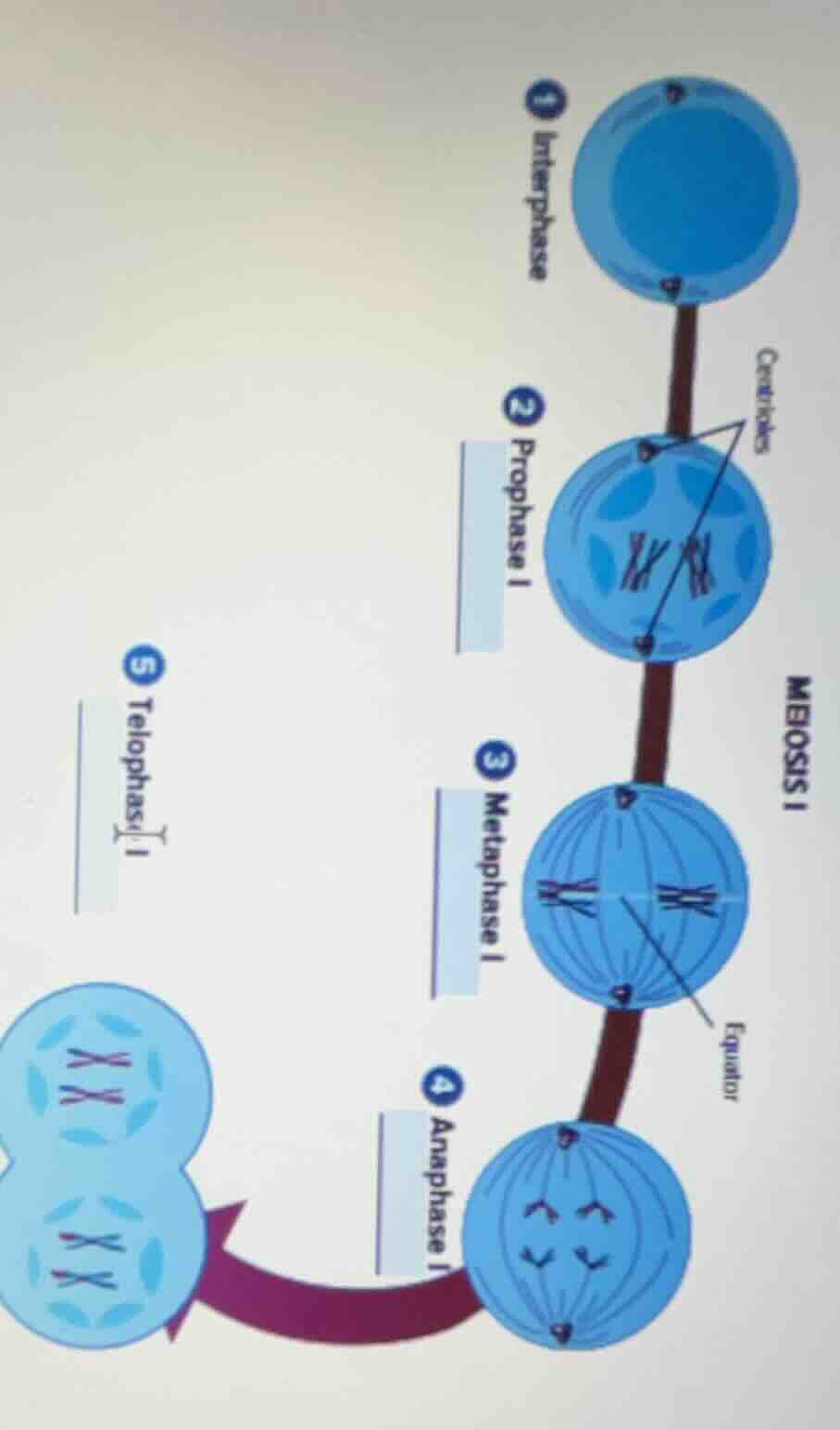
meiosis i
1 interphase
2 prophase i
3 metaphase i
4 anaphase i
5 telophase i
centrioles
equator
To solve this, we analyze each stage of Meiosis I:
Step 1: Prophase I
In Prophase I, homologous chromosomes pair up (synapsis), and crossing - over can occur. The main event here is the condensation of chromatin into chromosomes, the pairing of homologous chromosomes, and the formation of the spindle apparatus.
Step 2: Metaphase I
During Metaphase I, the paired homologous chromosomes (tetrads) line up along the equator (metaphase plate) of the cell. The spindle fibers attach to the centromeres of the chromosomes, and the orientation of the tetrads is random (independent assortment).
Step 3: Anaphase I
In Anaphase I, the homologous chromosomes are pulled apart by the spindle fibers and move to opposite poles of the cell. Sister chromatids remain attached at their centromeres during this stage.
Step 4: Telophase I
During Telophase I, the chromosomes reach the poles of the cell. The nuclear membrane may reform around the chromosomes, and cytokinesis usually occurs, resulting in two haploid daughter cells with duplicated chromosomes (each chromosome still has two sister chromatids).
For the blanks:
- Prophase I (2): Homologous chromosomes pair (synapsis), crossing - over may occur, chromosomes condense, spindle forms.
- Metaphase I (3): Tetrads (paired homologs) align at the cell equator.
- Anaphase I (4): Homologous chromosomes separate (move to opposite poles).
- Telophase I (5): Chromosomes reach poles, nuclear envelope may reform, cytokinesis occurs (2 haploid cells form, each with duplicated chromosomes).
If we were to fill the blanks with the main events:
- Homologous chromosomes pair, crossing - over (if applicable), chromosome condensation, spindle formation.
- Tetrads align at the equator.
- Homologous chromosomes separate.
- Chromosomes reach poles, cytokinesis (2 haploid cells).

Snap & solve any problem in the app
Get step-by-step solutions on Sovi AI
Photo-based solutions with guided steps
Explore more problems and detailed explanations
To solve this, we analyze each stage of Meiosis I:
Step 1: Prophase I
In Prophase I, homologous chromosomes pair up (synapsis), and crossing - over can occur. The main event here is the condensation of chromatin into chromosomes, the pairing of homologous chromosomes, and the formation of the spindle apparatus.
Step 2: Metaphase I
During Metaphase I, the paired homologous chromosomes (tetrads) line up along the equator (metaphase plate) of the cell. The spindle fibers attach to the centromeres of the chromosomes, and the orientation of the tetrads is random (independent assortment).
Step 3: Anaphase I
In Anaphase I, the homologous chromosomes are pulled apart by the spindle fibers and move to opposite poles of the cell. Sister chromatids remain attached at their centromeres during this stage.
Step 4: Telophase I
During Telophase I, the chromosomes reach the poles of the cell. The nuclear membrane may reform around the chromosomes, and cytokinesis usually occurs, resulting in two haploid daughter cells with duplicated chromosomes (each chromosome still has two sister chromatids).
For the blanks:
- Prophase I (2): Homologous chromosomes pair (synapsis), crossing - over may occur, chromosomes condense, spindle forms.
- Metaphase I (3): Tetrads (paired homologs) align at the cell equator.
- Anaphase I (4): Homologous chromosomes separate (move to opposite poles).
- Telophase I (5): Chromosomes reach poles, nuclear envelope may reform, cytokinesis occurs (2 haploid cells form, each with duplicated chromosomes).
If we were to fill the blanks with the main events:
- Homologous chromosomes pair, crossing - over (if applicable), chromosome condensation, spindle formation.
- Tetrads align at the equator.
- Homologous chromosomes separate.
- Chromosomes reach poles, cytokinesis (2 haploid cells).