QUESTION IMAGE
Question
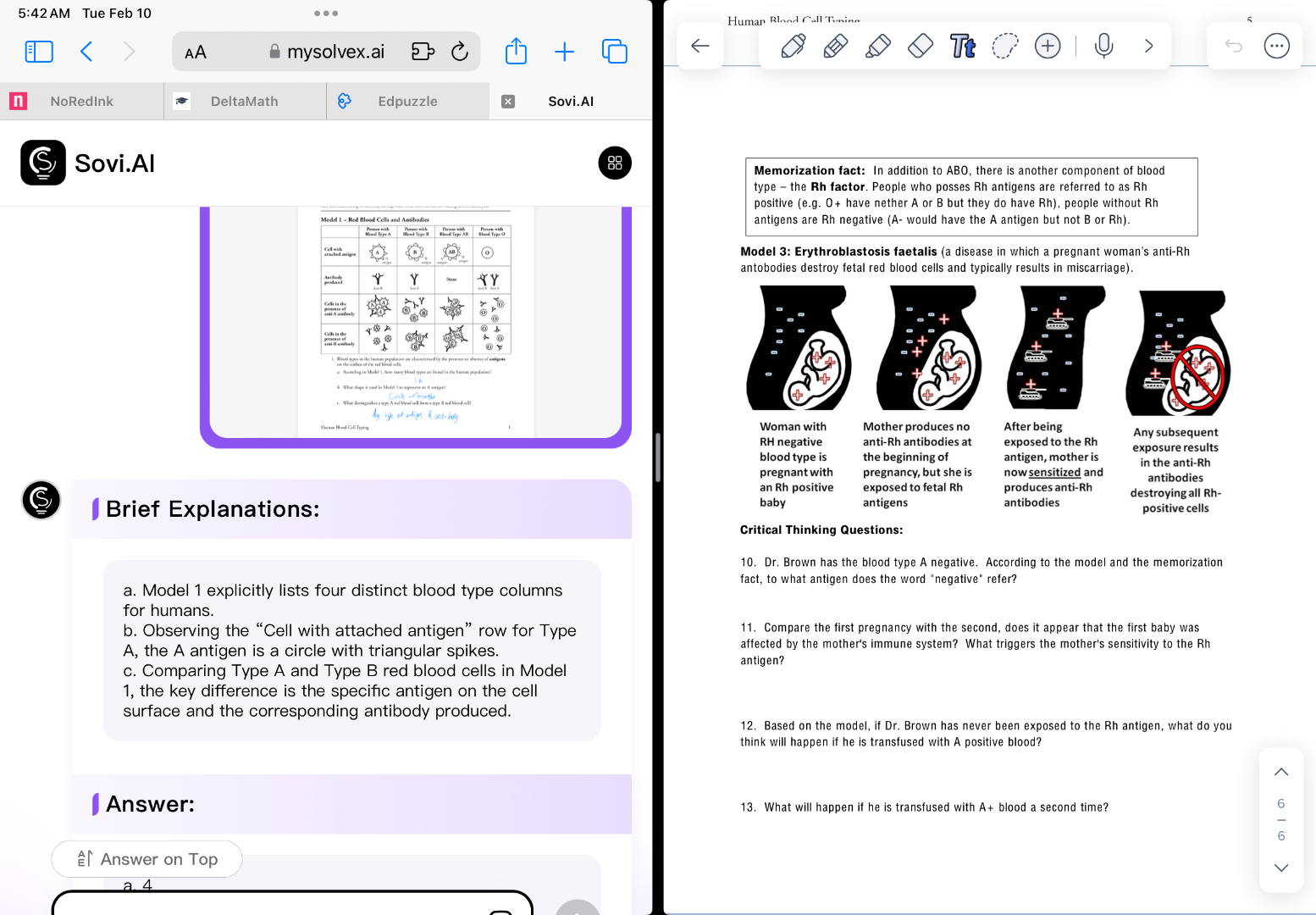
memorization fact: in addition to abo, there is another component of blood type - the rh factor. people who posses rh antigens are referred to as rh positive (e.g. o+ have neither a or b but they do have rh), people without rh antigens are rh negative (a- would have the a antigen but not b or rh).
model 3: erythroblastosis foetalis (a disease in which a pregnant womans anti-rh antibodies destroy fetal red blood cells and typically results in miscarriage).
woman with rh negative blood type is pregnant with an rh positive baby
mother produces no anti-rh antibodies at the beginning of pregnancy, but she is exposed to fetal rh antigens
after being exposed to the rh antigen, mother is now sensitized and produces anti-rh antibodies
any subsequent exposure results in the anti-rh antibodies destroying all rh-positive cells
critical thinking questions:
- dr. brown has the blood type a negative. according to the model and the memorization fact, to what antigen does the word
egative\ refer?
- compare the first pregnancy with the second, does it appear that the first baby was affected by the mothers immune system? what triggers the mothers sensitivity to the rh antigen?
- based on the model, if dr. brown has never been exposed to the rh antigen, what do you think will happen if he is transfused with a positive blood?
- what will happen if he is transfused with a+ blood a second time?
brief explanations:
a. model 1 explicitly lists four distinct blood type columns for humans.
b. observing the \cell with attached antigen\ row for type a, the a antigen is a circle with triangular spikes.
c. comparing type a and type b red blood cells in model 1, the key difference is the specific antigen on the cell surface and the corresponding antibody produced.
- Per the memorization fact, "negative" in blood type means the absence of Rh antigens; Dr. Brown's A negative has A antigens but no Rh antigens.
- Model 3 shows the first pregnancy has no pre-formed anti-Rh antibodies, so the fetus is unharmed. Sensitivity comes from exposure to fetal Rh-positive blood (likely during delivery) which stimulates antibody production.
- As an Rh-negative person with no prior Rh exposure, transfusion with Rh-positive (A+) blood will trigger the immune system to make anti-Rh antibodies, which then attack the foreign Rh-positive cells.
- After the first exposure, anti-Rh antibodies are already present. A second transfusion of Rh-positive blood will immediately trigger these antibodies to destroy the transfused cells, leading to a severe transfusion reaction.

Snap & solve any problem in the app
Get step-by-step solutions on Sovi AI
Photo-based solutions with guided steps
Explore more problems and detailed explanations
- The "negative" refers to the absence of the Rh antigen.
- No, the first baby was not affected. Sensitivity is triggered by exposure to fetal Rh-positive blood during the first pregnancy/birth.
- Dr. Brown's immune system will start producing anti-Rh antibodies, and the transfused Rh-positive blood cells will be destroyed.
- The pre-existing anti-Rh antibodies will rapidly attack and destroy the transfused Rh-positive blood cells, causing a severe, potentially life-threatening reaction.