QUESTION IMAGE
Question
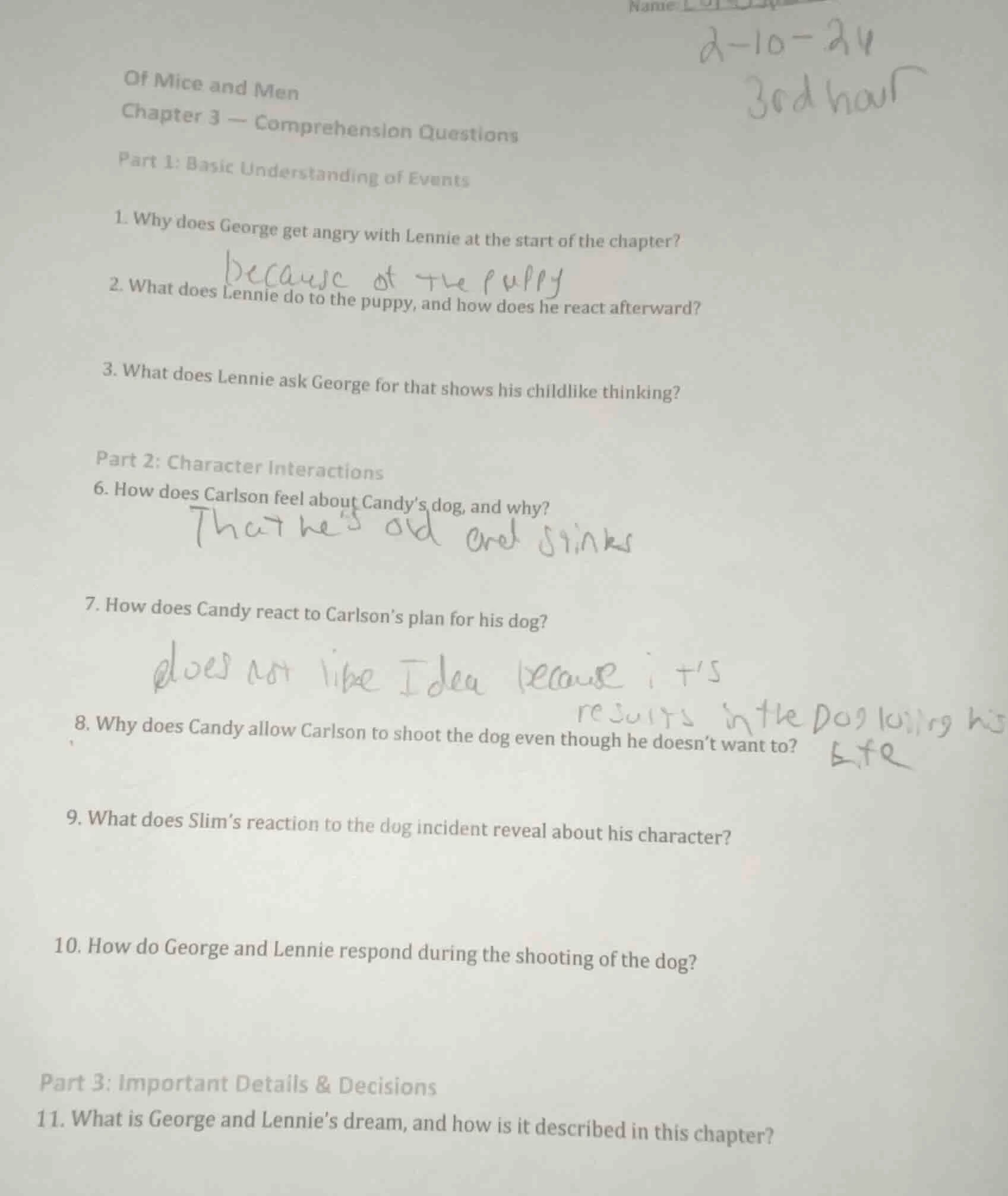
of mice and men
chapter 3 — comprehension questions
part 1: basic understanding of events
- why does george get angry with lennie at the start of the chapter?
because of the puppy
- what does lennie do to the puppy, and how does he react afterward?
- what does lennie ask george for that shows his childlike thinking?
part 2: character interactions
- how does carlson feel about candys dog, and why?
that hes old and stinks
- how does candy react to carlsons plan for his dog?
does not like idea because its results in the dog losing his life
- why does candy allow carlson to shoot the dog even though he doesnt want to?
- what does slims reaction to the dog incident reveal about his character?
- how do george and lennie respond during the shooting of the dog?
part 3: important details & decisions
- what is george and lennies dream, and how is it described in this chapter?
2-10-24
3rd hour
Brief Explanations
- George is angry because Lennie is petting his new puppy in the barn instead of being where George told him to be, and George worries Lennie will get into trouble.
- Lennie accidentally kills the puppy by handling it too roughly because he doesn't understand his own strength. Afterward, he is distraught, panicking that George will be angry and won't let him tend the rabbits on their dream farm.
- Lennie asks George to tell him the story of their dream farm (with the rabbits he can tend) repeatedly, showing his childlike need for comfort and fixation on the simple, happy idea.
- Carlson thinks Candy's dog is old, blind, lame, and smells bad; he believes the dog is suffering and should be put out of its misery.
- Candy is deeply upset and resistant at first—he argues to keep the dog, as it has been his companion for years.
- Candy gives in because Slim agrees with Carlson, saying the dog is better off dead, and Candy feels he has no real choice but to go along with the group's pressure.
- Slim's calm, pragmatic but sympathetic reaction shows he is a respected, fair, and compassionate leader figure on the ranch; he makes tough calls but does so with care, which is why others listen to him.
- George refuses to watch the shooting and instead tells Lennie to look at him and recite the details of their dream farm, distracting Lennie from the distressing event. Lennie follows George's instructions, focused on the dream rather than the shooting.
- Their dream is to own a small farm where they can be independent, work for themselves, and not have to take orders from anyone. In this chapter, they expand on it with Candy, planning that Candy will join them with his savings, and they describe having rabbits, chickens, a garden, and a place where they will be safe and happy.

Snap & solve any problem in the app
Get step-by-step solutions on Sovi AI
Photo-based solutions with guided steps
Explore more problems and detailed explanations
- George is angry because Lennie is in the barn with his new puppy instead of following George's instructions, and George fears Lennie will cause trouble.
- Lennie accidentally kills the puppy by handling it too roughly. He reacts with panic and guilt, terrified George will reject him and take away his chance to tend rabbits.
- Lennie asks George to repeat the story of their dream farm (specifically the part about him tending rabbits).
- Carlson dislikes Candy's dog, calling it old, smelly, and suffering; he thinks it should be shot.
- Candy is upset and resists, arguing to keep his long-time companion.
- Candy gives in because Slim endorses Carlson's plan, and he feels he has no other option.
- Slim's reaction reveals he is a wise, compassionate, and respected authority who makes fair, empathetic decisions.
- George distracts Lennie by having him focus on their dream farm, refusing to watch the shooting himself. Lennie obeys George, fixated on the dream.
- Their dream is to own a small, independent farm where they can work for themselves, live safely, and Lennie can tend rabbits. In this chapter, they include Candy in the plan, detailing a self-sustaining home with crops, animals, and no more bossed-around work.