QUESTION IMAGE
Question
moths of the limberlost
by gene stratton-porter (excerpt)
chapter i
(1) to me the limberlost is a word with which to conjure; a
spot wherein to revel. the swamp lies in north-eastern
indiana, nearly one hundred miles south of the michigan
line and ten west of the ohio. in its day it covered a large
area. when i arrived, there were miles of unbroken forest,
lakes provided with boats for navigation, streams of
running water, the roads around the edges corduroy, made
by felling and sinking large trees in the muck. then the
winter swamp had all the lacy exquisite beauty of such
locations when snow and frost draped, while from may
until october it was practically tropical jungle. from it i
have sent to scientists flowers and vines not then
classified and illustrated in our botanies.
(2) it was a piece of forethought to work unceasingly at
that time, for soon commerce attacked the swamp and
began its usual process of devastation. canadian
lumbermen came seeking tall straight timber for ship
masts and tough heavy trees for beams. grand rapids
followed and stripped the forest of hard wood for fine
furniture, and through my experience with the lumber men
\freckles\ story was written. afterward hoop and stave
select the correct text in the passage.
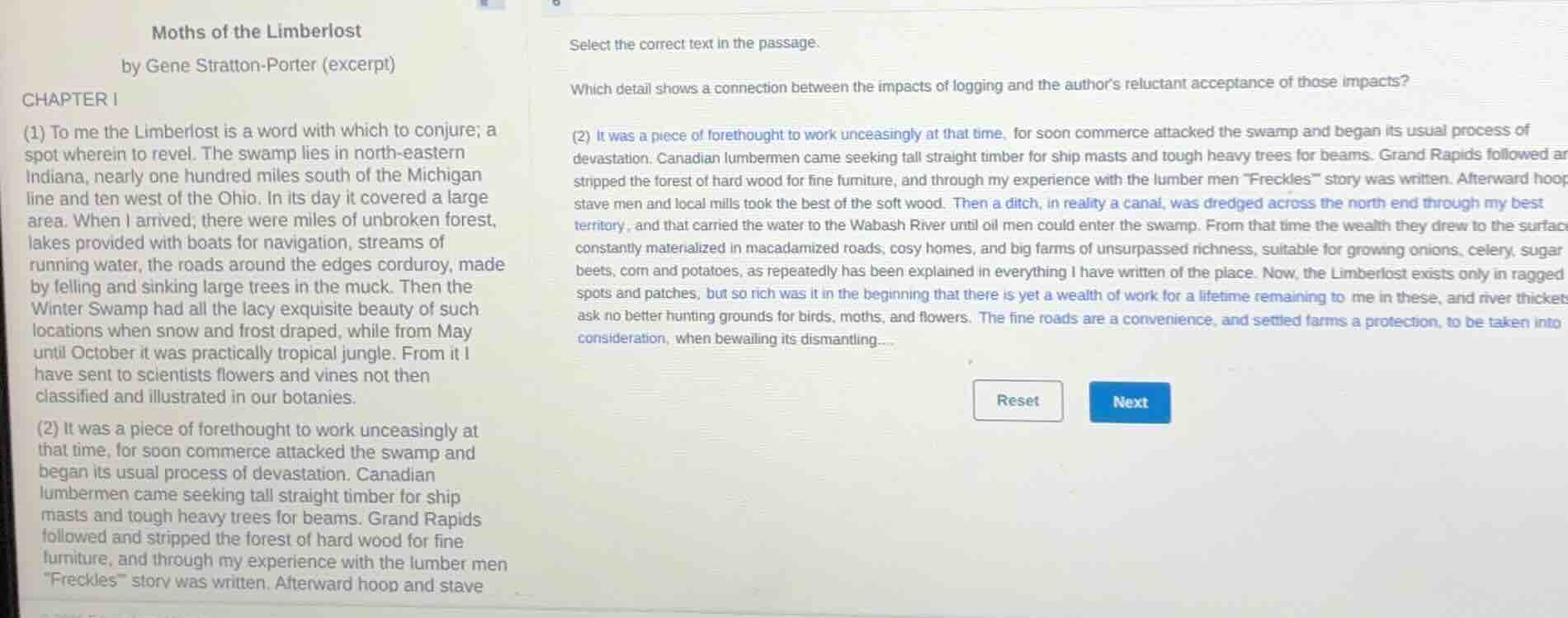
which detail shows a connection between the impacts of logging and the authors reluctant acceptance of those impacts?
(2) it was a piece of forethought to work unceasingly at that time, for soon commerce attacked the swamp and began its usual process of
devastation. canadian lumbermen came seeking tall straight timber for ship masts and tough heavy trees for beams. grand rapids followed ar
stripped the forest of hard wood for fine furniture, and through my experience with the lumber men \freckles\ story was written. afterward hoop
stave men and local mills took the best of the soft wood. then a ditch, in reality a canal, was dredged across the north end through my best
territory, and that carried the water to the wabash river until oil men could enter the swamp. from that time the wealth they drew to the surfac
constantly materialized in macadamized roads, cosy homes, and big farms of unsurpassed richness, suitable for growing onions, celery, sugar
the wealth they drew to the surface constantly materialized in macadamized roads, cosy homes, and big farms of unsurpassed richness, suitable for growing onions, celery, sugar
ts, com and potatoes, as repeatedly has been explained in everything i have written of the place. now, the limberlost exists only in ragged
spots and patches, but so rich was it in the beginning that there is yet a wealth of work for a lifetime remaining to me in these, and river thicket
ask no better hunting grounds for birds, moths, and flowers. the fine roads are a convenience, and settled farms a protection, to be taken into
consideration, when bewailing its dismantling...
The question asks for text that links logging's impacts to the author's reluctant acceptance. The relevant text acknowledges the losses of the original Limberlost but also notes the practical benefits of logging's results (roads, farms) that the author must consider while grieving the swamp's destruction, showing reluctant acceptance.

Snap & solve any problem in the app
Get step-by-step solutions on Sovi AI
Photo-based solutions with guided steps
Explore more problems and detailed explanations
The fine roads are a convenience, and settled farms a protection, to be taken into consideration, when bewailing its dismantling.