QUESTION IMAGE
Question
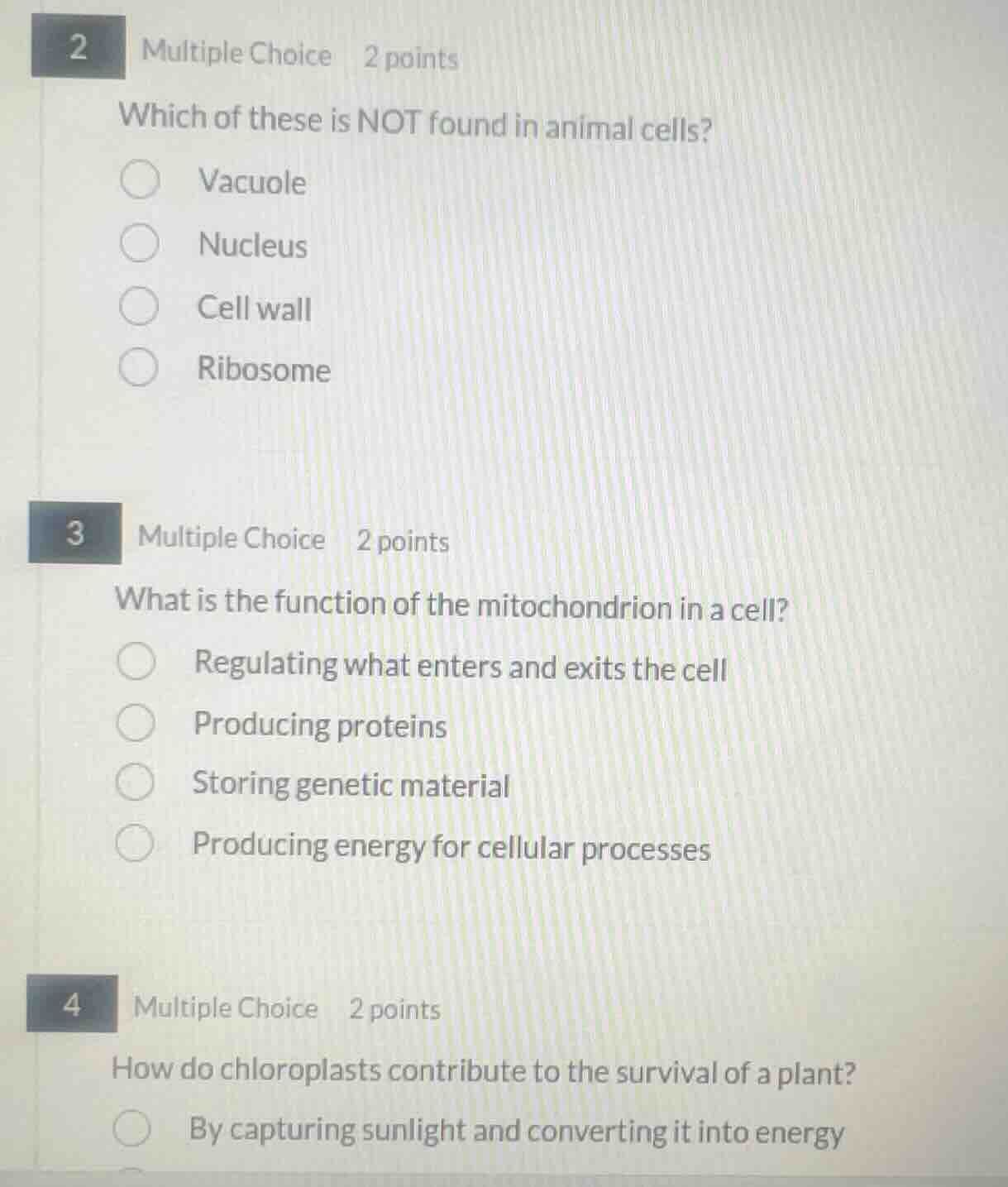
2 multiple choice 2 points which of these is not found in animal cells? vacuole nucleus cell wall ribosome 3 multiple choice 2 points what is the function of the mitochondrion in a cell? regulating what enters and exits the cell producing proteins storing genetic material producing energy for cellular processes 4 multiple choice 2 points how do chloroplasts contribute to the survival of a plant? by capturing sunlight and converting it into energy
Brief Explanations
- For question 2: Animal cells lack a rigid cell wall, which is a structure unique to plant, fungal, and some bacterial cells. They do have small vacuoles, a nucleus, and ribosomes.
- For question 3: Mitochondria are known as the "powerhouses" of the cell, as they generate ATP (energy) through cellular respiration for cellular activities. The cell membrane regulates transport, ribosomes make proteins, and the nucleus stores genetic material.
- For question 4: Chloroplasts contain chlorophyll, which captures sunlight to perform photosynthesis, converting light energy into chemical energy (glucose) that the plant uses for survival.

Snap & solve any problem in the app
Get step-by-step solutions on Sovi AI
Photo-based solutions with guided steps
Explore more problems and detailed explanations
- Cell wall
- Producing energy for cellular processes
- By capturing sunlight and converting it into energy