QUESTION IMAGE
Question
multiple select question
select all that apply
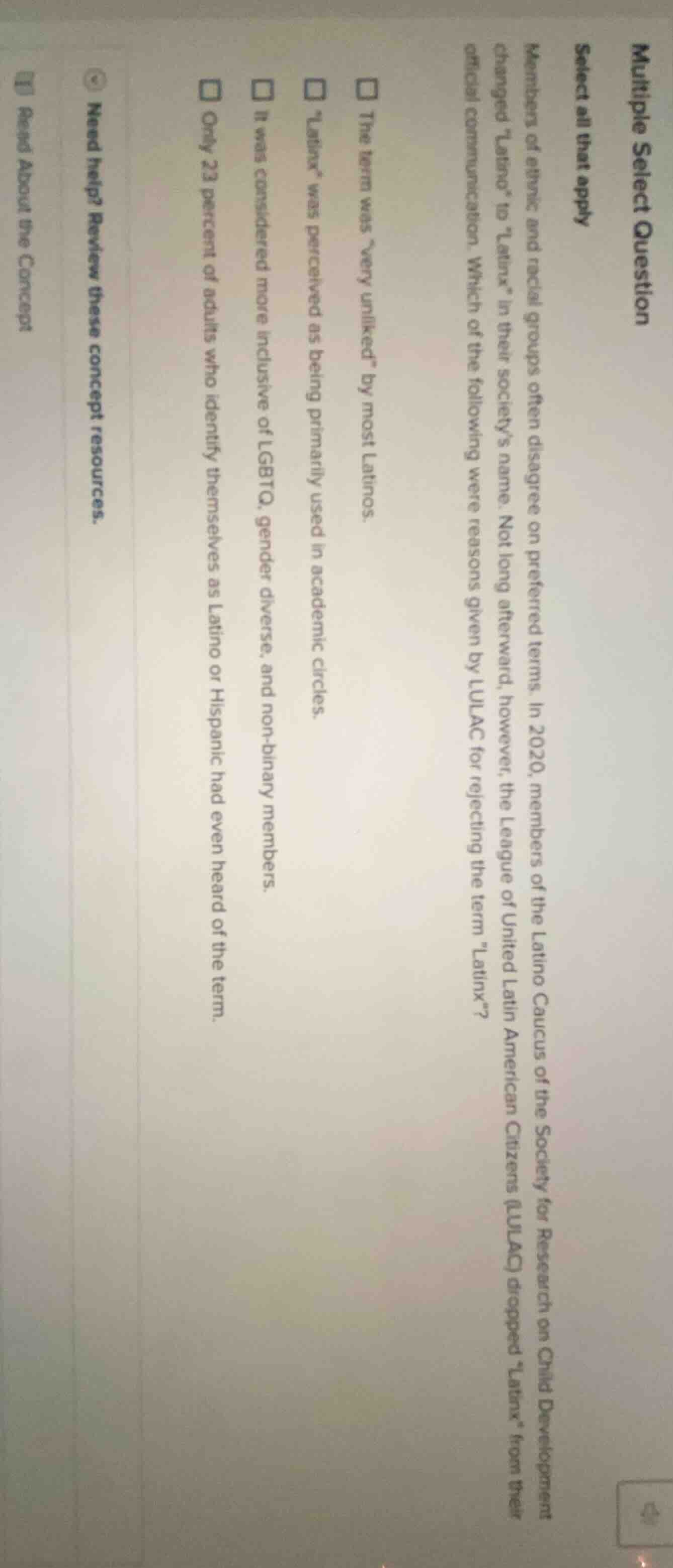
members of ethnic and racial groups often disagree on preferred terms. in 2020, members of the latino caucus of the society for research on child development changed “latino” to “latinx” in their name. not long afterward, however, the league of united latin american citizens (lulac) dropped “latinx” from their official communication. which of the following were reasons given by lulac for rejecting the term “latinx”?
- the term was “very unliked” by most latinos.
- “latinx” was perceived as being primarily used in academic circles.
- it was considered more inclusive of lgbtq, gender diverse, and non - binary members.
- only 23 percent of adults who identify themselves as latino or hispanic had even heard of the term.
need help? review these concept resources.
read about the concept
- For "The term was 'very unliked' by most Latinos": This aligns with LULAC's rejection as the term was disliked by a large portion of the Latino community.
- For "'Latinx' was perceived as being primarily used in academic circles": If the term was seen as academic - centric and not representative of the broader Latino community, it could be a reason for rejection.
- For "Only 23 percent of adults who identify themselves as Latino or Hispanic had even heard of the term": Low awareness among the target group (Latino/Hispanic adults) could be a reason to reject the term as it is not widely recognized.
- The option "It was considered more inclusive of LGBTQ, gender diverse, and non - binary members" is a positive aspect of the term and would not be a reason for rejection.

Snap & solve any problem in the app
Get step-by-step solutions on Sovi AI
Photo-based solutions with guided steps
Explore more problems and detailed explanations
A. The term was "very unliked" by most Latinos
B. "Latinx" was perceived as being primarily used in academic circles
D. Only 23 percent of adults who identify themselves as Latino or Hispanic had even heard of the term