QUESTION IMAGE
Question
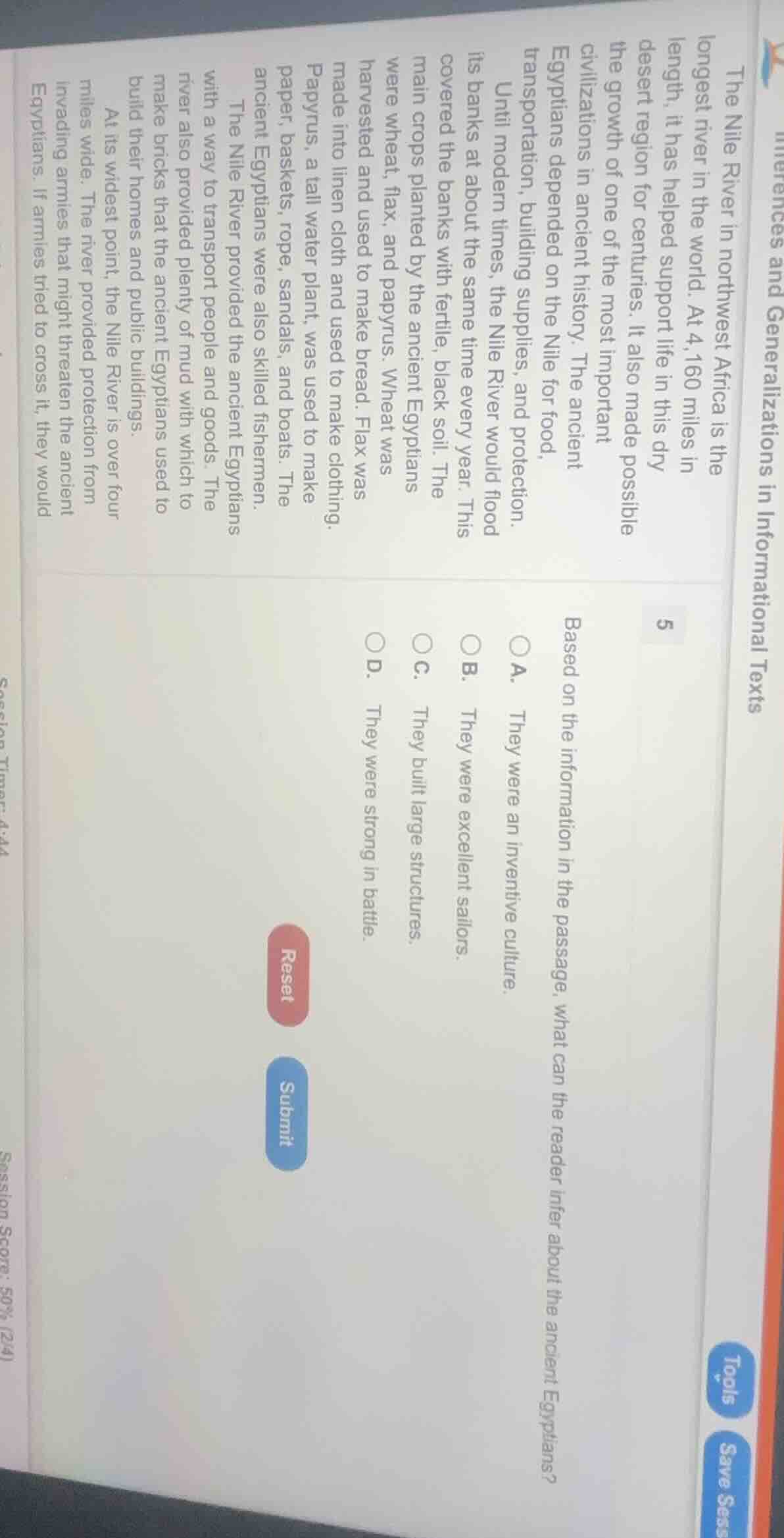
the nile river in northwest africa is the longest river in the world. at 4,160 miles in length, it has helped support life in this dry desert region for centuries. it also made possible the growth of one of the most important civilizations in ancient history. the ancient egyptians depended on the nile for food, transportation, building supplies, and protection. until modern times, the nile river would flood its banks at about the same time every year. this covered the banks with fertile, black soil. the main crops planted by the ancient egyptians were wheat, flax, and papyrus. wheat was harvested and used to make bread. flax was made into linen cloth and used to make clothing. papyrus, a tall water plant, was used to make paper, baskets, rope, sandals, and boats. the ancient egyptians were also skilled fishermen. the nile river provided the ancient egyptians with a way to transport people and goods. the river also provided plenty of mud with which to make bricks that the ancient egyptians used to build their homes and public buildings. at its widest point, the nile river is over four miles wide. the river provided protection from invading armies that might threaten the ancient egyptians. if armies tried to cross it, they would 5 based on the information in the passage, what can the reader infer about the ancient egyptians? a. they were an inventive culture. b. they were excellent sailors. c. they built large structures. d. they were strong in battle.
Para inferir sobre los antiguos egipcios, analizamos el texto: usaron el papiro para hacer varios objetos (pan, ropa, etc.), lo que indica creatividad e inventividad en el uso de recursos. Las otras opciones: B (no hay info sobre navegación excelente), C (no se menciona estructuras grandes, sino construcciones con barro), D (la protección del río no implica ser fuertes en batalla). Así, la opción A es la correcta.

Snap & solve any problem in the app
Get step-by-step solutions on Sovi AI
Photo-based solutions with guided steps
Explore more problems and detailed explanations
A. They were an inventive culture.