QUESTION IMAGE
Question
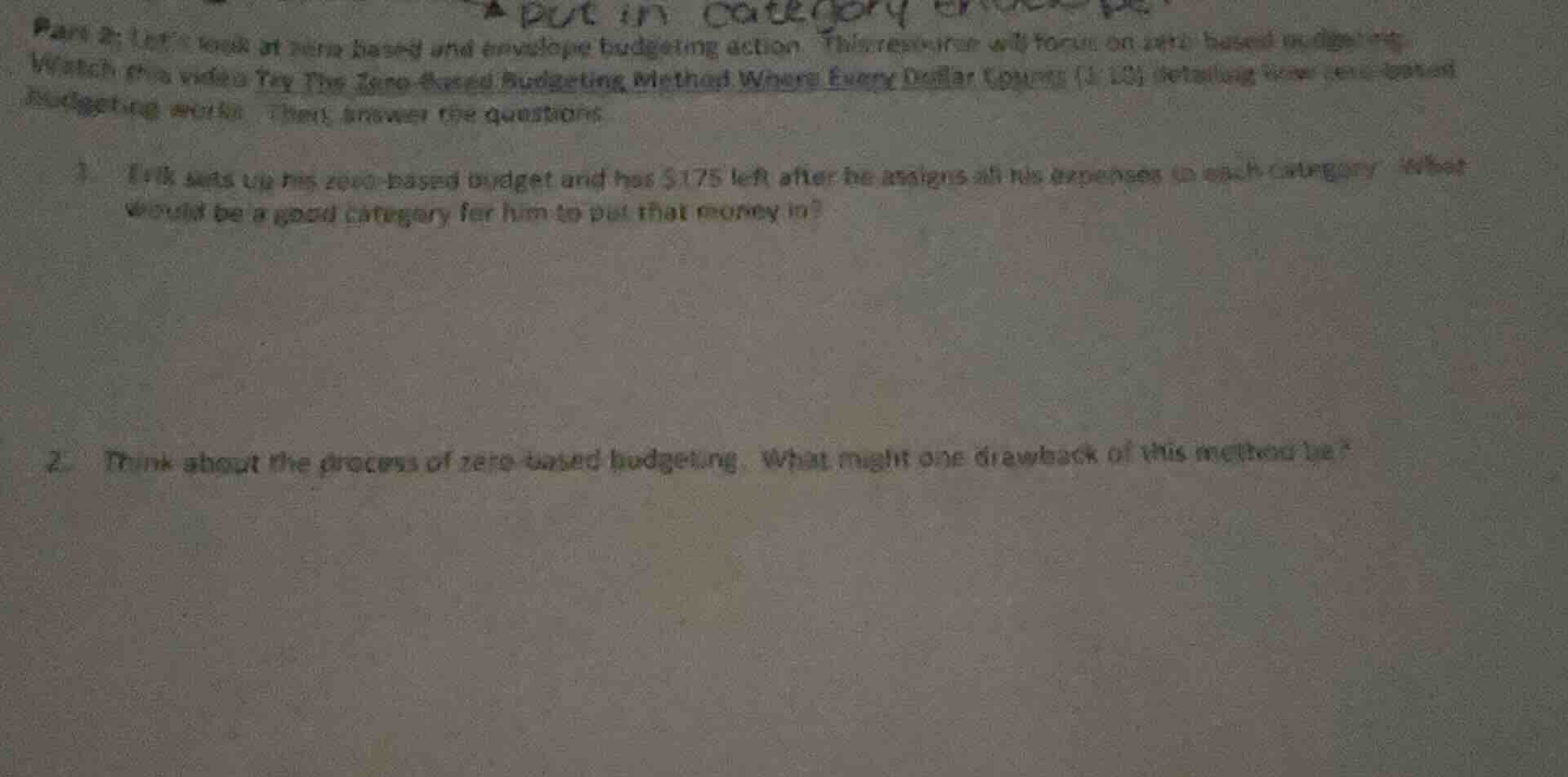
part 2: lets look at zero - based and envelope budgeting action. this exercise will focus on zero - based budgeting. watch the video try the zero - based budgeting method where every dollar counts (1:13) detailing how zero - based budgeting works. then, answer the questions.
- erik sets up his zero - based budget and has $175 left after he assigns all his expenses to each category. what would be a good category for him to put that money in?
- think about the process of zero - based budgeting. what might one drawback of this method be?
Brief Explanations
- For leftover funds in zero-based budgeting, a category that aligns with financial goals like emergency savings, retirement, or a sinking fund for a future purchase is ideal, as it ensures every dollar is intentionally allocated.
- Zero-based budgeting requires justifying every expense from scratch each budgeting period, which creates a significant time and administrative burden compared to incremental budgeting.

Snap & solve any problem in the app
Get step-by-step solutions on Sovi AI
Photo-based solutions with guided steps
Explore more problems and detailed explanations
- A good category would be an emergency fund, retirement savings, or a dedicated sinking fund for a planned large purchase (e.g., a car repair, vacation).
- A key drawback is the significant time and effort required to review and justify every single expense in each budgeting cycle, which is far more labor-intensive than traditional incremental budgeting.