QUESTION IMAGE
Question
question 5 (1 point)
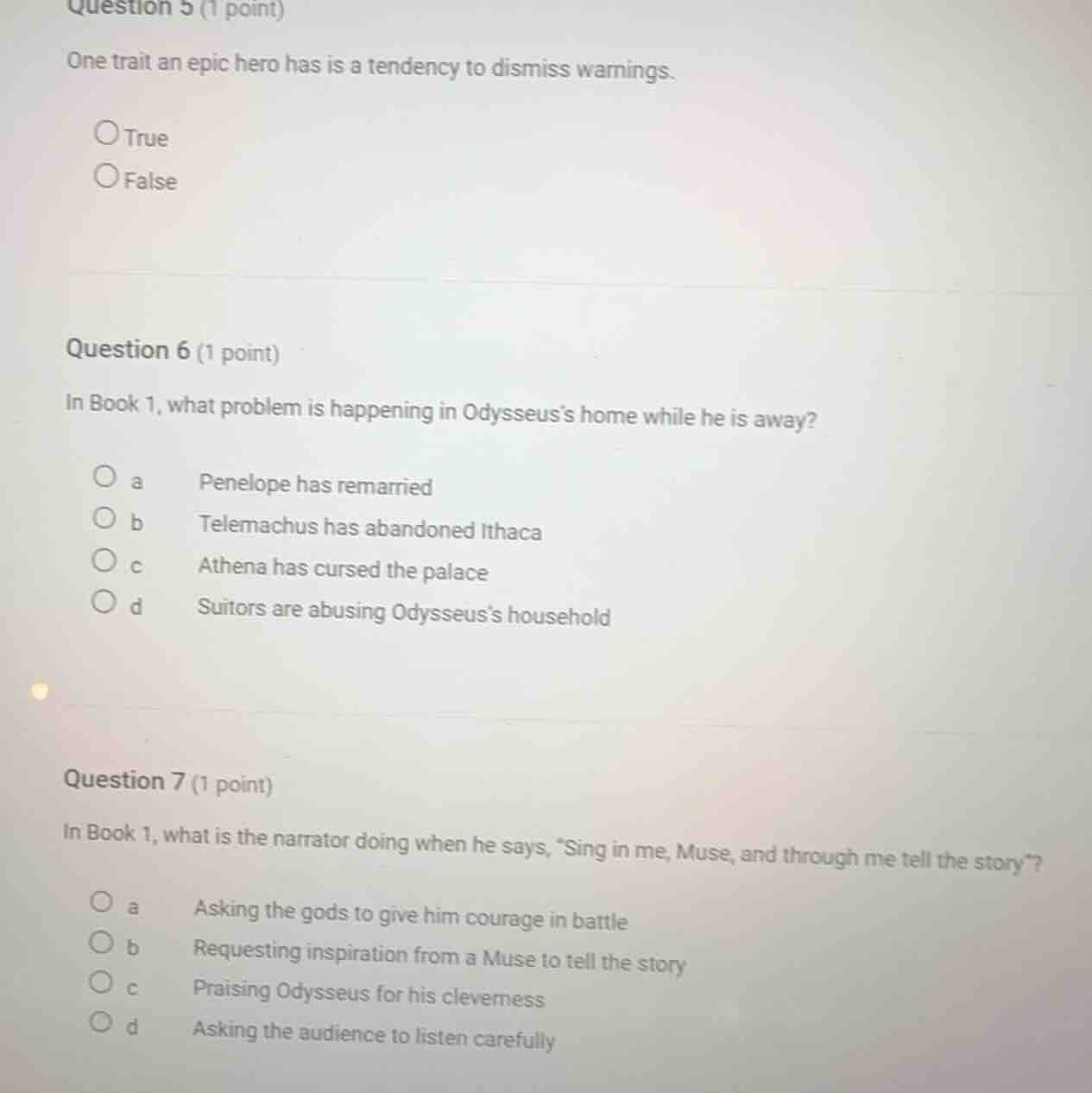
one trait an epic hero has is a tendency to dismiss warnings.
true
false
question 6 (1 point)
in book 1, what problem is happening in odysseus’s home while he is away?
a penelope has remarried
b telemachus has abandoned ithaca
c athena has cursed the palace
d suitors are abusing odysseus’s household
question 7 (1 point)
in book 1, what is the narrator doing when he says, “sing in me, muse, and through me tell the story”?
a asking the gods to give him courage in battle
b requesting inspiration from a muse to tell the story
c praising odysseus for his cleverness
d asking the audience to listen carefully
Question 5
Epic heroes often exhibit traits like hubris or overconfidence, which can lead to dismissing warnings (e.g., Odysseus ignoring Circe’s or Tiresias’ warnings at times). So the statement is True.
In Book 1 of The Odyssey, while Odysseus is away, suitors have invaded his home, trying to force Penelope to marry and abusing his household’s resources. Option a is wrong (Penelope hasn’t remarried), b is wrong (Telemachus is trying to protect Ithaca), c is wrong (Athena helps, not curses). So d is correct.
In epic poetry, the invocation of the Muse is a traditional way to request divine inspiration to tell the story. The line “Sing in me, Muse, and through me tell the story” is the narrator (Homer) asking the Muse for inspiration to narrate Odysseus’s tale. Option a is wrong (not about battle courage), c is wrong (not praising Odysseus), d is wrong (not addressing the audience to listen). So b is correct.

Snap & solve any problem in the app
Get step-by-step solutions on Sovi AI
Photo-based solutions with guided steps
Explore more problems and detailed explanations
True