QUESTION IMAGE
Question
racial divisions
voting rights after new
amendments: 15th amendment mainly aimed at racial discrimination in voting. southern
states soon passed laws that kept blacks from exercising their right to vote.
poll taxes:
- southern states introduced fees for voting, known as a poll taxes, which most african-
americans in the south were unable to pay.
- however, white voters might be allowed to pay a lower fee or be exempt entirely.
literacy tests:
- some states required voters to pass literacy tests, proving that they were able to read.
- because slaves had been prohibited from learning to read, this ruled
out voting for most black citizens in the south.
- additionally, the tests were often designed to be impossible to pass, sometimes
written in foreign languages or intentionally confusing.
grandfather clauses:
- grandfather clauses said that any individual whose grandfather had been eligible to
vote was exempt from poll taxes and literacy tests.
- this helped most white voters while disqualifying black voters, whose ancestors
had been enslaved and thus couldnt vote.
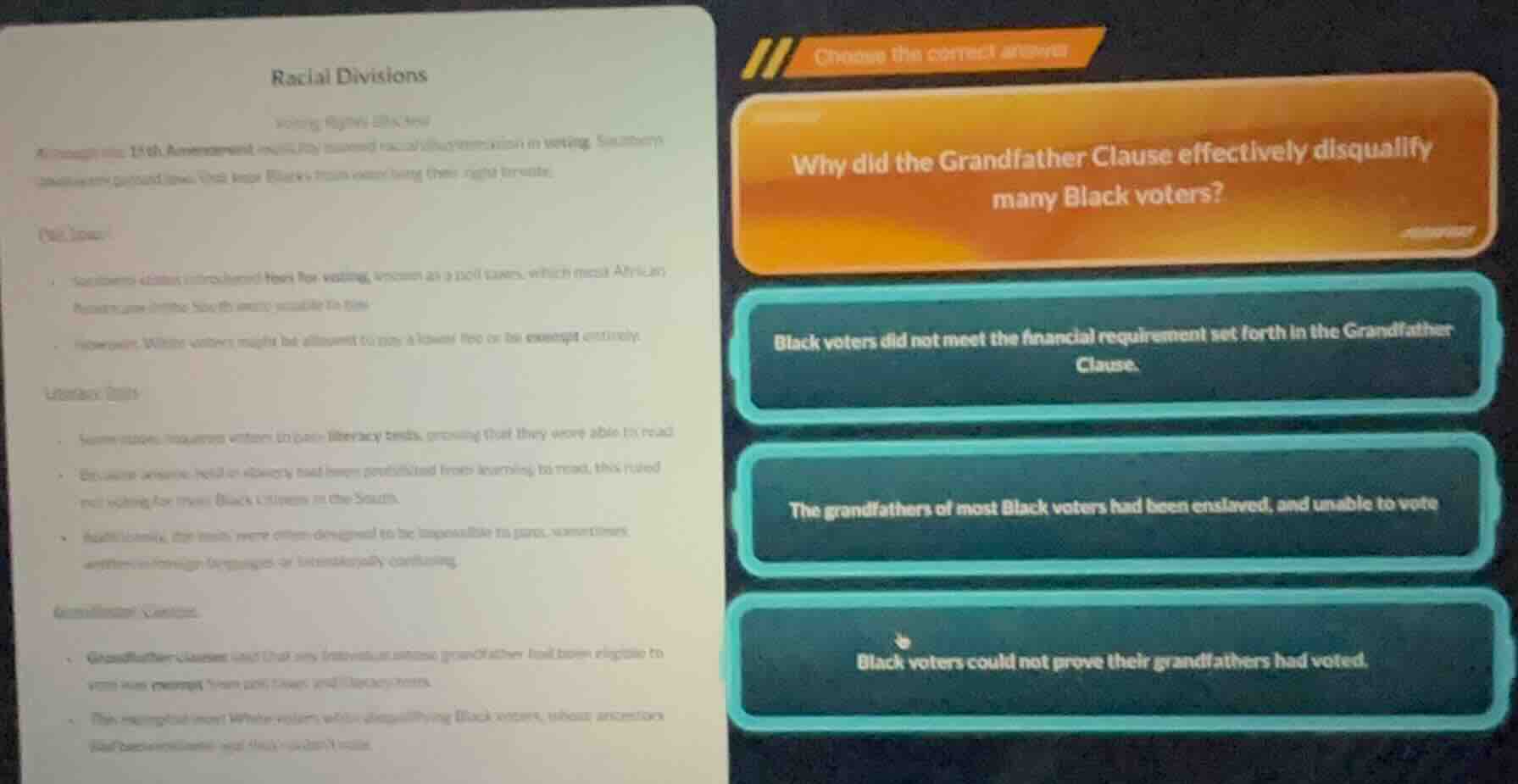
choose the correct answer
why did the grandfather clause effectively disqualify
many black voters?
black voters did not meet the financial requirement set forth in the grandfather
clause.
the grandfathers of most black voters had been enslaved, and unable to vote
black voters could not prove their grandfathers had voted.
The Grandfather Clause stated that if a person's grandfather was eligible to vote, they could be exempt from voting restrictions (like literacy tests or poll taxes). Most Black voters' grandfathers were enslaved and thus unable to vote (enslaved people couldn't vote), so Black voters couldn't meet the grandfather - eligibility requirement. The first option is incorrect as the Grandfather Clause wasn't about financial requirements. The third option is incorrect because the issue was that their grandfathers couldn't vote (due to slavery), not that they couldn't prove it.

Snap & solve any problem in the app
Get step-by-step solutions on Sovi AI
Photo-based solutions with guided steps
Explore more problems and detailed explanations
B. The grandfathers of most Black voters had been enslaved, and unable to vote