QUESTION IMAGE
Question
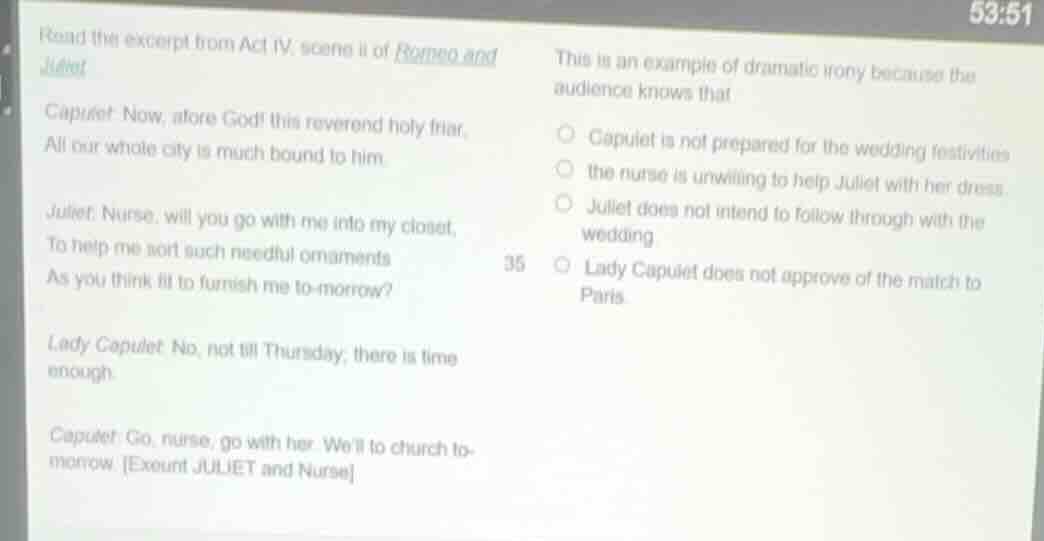
read the excerpt from act iv, scene ii of romeo and juliet
capulet: now, afore god! this reverend holy friar,
all our whole city is much bound to him.
juliet: nurse, will you go with me into my closet,
to help me sort such needful ornaments
as you think fit to furnish me to - morrow?
lady capulet: no, not till thursday; there is time enough.
capulet: go, nurse, go with her. well to church to - morrow. exeunt juliet and nurse
this is an example of dramatic irony because the audience knows that
○ capulet is not prepared for the wedding festivities
○ the nurse is unwilling to help juliet with her dress.
○ juliet does not intend to follow through with the wedding
35 ○ lady capulet does not approve of the match to paris
Dramatic irony occurs when the audience knows something characters don't. In Romeo and Juliet, Juliet has a plan to avoid the wedding to Paris (via the Friar's potion). The characters (Capulet, Lady Capulet, Nurse) think she's preparing for the wedding, but the audience knows Juliet doesn't intend to go through with it. The other options are incorrect: Capulet seems prepared, the Nurse is willing, and Lady Capulet approves the match.

Snap & solve any problem in the app
Get step-by-step solutions on Sovi AI
Photo-based solutions with guided steps
Explore more problems and detailed explanations
Juliet does not intend to follow through with the wedding