QUESTION IMAGE
Question
relevant
metaphors
ideal
evidence
conflicts
dialogue
speech
freedom
ideals
reasonable
topic
societal
themes in literature represent deeper
or messages explored by authors.
a theme is what the author is saying about the
of a story.
themes are revealed through characters’ actions,
, and the events of the story
to identify a theme, look for patterns such as repeated ideas,
actions, or
gathering
from the text is essential to
demonstrate how a theme is shown.
a strong thesis statement explains the theme and how it is
in the story.
in “macbeth”, the theme of the fleeting nature of life is revealed
through the use of
like “a walking
shadow.”
nora’s dialogue in “a doll’s house” highlights the conflict
between societal expectations and personal
helmer’s statement, “before all else, you are a wife and mother,”
reflects
expectations of women during
ibsen’s time.
nora rejects traditional roles by asserting that she is a
human being before all else.
writing about themes helps improve skills in analyzing complex
and communicating ideas clearly
themes like ambition and identity explored in literature remain
relevant to modern readers.
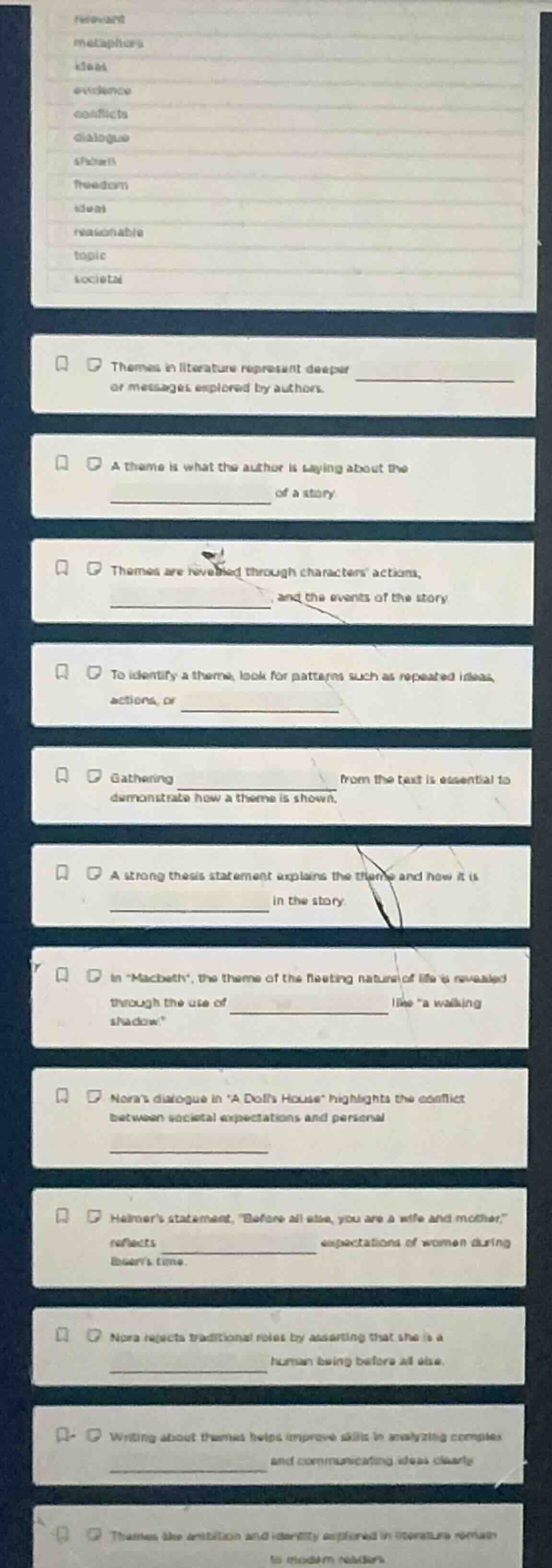
Each blank is filled using the provided word bank, matching literary concepts and text-specific context:
- Literature themes convey deeper core messages/ideas.
- A theme comments on a story's central topic.
- Themes are shown through characters' actions, dialogue, and events.
- Repeated metaphors are a pattern for identifying themes.
- Text evidence proves how a theme appears.
- A thesis explains how a theme is reflected in a story.
- Macbeth uses metaphors like "a walking shadow" for life's fleetingness.
- Nora's arc in A Doll's House contrasts societal norms with personal freedom.
- Helmer's line reflects 19th-century societal expectations of women.
- Nora asserts she is a reasonable person before a wife/mother.
- Theme analysis builds skills for complex societal idea analysis.
- Timeless themes like ambition remain relevant to modern readers.

Snap & solve any problem in the app
Get step-by-step solutions on Sovi AI
Photo-based solutions with guided steps
Explore more problems and detailed explanations
- Themes in literature represent deeper ideas or messages explored by authors.
- A theme is what the author is saying about the topic of a story.
- Themes are revealed through characters' actions, dialogue, and the events of the story
- To identify a theme, look for patterns such as repeated ideas, actions, or metaphors
- Gathering evidence from the text is essential to demonstrate how a theme is shown.
- A strong thesis statement explains the theme and how it is reflected in the story.
- In "Macbeth", the theme of the fleeting nature of life is revealed through the use of metaphors like "a walking shadow."
- Nora's dialogue in "A Doll's House" highlights the conflict between societal expectations and personal freedom
- Helmer's statement, "Before all else, you are a wife and mother," reflects societal expectations of women during Ibsen's time.
- Nora rejects traditional roles by asserting that she is a reasonable human being before all else.
- Writing about themes helps improve skills in analyzing complex ideas and communicating ideas clearly
- Themes like ambition and identity explored in literature remain relevant to modern readers.