QUESTION IMAGE
Question
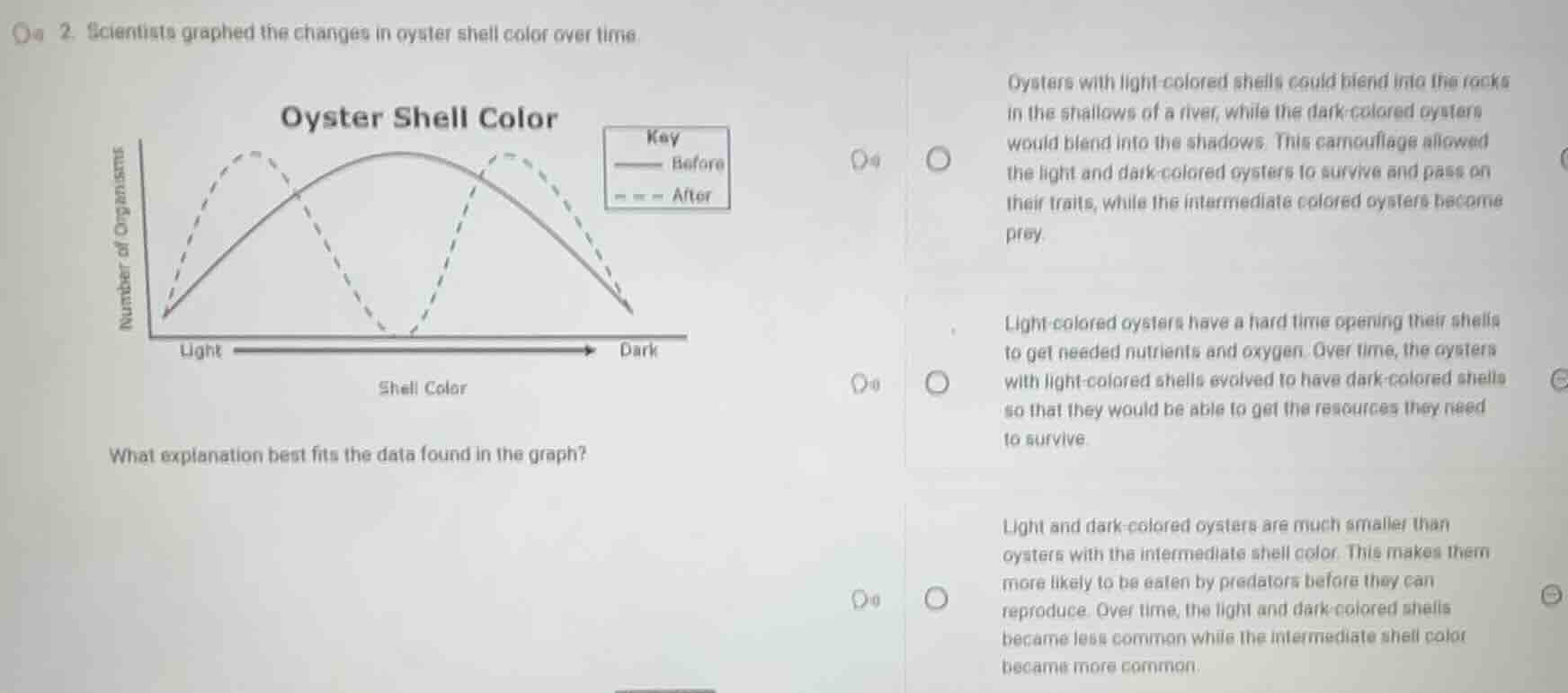
- scientists graphed the changes in oyster shell color over time.
oyster shell color
what explanation best fits the data found in the graph?
oysters with light - colored shells could blend into the rocks in the shallows of a river, while the dark - colored oysters would blend into the shadows. this camouflage allowed the light and dark - colored oysters to survive and pass on their traits, while the intermediate colored oysters become prey.
light - colored oysters have a hard time opening their shells to get needed nutrients and oxygen. over time, the oysters with light - colored shells evolved to have dark - colored shells so that they would be able to get the resources they need to survive.
light and dark - colored oysters are much smaller than oysters with the intermediates shell color. this makes them more likely to be eaten by predators before they can reproduce. over time, the light and dark - colored shells became less common while the intermediate shell color became more common.
The graph shows that before, intermediate-colored oysters were most common, with light and dark being less frequent. After, intermediate-colored oysters are rare, while light and dark are more common. This matches disruptive selection, where extreme traits (light/dark shells) are favored because they provide camouflage, allowing those oysters to survive and reproduce, while intermediate oysters are preyed on. The first option describes this scenario accurately, while the other options contradict the graph's data.

Snap & solve any problem in the app
Get step-by-step solutions on Sovi AI
Photo-based solutions with guided steps
Explore more problems and detailed explanations
Oysters with light-colored shells could blend into the rocks in the shallows of a river, while the dark-colored oysters would blend into the shadows. This camouflage allowed the light and dark-colored oysters to survive and pass on their traits, while the intermediate colored oysters become prey.