QUESTION IMAGE
Question
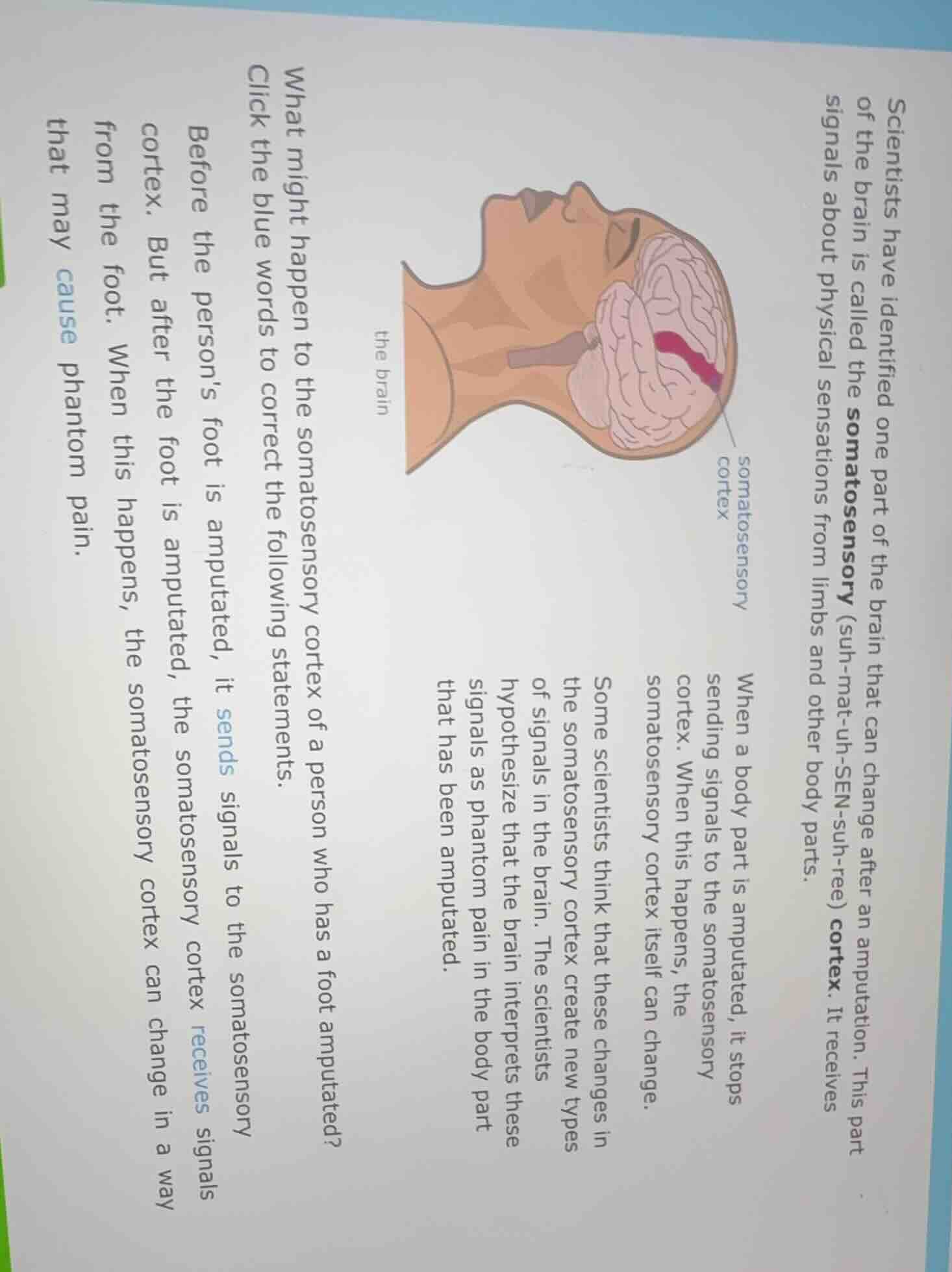
scientists have identified one part of the brain that can change after an amputation. this part of the brain is called the somatosensory (suh - mat - uh - sen - suh - ree) cortex. it receives signals about physical sensations from limbs and other body parts.
when a body part is amputated, it stops sending signals to the somatosensory cortex. when this happens, the somatosensory cortex itself can change.
some scientists think that these changes in the somatosensory cortex create new types of signals in the brain. the scientists hypothesize that the brain interprets these signals as phantom pain in the body part that has been amputated.
what might happen to the somatosensory cortex of a person who has a foot amputated?
click the blue words to correct the following statements.
before the person’s foot is amputated, it sends signals to the somatosensory cortex. but after the foot is amputated, the somatosensory cortex receives signals from the foot. when this happens, the somatosensory cortex can change in a way that may cause phantom pain.
The text describes that after an amputation, the somatosensory cortex stops receiving signals from the removed limb, then undergoes changes where it generates new internal signals that the brain misinterprets as sensations from the amputated body part, leading to phantom pain. The incorrect original statement claimed the amputated foot still sends signals, which is wrong because the foot is no longer present to send signals. The corrected statements reflect the actual process: the foot stops sending signals post-amputation, the somatosensory cortex changes, creates new signals, and these are misinterpreted as phantom pain.

Snap & solve any problem in the app
Get step-by-step solutions on Sovi AI
Photo-based solutions with guided steps
Explore more problems and detailed explanations
Corrected statements:
Before the person's foot is amputated, it sends signals to the somatosensory cortex. But after the foot is amputated, the somatosensory cortex stops receiving signals from the foot. When this happens, the somatosensory cortex can change in a way that creates new signals in the brain, which may cause phantom pain.