QUESTION IMAGE
Question
select all that apply
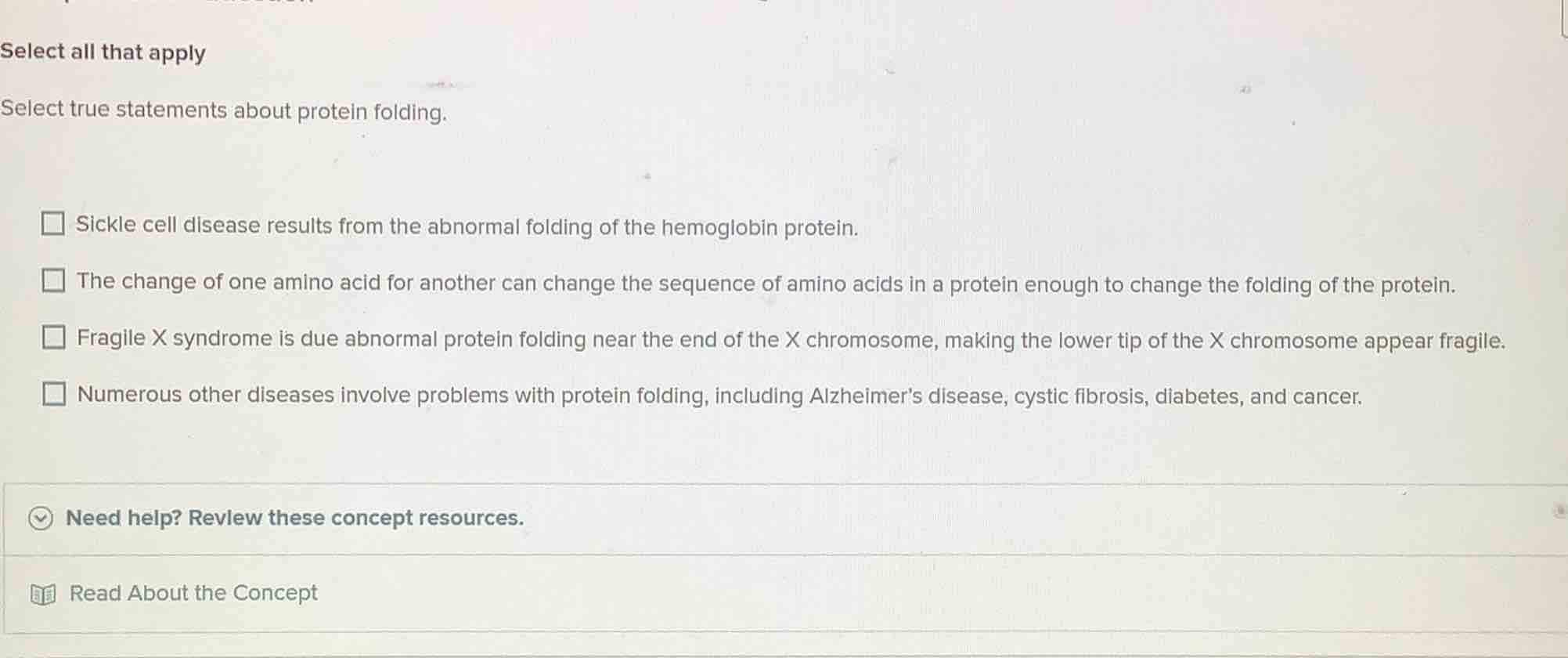
select true statements about protein folding.
- sickle cell disease results from the abnormal folding of the hemoglobin protein.
- the change of one amino acid for another can change the sequence of amino acids in a protein enough to change the folding of the protein.
- fragile x syndrome is due abnormal protein folding near the end of the x chromosome, making the lower tip of the x chromosome appear fragile.
- numerous other diseases involve problems with protein folding, including alzheimer’s disease, cystic fibrosis, diabetes, and cancer.
need help? review these concept resources.
read about the concept
Brief Explanations
- Sickle cell disease: Sickle cell disease is caused by a mutation in the hemoglobin gene, leading to abnormal hemoglobin (HbS) that folds improperly, causing red blood cells to sickle. So this statement is true.
- Amino acid change and protein folding: The amino acid sequence determines the protein's structure (including folding). Changing one amino acid can alter the sequence, affecting interactions (like hydrogen bonds, hydrophobic interactions) that drive folding, so this can change protein folding. This statement is true.
- Fragile X syndrome: Fragile X syndrome is caused by a trinucleotide repeat expansion in the FMR1 gene, leading to reduced FMRP protein production, not abnormal protein folding of a protein near the X - chromosome tip. So this statement is false.
- Diseases and protein folding: Many diseases are linked to protein misfolding. Alzheimer's (amyloid - β and tau misfolding), cystic fibrosis (CFTR protein misfolding), some forms of diabetes (insulin misfolding), and cancer (e.g., misfolded tumor - related proteins) involve protein folding problems. This statement is true.

Snap & solve any problem in the app
Get step-by-step solutions on Sovi AI
Photo-based solutions with guided steps
Explore more problems and detailed explanations
- The change of one amino acid for another can change the sequence of amino acids in a protein enough to change the folding of the protein.
- Sickle cell disease results from the abnormal folding of the hemoglobin protein.
- Numerous other diseases involve problems with protein folding, including Alzheimer’s disease, cystic fibrosis, diabetes, and cancer.