QUESTION IMAGE
Question
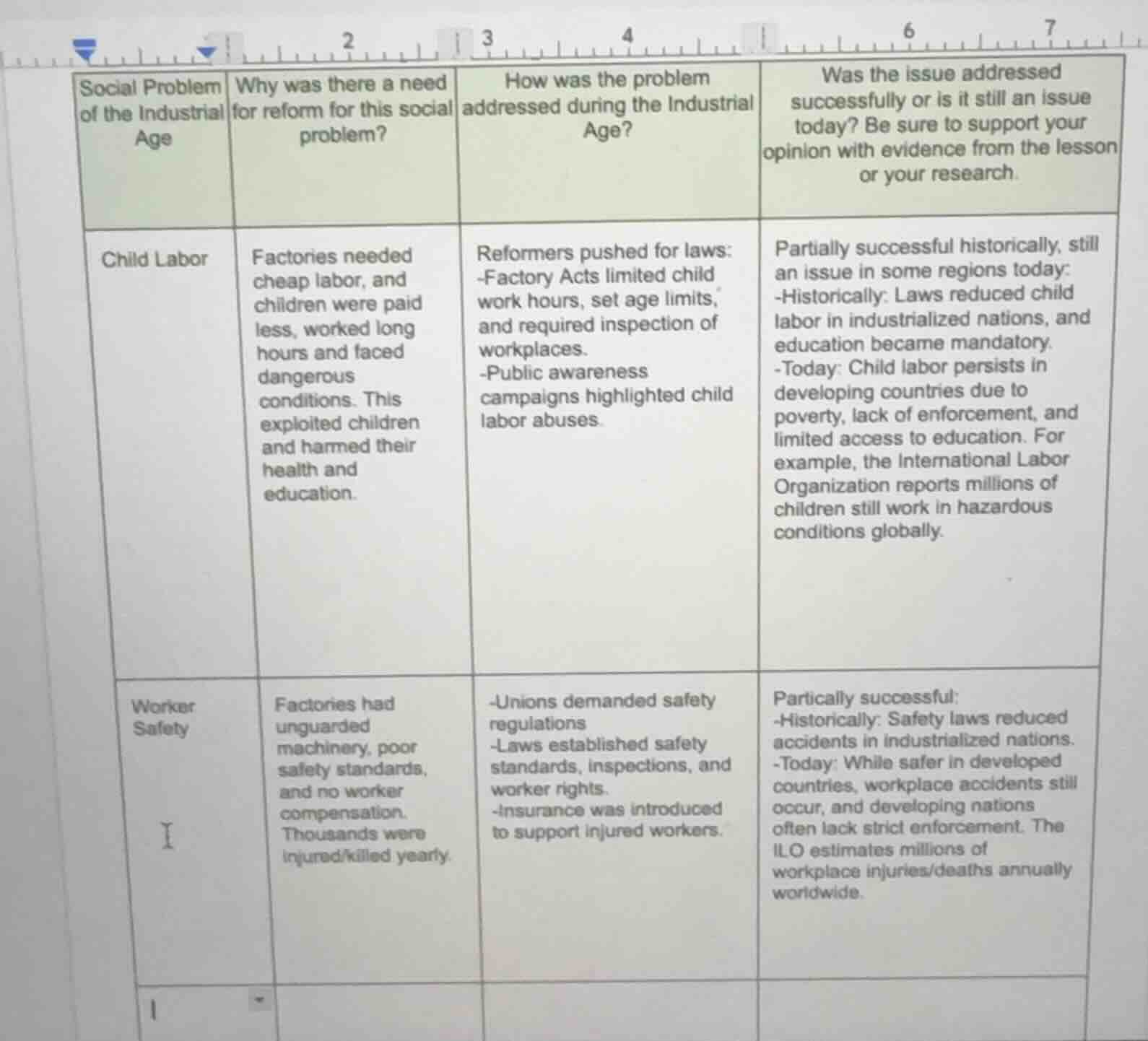
social problem of the industrial age | why was there a need for reform for this social problem? | how was the problem addressed during the industrial age? | was the issue addressed successfully or is it still an issue today? be sure to support your opinion with evidence from the lesson or your research
child labor | factories needed cheap labor, and children were paid less, worked long hours and faced dangerous conditions. this exploited children and harmed their health and education. | reformers pushed for laws: -factory acts limited child work hours, set age limits, and required inspection of workplaces. -public awareness campaigns highlighted child labor abuses. | partially successful historically, still an issue in some regions today: -historically: laws reduced child labor in industrialized nations, and education became mandatory. -today: child labor persists in developing countries due to poverty, lack of enforcement, and limited access to education. for example, the international labor organization reports millions of children still work in hazardous conditions globally.
worker safety | factories had unguarded machinery, poor safety standards, and no worker compensation. thousands were injured/killed yearly. | -unions demanded safety regulations -laws established safety standards, inspections, and worker rights. -insurance was introduced to support injured workers. | partially successful: -historically: safety laws reduced accidents in industrialized nations. -today: while safer in developed countries, workplace accidents still occur, and developing nations often lack strict enforcement. the ilo estimates millions of workplace injuries/deaths annually worldwide.
Since the problem here is about analyzing social problems of the Industrial Age (child labor, worker safety) in terms of reform needs, addressing methods, and current status, the discipline is Social Science, subfield is History (as it deals with historical analysis of industrial age social issues) or Sociology (analyzing social problems). Using the Answer - Explanation Format:
The table analyzes social problems (child labor, worker safety) during the Industrial Age. For child labor, the need for reform came from factory demand for cheap labor, child exploitation, and harm to health/education. Reform involved Factory Acts and public awareness. Today, it persists in developing regions. For worker safety, reform was needed due to dangerous work conditions; unions, laws, and insurance addressed it, with success varying by region today.

Snap & solve any problem in the app
Get step-by-step solutions on Sovi AI
Photo-based solutions with guided steps
Explore more problems and detailed explanations
- Child Labor:
- Need for reform: Factories needed cheap labor; children were underpaid, overworked, in dangerous conditions, harming health/education.
- How addressed: Reformers pushed Factory Acts (limit hours, set age limits, inspect workplaces) and public awareness campaigns.
- Today: Partially successful historically (reduced in industrialized nations, mandatory education), still an issue in developing regions (poverty, weak enforcement, limited education; ILO reports millions in hazardous work).
- Worker Safety:
- Need for reform: Unguarded machinery, poor safety, no compensation; thousands injured/killed yearly.
- How addressed: Unions demanded safety regs; laws set standards/inspections/worker rights; insurance for injured workers.
- Today: Partially successful (safer in developed nations), still issues in developing regions (weak enforcement; ILO estimates millions of workplace injuries/deaths yearly).