QUESTION IMAGE
Question
of the south china sea, the
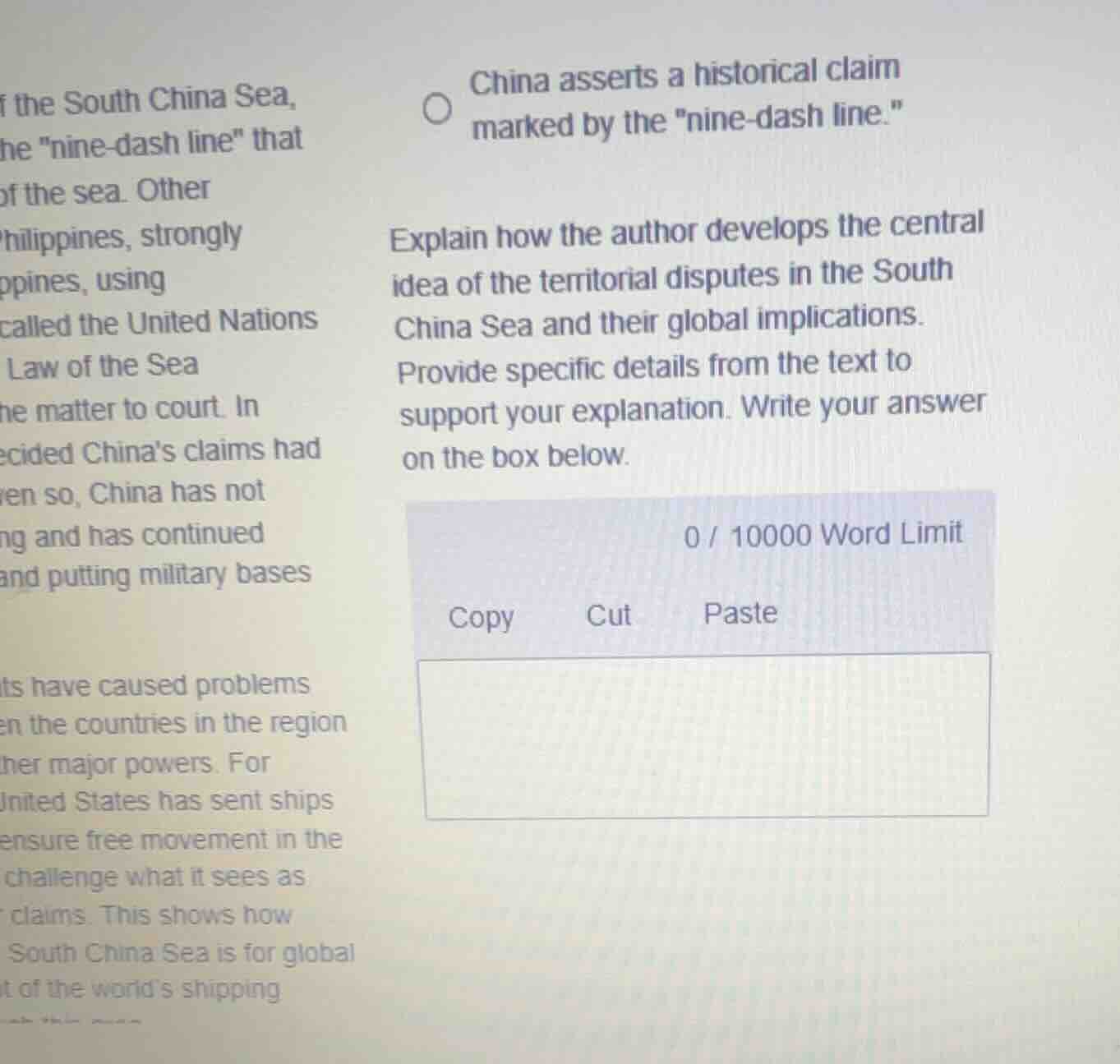
ine - dash line\ that of the sea. other hilippines, strongly ppines, using called the united nations law of the sea he matter to court. in ecided chinas claims had ven so, china has not ng and has continued and putting military bases ts have caused problems en the countries in the region her major powers. for united states has sent ships ensure free movement in the challenge what it sees as claims. this shows how south china sea is for global t of the worlds shipping china asserts a historical claim marked by the
ine - dash line.\ explain how the author develops the central idea of the territorial disputes in the south china sea and their global implications. provide specific details from the text to support your explanation. write your answer on the box below. 0 / 10000 word limit copy cut paste
The author first establishes the core territorial dispute by introducing China's historical "nine-dash line" claim to the South China Sea. They then highlight opposing action from regional states like the Philippines, which brought the case to the UN under the Law of the Sea, with the court rejecting China's claims. The author shows the dispute's persistence by noting China's continued militarization of the area. To connect to global implications, they link the dispute to major powers (like the U.S. sending ships to uphold free movement) and emphasize the sea's role as a critical global shipping route, framing the conflict as a threat to international maritime stability.

Snap & solve any problem in the app
Get step-by-step solutions on Sovi AI
Photo-based solutions with guided steps
Explore more problems and detailed explanations
The author develops the central idea in three key ways:
- Foundational Dispute Setup: Opens with the core territorial claim: China asserts historical control over the South China Sea via the "nine-dash line," establishing the root of the conflict.
- Regional & Legal Opposition: Details pushback from nations like the Philippines, which filed a case against China under the United Nations Law of the Sea. The court ruled against China's claims, but China has ignored the decision, continuing to build military bases in the area—highlighting the dispute's unresolved, tense nature.
- Global Implications: Connects the regional dispute to global stakes by noting major powers like the U.S. have intervened (sending ships to ensure free movement) and emphasizing the South China Sea's role as a critical global shipping route, framing the conflict as a threat to international maritime security and global trade flows.