QUESTION IMAGE
Question
the structure of state government
state (noun) definition
each state in the united states has its own government. these operate like the branches of the federal government, coming in executive, legislative, and judicial, or state, functions.
- shared control provides the federal government
- like the federal government, each state exercises power from its own constitution.
- states practice their own three branches of government: the executive, legislative, and judicial branches (though they may have different official names than their federal counterparts).
(note: the names of the branches and offices may further vary from state to state, though filling the same roles.)
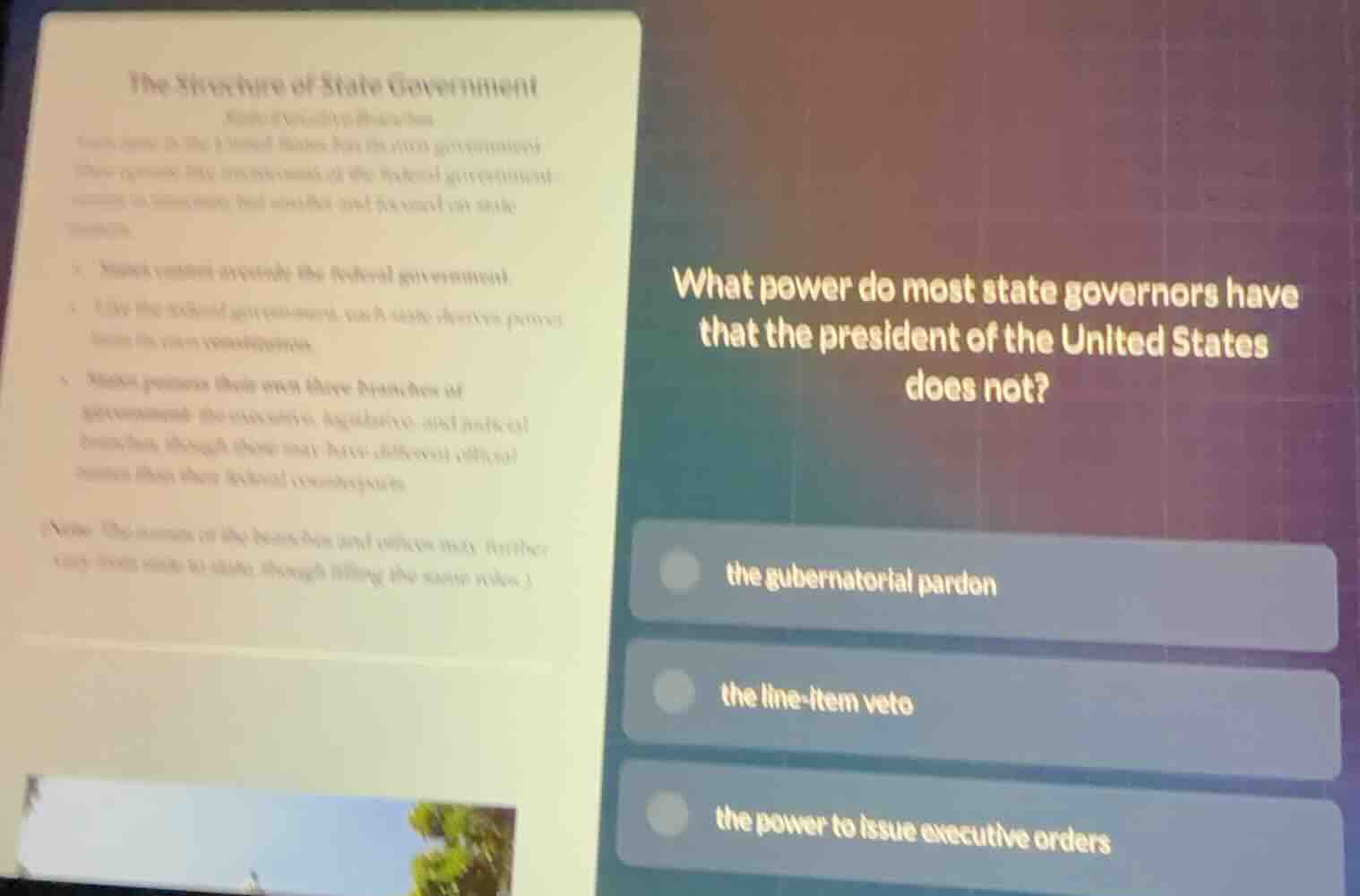
what power do most state governors have that the president of the united states does not?
- the gubernatorial pardon
- the line - item veto
- the power to issue executive orders
The U.S. President does not have the line-item veto (it was ruled unconstitutional for the federal executive), while most U.S. state governors possess this power to reject specific parts of appropriations bills without vetoing the entire bill. The presidential pardon exists at the federal level, and the president can issue executive orders, so these are not unique to governors.

Snap & solve any problem in the app
Get step-by-step solutions on Sovi AI
Photo-based solutions with guided steps
Explore more problems and detailed explanations
the line-item veto