QUESTION IMAGE
Question
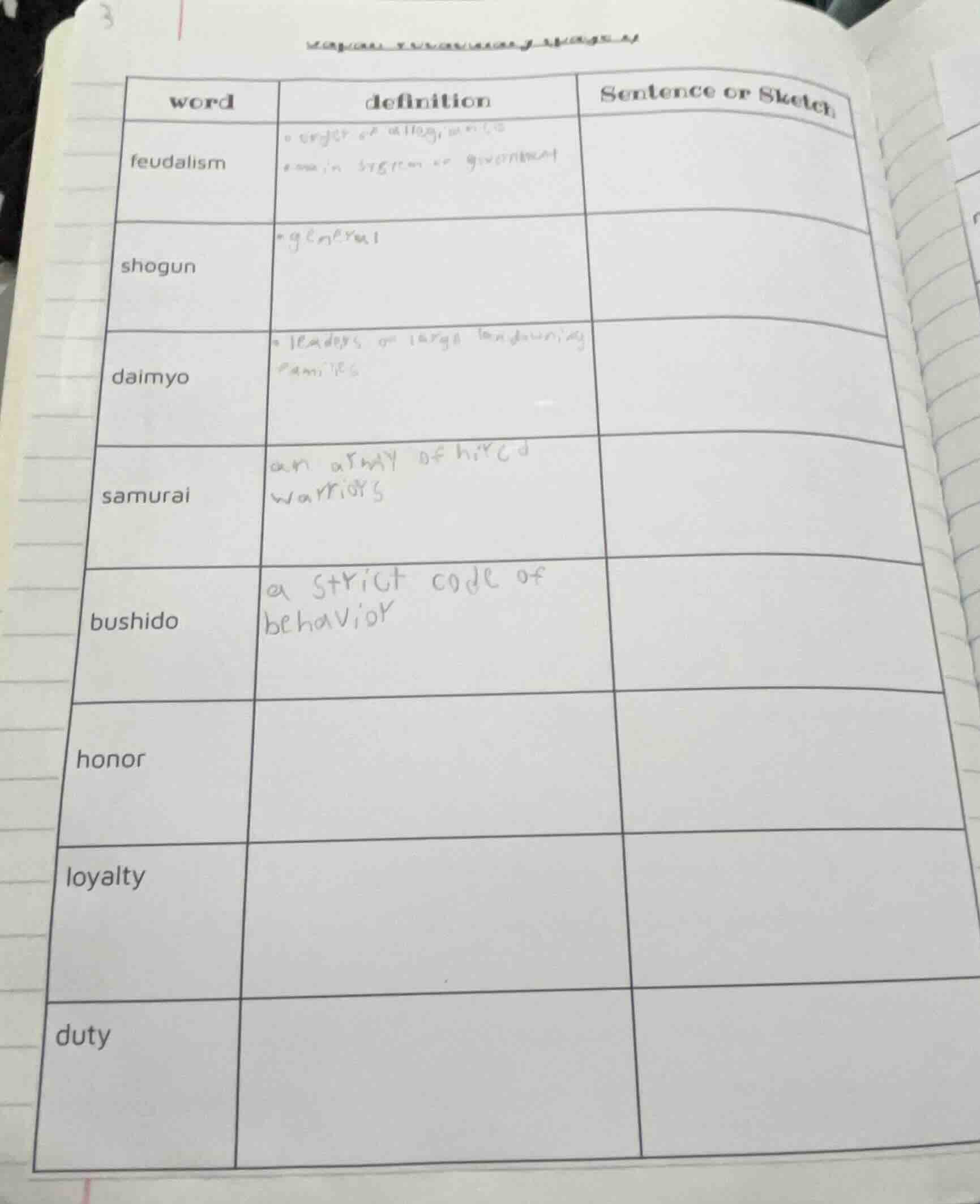
the table has three columns: word, definition, and sentence or sketch. the words listed are feudalism, shogun, daimyo, samurai, bushido, honor, loyalty, duty. some definitions are partially filled: feudalism has a partially legible definition, shogun is defined as general, daimyo as leaders of large landowning families, samurai as an army of hired warriors, bushido as a strict code of behavior, and the rest (honor, loyalty, duty) have empty definition and sentence/sketch columns.
To complete the table, we need to provide accurate definitions and sentences/sketches for each term related to Japanese feudalism:
1. Feudalism
- Definition: A social, economic, and political system in medieval Europe and Japan where land was granted by a lord to vassals in exchange for loyalty, military service, and other services. In Japan, it involved a hierarchy of lords (daimyo), vassals (samurai), and peasants.
- Sentence or Sketch: Feudalism in Japan structured society with the shogun at the top, followed by daimyo, samurai, and then peasants and merchants.
2. Shogun
- Definition: A military dictator or general who held real power in feudal Japan, while the emperor was a symbolic figurehead.
- Sentence or Sketch: The shogun ruled Japan during the feudal period, controlling the military and governing the country.
3. Daimyo
- Definition: Powerful Japanese feudal lords who owned large estates (han) and had their own samurai armies.
- Sentence or Sketch: Daimyo were vassals of the shogun and competed with each other for power and influence.
4. Samurai
- Definition: Professional warrior class in feudal Japan, who served the daimyo or shogun, followed a strict code of conduct (bushido), and were skilled in martial arts.
- Sentence or Sketch: Samurai were known for their loyalty, bravery, and adherence to the bushido code.
5. Bushido
- Definition: The strict code of conduct for samurai, emphasizing honor, loyalty, self-discipline, and self-sacrifice.
- Sentence or Sketch: Bushido guided samurai behavior, requiring them to be loyal to their lords, brave in battle, and honorable in all aspects of life.
6. Honor
- Definition: A sense of respect, integrity, and reputation that samurai and others in feudal Japan valued highly; it was central to the bushido code.
- Sentence or Sketch: For a samurai, honor was more important than life itself, and they would rather die than bring shame to their family or lord.
7. Loyalty
- Definition: Faithfulness and devotion to one's lord (daimyo or shogun) or family, a core value in feudal Japanese society, especially among samurai.
- Sentence or Sketch: Samurai demonstrated loyalty by serving their lords faithfully, even in the face of great danger.
8. Duty
- Definition: A moral or legal obligation to perform certain actions, such as a samurai's duty to protect their lord, or a peasant's duty to work the land.
- Sentence or Sketch: A samurai's duty included protecting their lord's estate, following the bushido code, and maintaining the honor of their family.
Now, filling in the table:
| Word | Definition | Sentence or Sketch |
|---|---|---|
| shogun | Military dictator/general ruling feudal Japan. | The shogun held real power while the emperor was symbolic. |
| daimyo | Powerful feudal lords with large estates and samurai armies. | Daimyo competed for power and served the shogun. |
| samurai | Professional warrior class following…

Snap & solve any problem in the app
Get step-by-step solutions on Sovi AI
Photo-based solutions with guided steps
Explore more problems and detailed explanations
To complete the table, we need to provide accurate definitions and sentences/sketches for each term related to Japanese feudalism:
1. Feudalism
- Definition: A social, economic, and political system in medieval Europe and Japan where land was granted by a lord to vassals in exchange for loyalty, military service, and other services. In Japan, it involved a hierarchy of lords (daimyo), vassals (samurai), and peasants.
- Sentence or Sketch: Feudalism in Japan structured society with the shogun at the top, followed by daimyo, samurai, and then peasants and merchants.
2. Shogun
- Definition: A military dictator or general who held real power in feudal Japan, while the emperor was a symbolic figurehead.
- Sentence or Sketch: The shogun ruled Japan during the feudal period, controlling the military and governing the country.
3. Daimyo
- Definition: Powerful Japanese feudal lords who owned large estates (han) and had their own samurai armies.
- Sentence or Sketch: Daimyo were vassals of the shogun and competed with each other for power and influence.
4. Samurai
- Definition: Professional warrior class in feudal Japan, who served the daimyo or shogun, followed a strict code of conduct (bushido), and were skilled in martial arts.
- Sentence or Sketch: Samurai were known for their loyalty, bravery, and adherence to the bushido code.
5. Bushido
- Definition: The strict code of conduct for samurai, emphasizing honor, loyalty, self-discipline, and self-sacrifice.
- Sentence or Sketch: Bushido guided samurai behavior, requiring them to be loyal to their lords, brave in battle, and honorable in all aspects of life.
6. Honor
- Definition: A sense of respect, integrity, and reputation that samurai and others in feudal Japan valued highly; it was central to the bushido code.
- Sentence or Sketch: For a samurai, honor was more important than life itself, and they would rather die than bring shame to their family or lord.
7. Loyalty
- Definition: Faithfulness and devotion to one's lord (daimyo or shogun) or family, a core value in feudal Japanese society, especially among samurai.
- Sentence or Sketch: Samurai demonstrated loyalty by serving their lords faithfully, even in the face of great danger.
8. Duty
- Definition: A moral or legal obligation to perform certain actions, such as a samurai's duty to protect their lord, or a peasant's duty to work the land.
- Sentence or Sketch: A samurai's duty included protecting their lord's estate, following the bushido code, and maintaining the honor of their family.
Now, filling in the table:
| Word | Definition | Sentence or Sketch |
|---|---|---|
| shogun | Military dictator/general ruling feudal Japan. | The shogun held real power while the emperor was symbolic. |
| daimyo | Powerful feudal lords with large estates and samurai armies. | Daimyo competed for power and served the shogun. |
| samurai | Professional warrior class following bushido, serving daimyo/shogun. | Samurai were skilled warriors loyal to their lords. |
| bushido | Strict code of conduct for samurai (honor, loyalty, self-discipline). | Bushido required samurai to be honorable and loyal. |
| honor | High respect, integrity, and reputation (central to bushido). | Samurai valued honor more than life, avoiding shame. |
| loyalty | Faithfulness to lord/family (core samurai value). | Samurai showed loyalty by serving their lords faithfully. |
| duty | Moral/legal obligation (e.g., samurai protecting lord, peasants working). | A samurai’s duty included defending their lord and upholding bushido. |