QUESTION IMAGE
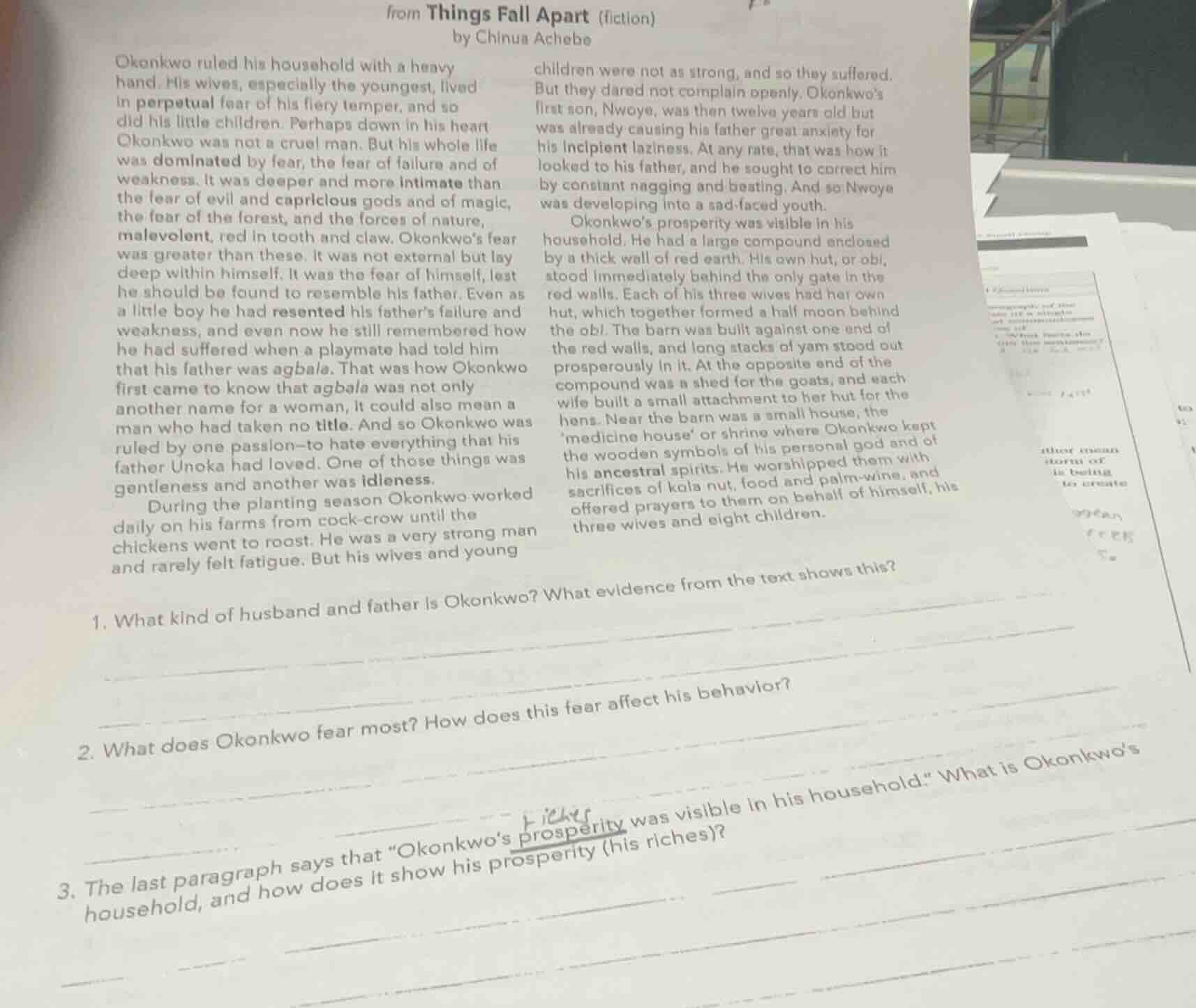
Question
from things fall apart (fiction)
by chinua achebe
okonkwo ruled his household with a heavy
hand. his wives, especially the youngest, lived
in perpetual fear of his fiery temper, and so
did his little children. perhaps down in his heart
okonkwo was not a cruel man. but his whole life
was dominated by fear, the fear of failure and of
weakness. it was deeper and more intimate than
the fear of evil and capricious gods and of magic,
the fear of the forest, and the forces of nature,
malevolent, red in tooth and claw. okonkwos fear
was greater than these. it was not external but lay
deep within himself. it was the fear of himself, lest
he should be found to resemble his father. even as
a little boy he had resented his fathers failure and
weakness, and even now he still remembered how
he had suffered when a playmate had told him
that his father was agbala. that was how okonkwo
first came to know that agbala was not only
another name for a woman, it could also mean a
man who had taken no title. and so okonkwo was
ruled by one passion—to hate everything that his
father unoka had loved. one of those things was
gentleness and another was idleness.
during the planting season okonkwo worked
daily on his farms from cock - crow until the
chickens went to roost. he was a very strong man
and rarely felt fatigue. but his wives and young
children were not as strong, and so they suffered.
but they dared not complain openly. okonkwos
first son, nwoye, was then twelve years old but
was already causing his father great anxiety for
his incipient laziness. at any rate, that was how it
looked to his father, and he sought to correct him
by constant nagging and beating. and so nwoye
was developing into a sad - faced youth.
okonkwos prosperity was visible in his
household. he had a large compound enclosed
by a thick wall of red earth. his own hut, or obi,
stood immediately behind the only gate in the
red walls. each of his three wives had her own
hut, which together formed a half moon behind
the obi. the barn was built against one end of
the red walls, and long stacks of yam stood out
prosperously in it. at the opposite end of the
compound was a shed for the goats, and each
wife built a small attachment to her hut for the
hens. near the barn was a small house, the
medicine house or shrine where okonkwo kept
the wooden symbols of his personal god and of
his ancestral spirits. he worshipped them with
sacrifices of kola nut, food and palm - wine, and
offered prayers to them on behalf of himself, his
three wives and eight children.
- what kind of husband and father is okonkwo? what evidence from the text shows this?
- what does okonkwo fear most? how does this fear affect his behavior?
- the last paragraph says that okonkwos prosperity was visible in his household. what is okonkwos
household, and how does it show his prosperity (his riches)?
Question 1
To determine what kind of husband and father Okonkwo is, we analyze the text:
- As a husband: The text states "Okonkwo ruled his household with a heavy hand. His wives, especially the youngest, lived in perpetual fear of his fiery temper". This shows he is strict and intimidating, ruling with a heavy hand and causing fear in his wives.
- As a father: "Okonkwo's first son, Nwoye, was then twelve years old but was already causing his father great anxiety for his incipient laziness. At any rate, that was how it looked to his father, and he sought to correct him by constant nagging and beating". This indicates he is harsh and strict, using nagging and beating to correct his son, which makes Nwoye a "sad - faced youth". Also, his children "lived in perpetual fear of his fiery temper", showing he is feared by his children.
To find what Okonkwo fears most and how it affects his behavior:
- What he fears most: The text says "But his whole life was dominated by fear, the fear of failure and of weakness... It was the fear of himself, lest he should be found to resemble his father". So he fears being like his father (who was seen as a failure and weak) and also fears failure and weakness in general.
- How it affects his behavior: "And so Okonkwo was ruled by one passion - to hate everything that his father Unoka had loved. One of those things was gentleness and another was idleness". Also, he rules his household with a heavy hand, is strict with his family, and works extremely hard ( "During the planting season Okonkwo worked daily on his farms from cock - crow until the chickens went to roost") to avoid being seen as weak or a failure like his father. He is harsh with his family as he doesn't want to be associated with the traits he saw in his father (gentleness, idleness).
To determine Okonkwo's household and how it shows his prosperity:
- Okonkwo's household: He has a "large compound enclosed by a thick wall of red earth". He has his own hut (obi), each of his three wives has her own hut (forming a half - moon behind his obi), a barn with "long stacks of yam" (a sign of wealth in his society), a shed for goats, each wife has a small attachment for hens, and a "medicine house" or shrine.
- How it shows prosperity: The large compound with a thick red - earth wall shows a substantial dwelling. The barn with "long stacks of yam" is a sign of agricultural success and wealth (yams are a valuable crop). Having multiple huts (his own, three for his wives) and separate structures for animals (goat shed, hen attachments) and a shrine shows a well - established and prosperous household with resources for housing, farming, and religious practices.

Snap & solve any problem in the app
Get step-by-step solutions on Sovi AI
Photo-based solutions with guided steps
Explore more problems and detailed explanations
As a husband, Okonkwo is strict and intimidating. Evidence: "Okonkwo ruled his household with a heavy hand. His wives, especially the youngest, lived in perpetual fear of his fiery temper". As a father, he is harsh and strict. Evidence: He corrects his son Nwoye "by constant nagging and beating", and his children "lived in perpetual fear of his fiery temper".