QUESTION IMAGE
Question
tracker - pangolin
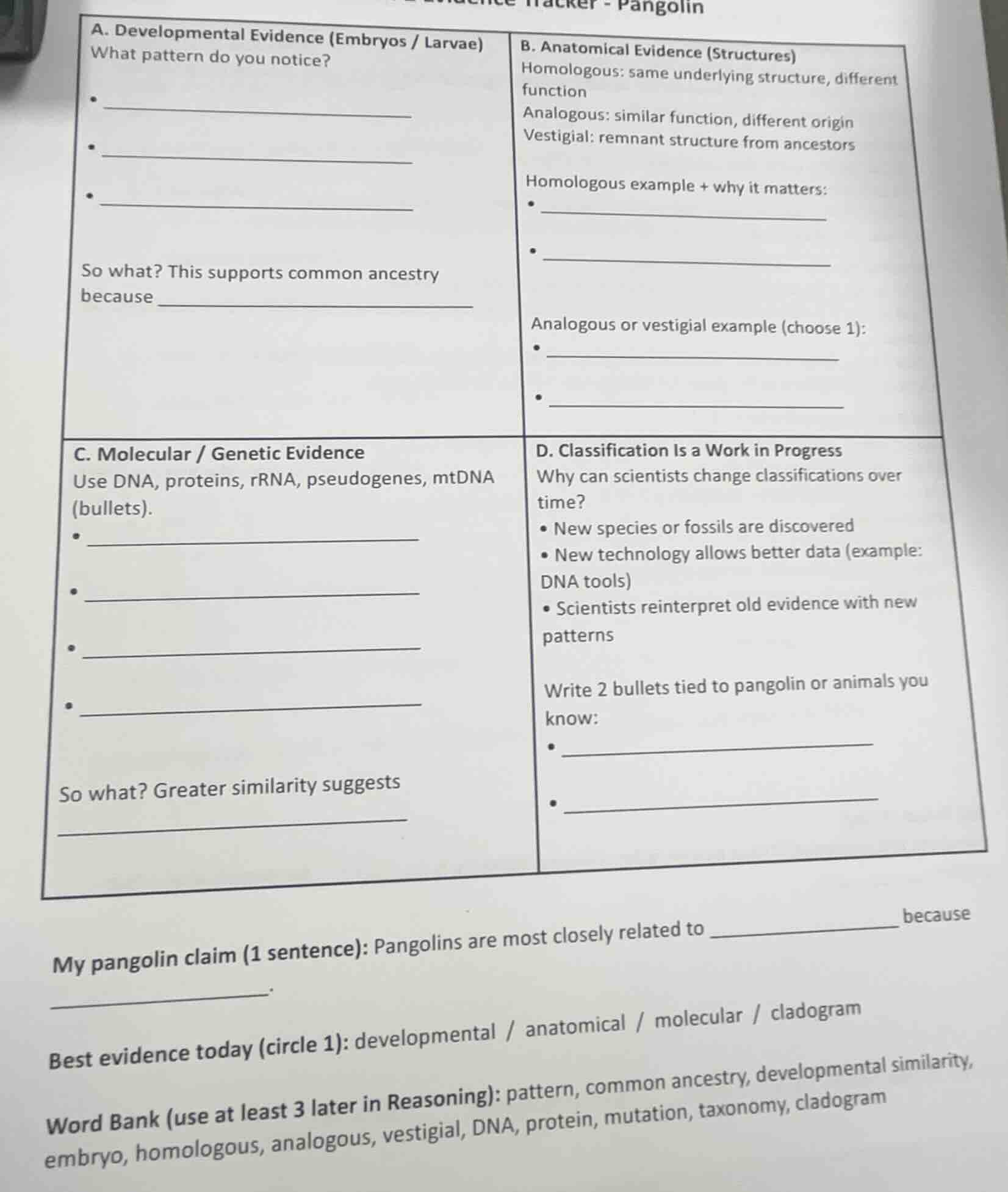
a. developmental evidence (embryos / larvae)
what pattern do you notice?
•
•
•
so what? this supports common ancestry
because
b. anatomical evidence (structures)
homologous: same underlying structure, different
function
analogous: similar function, different origin
vestigial: remnant structure from ancestors
homologous example + why it matters:
•
•
analogous or vestigial example (choose 1):
•
•
c. molecular / genetic evidence
use dna, proteins, rrna, pseudogenes, mtdna
(bullets).
•
•
•
•
so what? greater similarity suggests
d. classification is a work in progress
why can scientists change classifications over
time?
- new species or fossils are discovered
- new technology allows better data (example:
dna tools)
- scientists reinterpret old evidence with new
patterns
write 2 bullets tied to pangolin or animals you
know:
•
•
my pangolin claim (1 sentence): pangolins are most closely related to because
.
best evidence today (circle 1): developmental / anatomical / molecular / cladogram
word bank (use at least 3 later in reasoning): pattern, common ancestry, developmental similarity,
embryo, homologous, analogous, vestigial, dna, protein, mutation, taxonomy, cladogram
Section A (Developmental Evidence)
- Patterns are based on typical embryonic similarities across vertebrates. The link to common ancestry is shared developmental blueprints.
Section B (Anatomical Evidence)
- Homologous example uses a structure shared with pangolins' relatives; vestigial example uses a non-functional remnant structure.
Section C (Molecular/Genetic Evidence)
- Points are common genetic markers used to compare relatedness; similarity links to shared ancestry.
Section D (Classification is a Work in Progress)
- Examples are tied to pangolin-specific taxonomic updates or new discoveries.
Final Claim & Evidence
- The claim uses established genetic data linking pangolins to carnivorans, with molecular evidence being the most robust modern tool.

Snap & solve any problem in the app
Get step-by-step solutions on Sovi AI
Photo-based solutions with guided steps
Explore more problems and detailed explanations
A. Developmental Evidence (Embryos / Larvae)
What pattern do you notice?
- Early embryos have similar body plans
- Shared tail/gill slit structures early on
- Developmental stages follow identical sequence
So what? This supports common ancestry because shared embryonic blueprints come from shared genes.
B. Anatomical Evidence (Structures)
Homologous example + why it matters:
- Pangolin forelimb bones match cat forelimbs
- Shows shared tetrapod ancestor bone structure
Analogous or vestigial example (choose 1):
- Vestigial: Pangolin pelvic spurs (non-functional)
- Remnant of hindlimb structures from ancestors
C. Molecular / Genetic Evidence
- High DNA similarity between pangolins and carnivorans
- Shared pseudogenes related to tooth development
- Matching protein sequences in blood clotting factors
- Conserved rRNA gene sequences across close relatives
So what? Greater similarity suggests more recent shared ancestry.
D. Classification Is a Work in Progress
Write 2 bullets tied to pangolin or animals you know:
- New pangolin fossil finds in Africa shifted their taxonomic grouping from edentates to carnivorans
- DNA sequencing revealed tree pangolins are a distinct species from previously grouped Asian pangolins
My pangolin claim (1 sentence): Pangolins are most closely related to carnivorans (cats, dogs, bears) because their molecular DNA sequences show higher similarity to this group than to edentates.
Best evidence today (circle 1): molecular