QUESTION IMAGE
Question
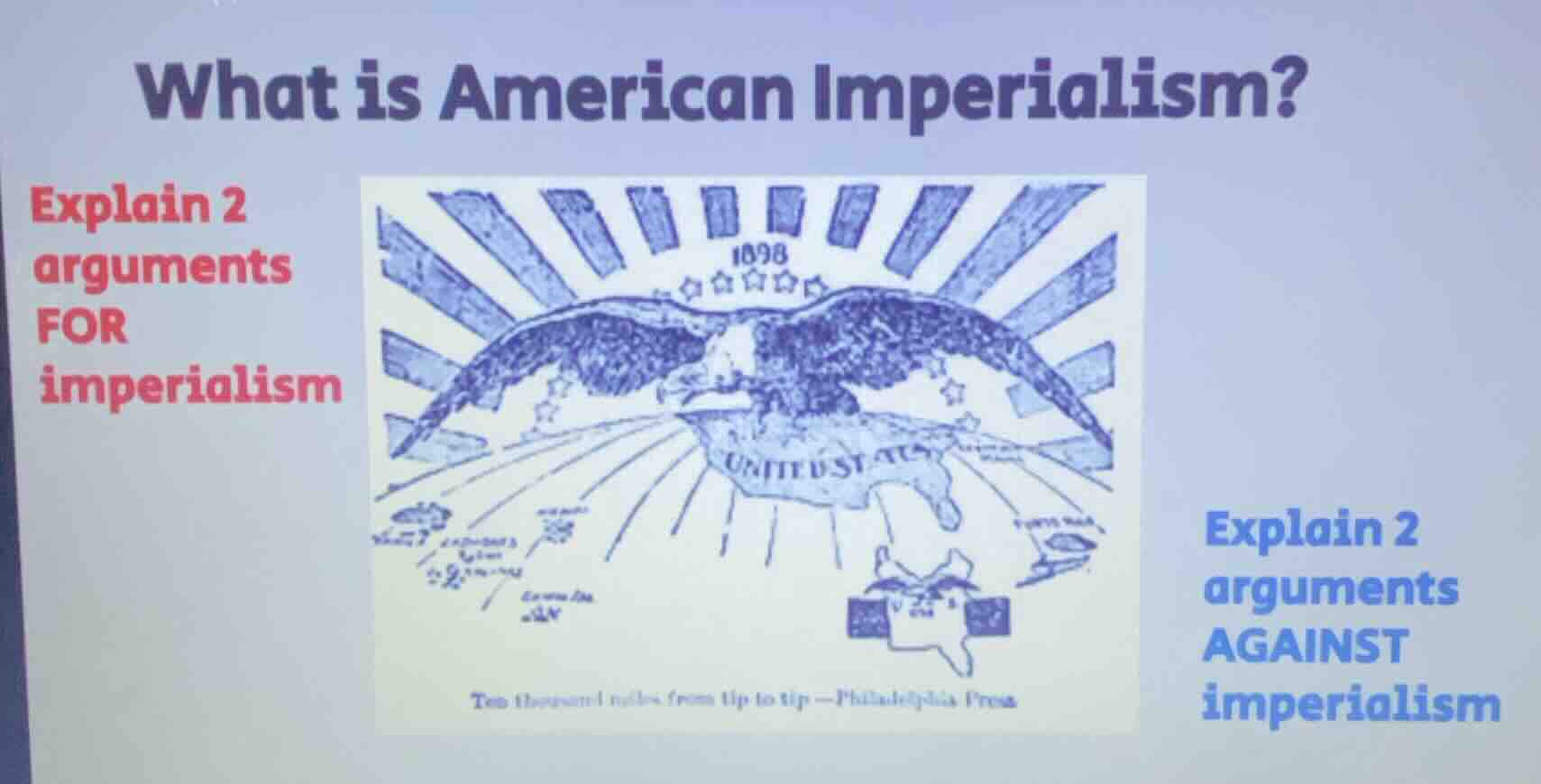
what is american imperialism?
explain 2 arguments for imperialism
explain 2 arguments against imperialism
Brief Explanations
Arguments For American Imperialism:
- Economic Expansion: Proponents argued that controlling overseas territories would provide new markets for American manufactured goods and access to cheap raw materials (like sugar, rubber, and minerals) to fuel domestic industries, boosting U.S. economic growth.
- Cultural/ Civilizing Mission: Imperialists claimed the U.S. had a moral duty to spread "American values" (democracy, Christianity, and modern infrastructure) to "uncivilized" or underdeveloped nations, framing it as a benevolent effort to lift these societies up.
Arguments Against American Imperialism:
- Violation of Democratic Principles: Critics argued that ruling over foreign peoples without their consent directly contradicted the U.S. founding ideals of self-governance and "no taxation without representation," making the U.S. a hypocritical power.
- Military and Financial Burden: Opponents pointed out that maintaining overseas colonies required large military deployments and ongoing financial investments to suppress uprisings and administer territories, diverting resources from domestic needs like social programs and infrastructure.

Snap & solve any problem in the app
Get step-by-step solutions on Sovi AI
Photo-based solutions with guided steps
Explore more problems and detailed explanations
Arguments FOR American Imperialism:
- Economic Expansion: Imperialism opened new markets and access to cheap raw materials for U.S. industries, driving domestic economic growth.
- Civilizing Mission: Advocates claimed the U.S. had a moral duty to spread democratic values, Christianity, and modern development to underdeveloped regions.
Arguments AGAINST American Imperialism:
- Contradiction of Democratic Ideals: Ruling over foreign populations without their consent violated the U.S. foundational principle of self-governance, creating a hypocritical system.
- Resource Diversion: Maintaining overseas colonies required heavy military and financial investment, taking resources away from domestic priorities like social services and infrastructure.