QUESTION IMAGE
Question
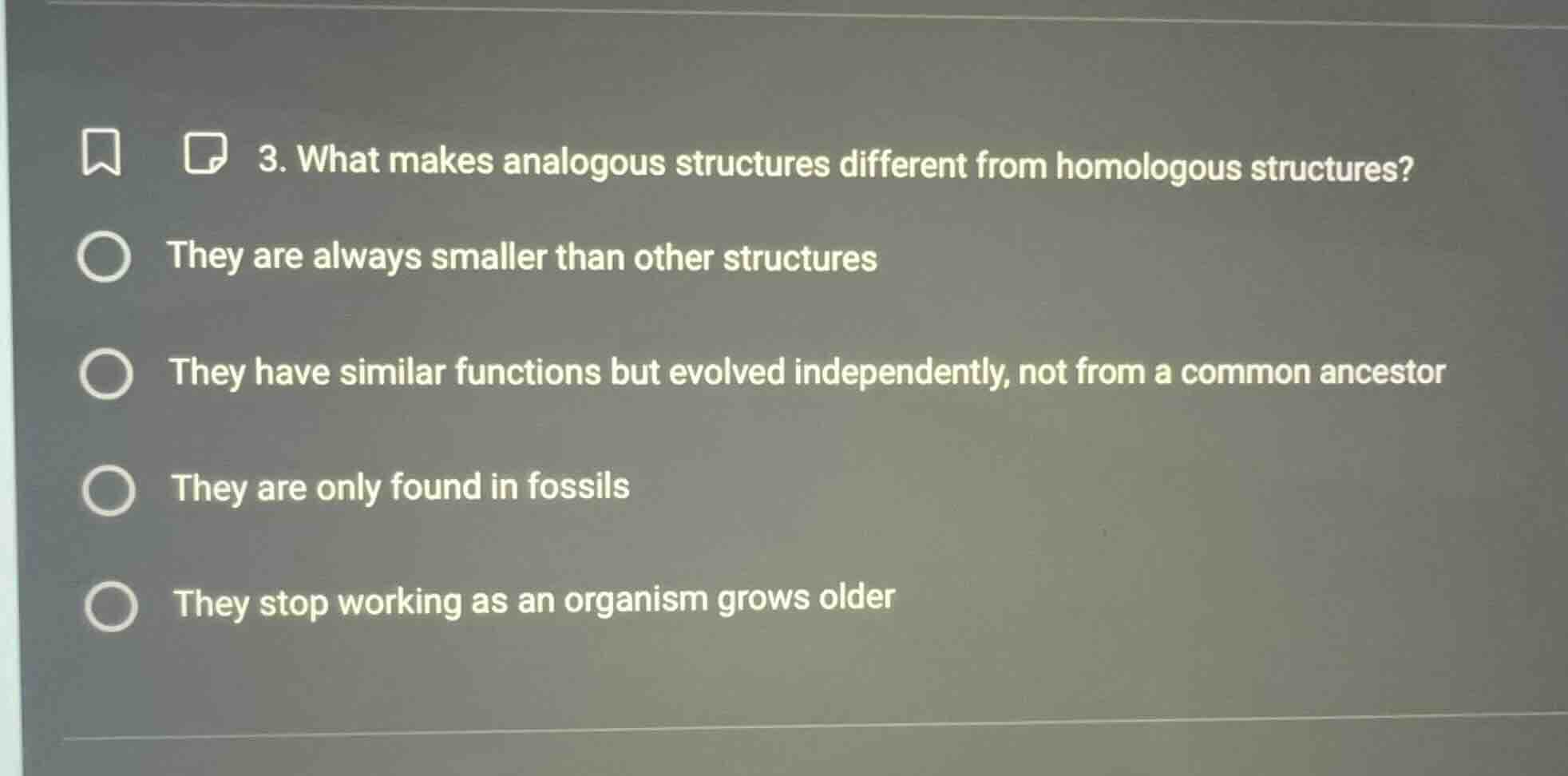
- what makes analogous structures different from homologous structures?
they are always smaller than other structures
they have similar functions but evolved independently, not from a common ancestor
they are only found in fossils
they stop working as an organism grows older
Brief Explanations
To determine the difference between analogous and homologous structures:
- Homologous structures are inherited from a common ancestor (similar structure, may differ in function).
- Analogous structures: different species develop similar functions (e.g., wings in insects and birds) independently, with no common ancestral structure for that function.
- Option 1: Size isn’t a defining difference.
- Option 3: Analogous structures exist in living organisms, not just fossils.
- Option 4: Structures don’t “stop working” due to being analogous/homologous.
Only option 2 matches the definition of analogous structures.

Snap & solve any problem in the app
Get step-by-step solutions on Sovi AI
Photo-based solutions with guided steps
Explore more problems and detailed explanations
B. They have similar functions but evolved independently, not from a common ancestor