QUESTION IMAGE
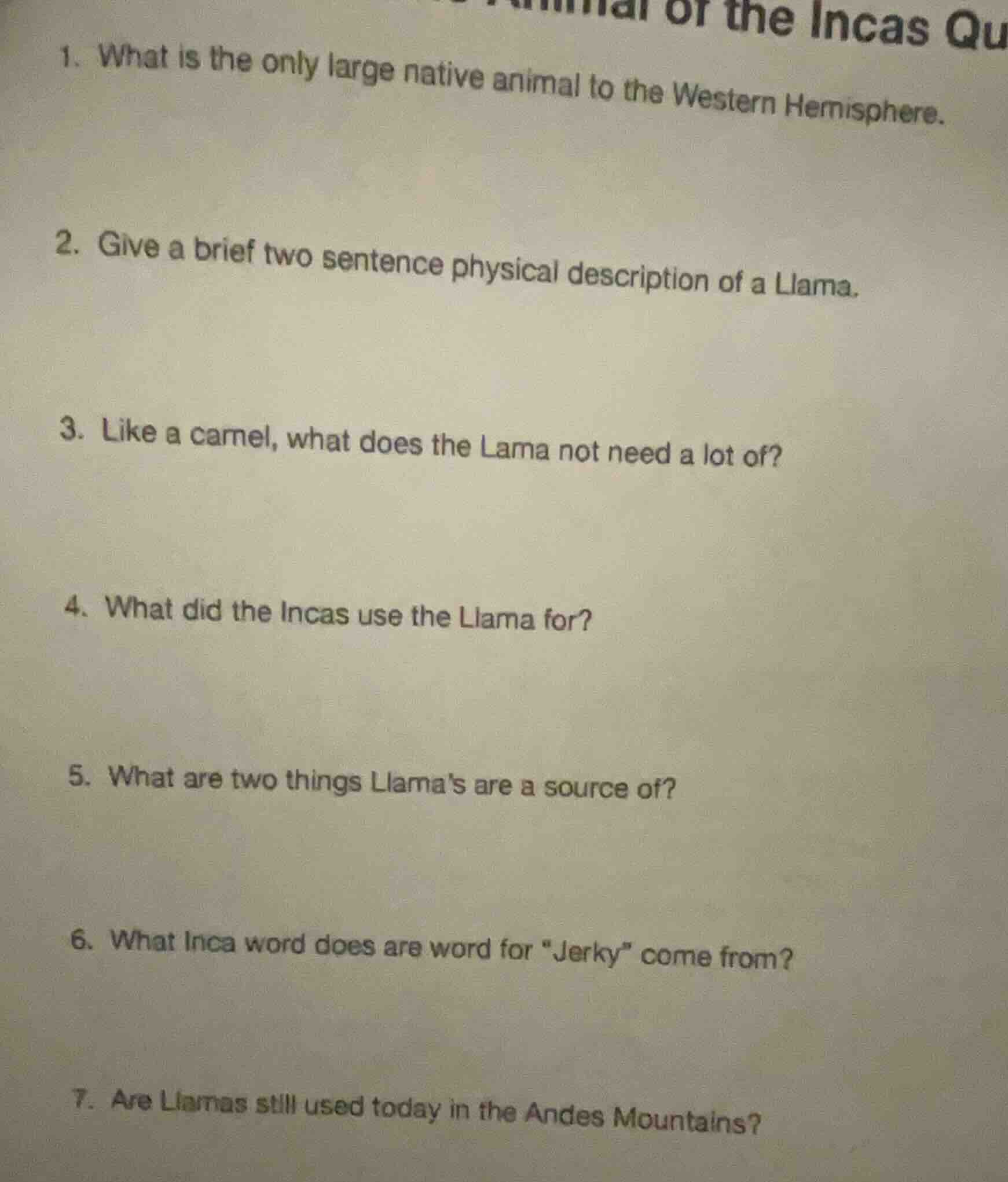
Question
- what is the only large native animal to the western hemisphere.
- give a brief two sentence physical description of a llama.
- like a camel, what does the lama not need a lot of?
- what did the incas use the llama for?
- what are two things llamas are a source of?
- what inca word does are word for \jerky\ come from?
- are llamas still used today in the andes mountains?
Brief Explanations
- Identifies the large native Western Hemisphere animal tied to the Incas.
- Provides a concise two-sentence physical overview of llamas.
- Notes a shared physiological trait between llamas and camels related to resource needs.
- Lists the historical uses of llamas by the Inca civilization.
- Names two resources derived from llamas.
- Traces the English word "jerky" to its Inca linguistic root.
- Confirms the modern status of llama use in the Andes.

Snap & solve any problem in the app
Get step-by-step solutions on Sovi AI
Photo-based solutions with guided steps
Explore more problems and detailed explanations
- The llama (or the South American camelid/llama, specifically)
- Llamas are large, furry camelids with long, slender necks and a rounded body covered in thick, soft wool that can range in color from white and brown to black. They have a small, triangular head with curved ears that stick out sideways, and they lack the humps of their Old World camel relatives.
- Water
- The Incas used llamas as pack animals to transport goods across mountainous terrain, and they also relied on them for wool, meat, and fertilizer.
- Wool (for textiles) and meat (for food)
- The Inca word ch'arki
- Yes, llamas are still used today in the Andes Mountains, primarily as pack animals and for their wool and meat, just as they were by the Incas.