QUESTION IMAGE
Question
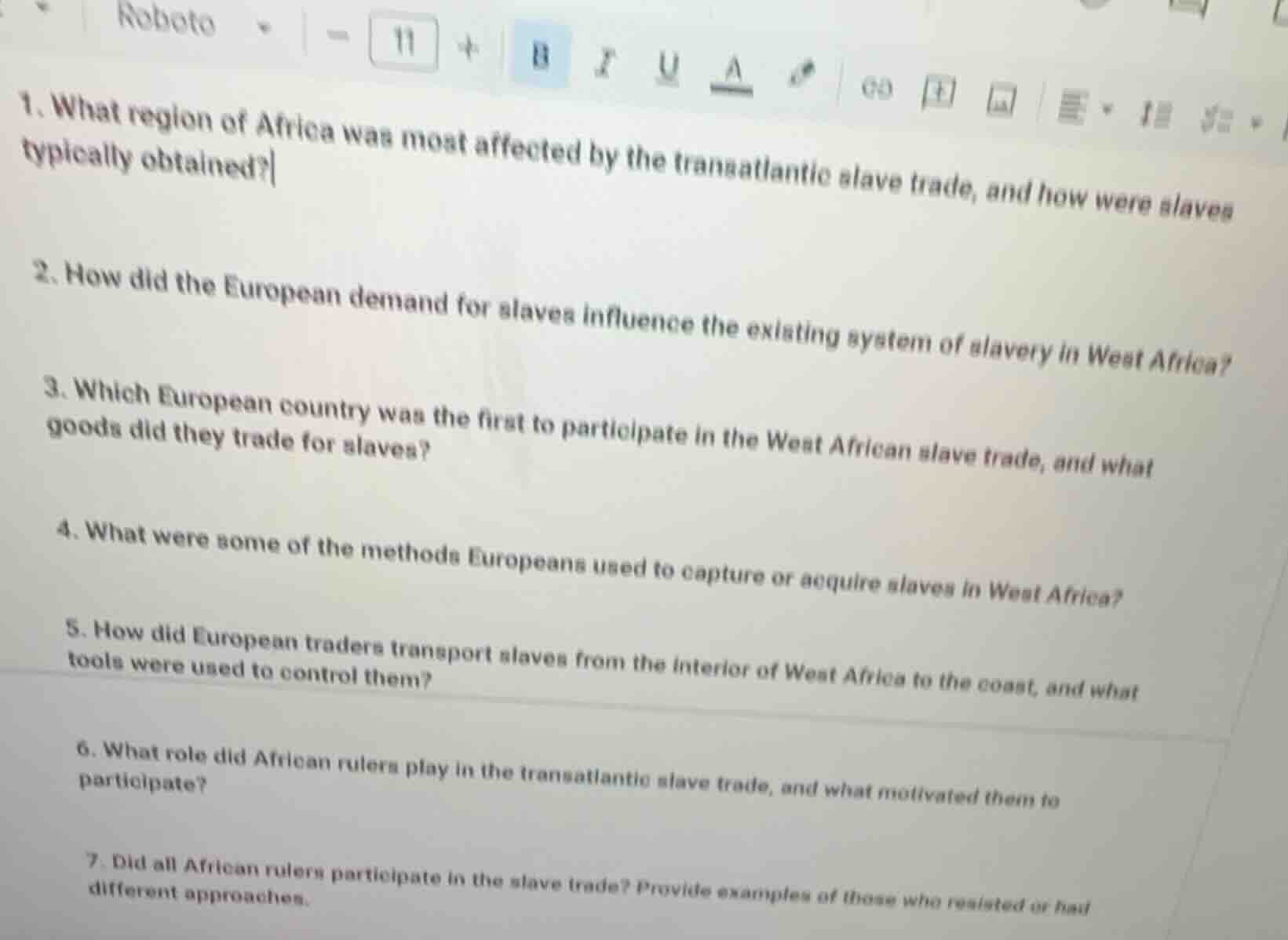
- what region of africa was most affected by the transatlantic slave trade, and how were slaves typically obtained?
- how did the european demand for slaves influence the existing system of slavery in west africa?
- which european country was the first to participate in the west african slave trade, and what goods did they trade for slaves?
- what were some of the methods europeans used to capture or acquire slaves in west africa?
- how did european traders transport slaves from the interior of west africa to the coast, and what tools were used to control them?
- what roles did african rulers play in the transatlantic slave trade, and what motivated them to participate?
- did all african rulers participate in the slave trade? provide examples of those who resisted or had different approaches.
Brief Explanations
- West/Central Africa bore the brunt of the transatlantic slave trade. Slaves were mostly captured via inter-African wars, raids, or sold as debtors or criminals by African elites to European traders.
- European demand expanded slavery from a small-scale, mostly domestic/communal practice into a large, commercialized system focused on exporting enslaved people for profit, increasing intergroup violence to capture more people.
- Portugal was the first European country to participate. They traded manufactured goods like firearms, metal tools, textiles, and rum for enslaved people.
- Europeans mostly relied on African intermediaries to capture enslaved people via raids or wars; some directly traded goods for enslaved people supplied by African rulers, and a small number conducted their own coastal raids.
- Enslaved people were forced to walk long overland routes (called "coffles") to the coast, bound by ropes or yokes. Tools like iron shackles, collars, and branding irons were used to control and mark them as property.
- Many African rulers acted as suppliers, capturing or selling enslaved people to Europeans in exchange for firearms, luxury goods, and political power. They were motivated by gaining military advantage over rivals, accumulating wealth, and strengthening their rule.
- No, not all African rulers participated. For example, the Kingdom of Kongo's King Afonso I initially traded but later protested the slave trade's harm to his kingdom. The Kingdom of Benin restricted slave trading for much of the period, focusing on other goods instead.

Snap & solve any problem in the app
Get step-by-step solutions on Sovi AI
Photo-based solutions with guided steps
Explore more problems and detailed explanations
- Most affected region: West and Central Africa. Slaves were obtained through inter-African wars, raids, and sales of debtors/criminals by African elites to Europeans.
- It transformed slavery from a small, domestic system into a large, profit-driven commercial trade, increasing violent raids and wars to capture more enslaved people.
- First country: Portugal. Traded goods: Firearms, metal tools, textiles, rum.
- Relied on African intermediaries for raids/wars; traded goods for enslaved people from African rulers; rare direct coastal raids.
- Transport: Forced overland marches (coffles) to the coast. Control tools: Iron shackles, collars, branding irons.
- Role: Supplied enslaved people to Europeans. Motivation: Gain firearms, wealth, and political power over rivals.
- No. Examples: King Afonso I of Kongo protested the trade; the Kingdom of Benin restricted slave trading.