QUESTION IMAGE
Question
q.6. what term is used to describe when no members of a species remain alive?
a) adaptation
b) biomes
c) succession
d) extinction
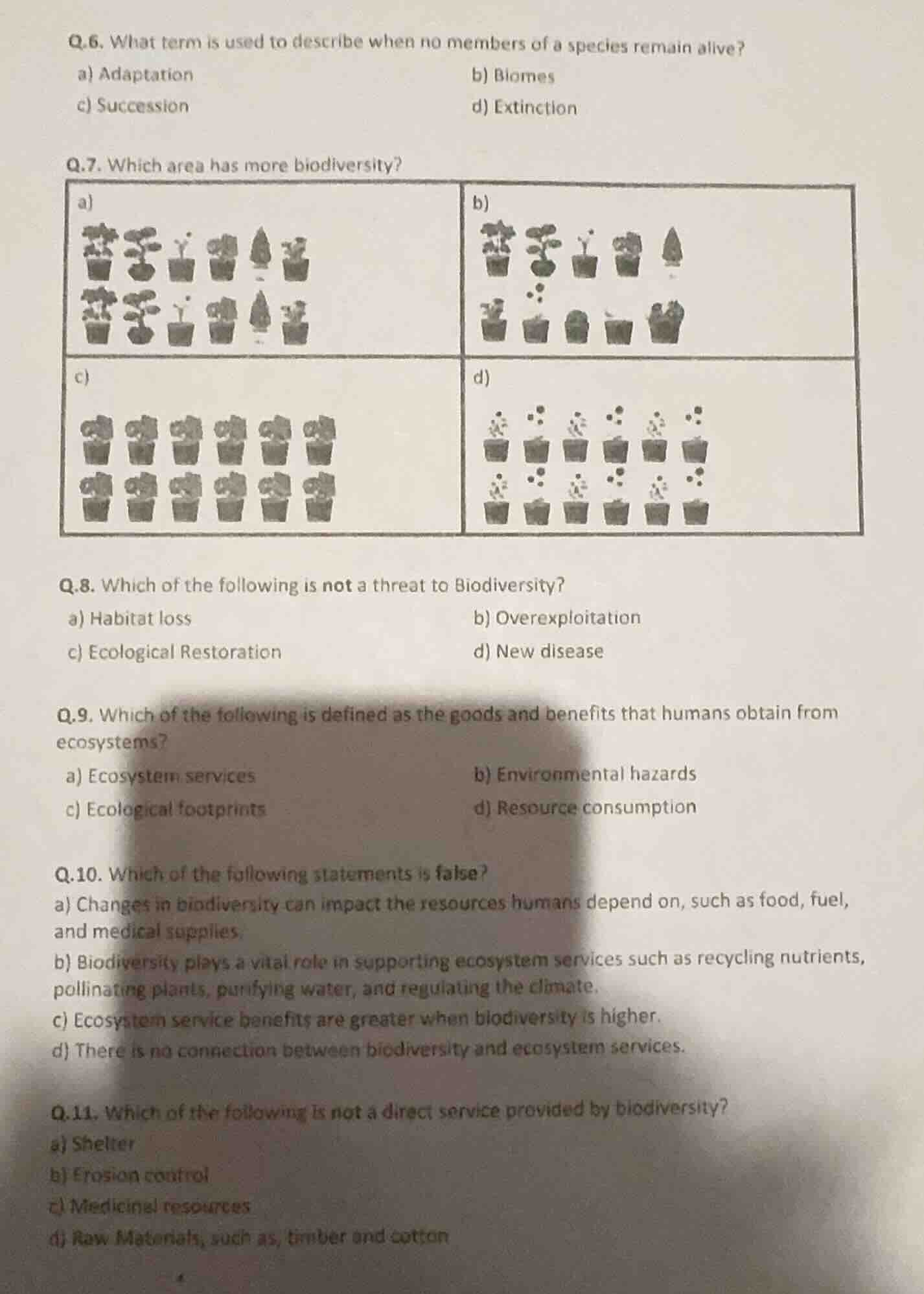
q.7. which area has more biodiversity?
chart with four sections a, b, c, d showing different plant arrangements
q.8. which of the following is not a threat to biodiversity?
a) habitat loss
b) overexploitation
c) ecological restoration
d) new disease
q.9. which of the following is defined as the goods and benefits that humans obtain from ecosystems?
a) ecosystem services
b) environmental hazards
c) ecological footprints
d) resource consumption
q.10. which of the following statements is false?
a) changes in biodiversity can impact the resources humans depend on, such as food, fuel, and medical supplies.
b) biodiversity plays a vital role in supporting ecosystem services such as recycling nutrients, pollinating plants, purifying water, and regulating the climate.
c) ecosystem service benefits are greater when biodiversity is higher.
d) there is no connection between biodiversity and ecosystem services.
q.11. which of the following is not a direct service provided by biodiversity?
a) shelter
b) erosion control
c) medicinal resources
d) raw materials, such as, timber and cotton
Q.6
- Adaptation is about species adjusting to environment.
- Biomes are large ecological areas.
- Succession is ecological change over time.
- Extinction is when no members of a species remain alive.
Biodiversity is about variety of species. Option b has more different types of plants compared to others (a has repetition, c and d have less variety).
- Habitat loss, overexploitation, new disease harm biodiversity.
- Ecological Restoration aims to restore and protect biodiversity, so it's not a threat.

Snap & solve any problem in the app
Get step-by-step solutions on Sovi AI
Photo-based solutions with guided steps
Explore more problems and detailed explanations
d) Extinction