QUESTION IMAGE
Question
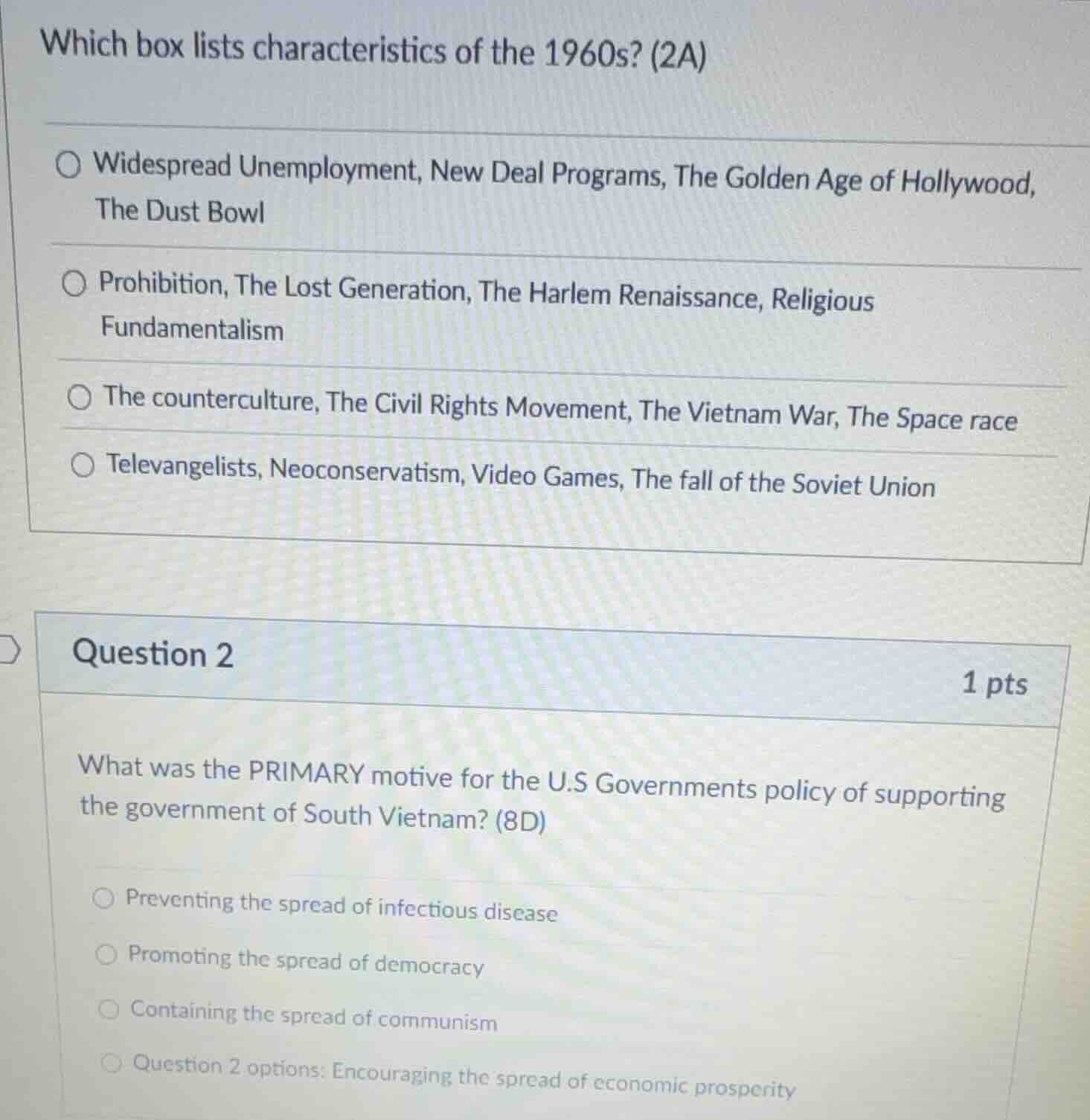
which box lists characteristics of the 1960s? (2a)
widespread unemployment, new deal programs, the golden age of hollywood, the dust bowl
prohibition, the lost generation, the harlem renaissance, religious fundamentalism
the counterculture, the civil rights movement, the vietnam war, the space race
televangelists, neoconservatism, video games, the fall of the soviet union
question 2
1 pts
what was the primary motive for the u.s governments policy of supporting the government of south vietnam? (8d)
preventing the spread of infectious disease
promoting the spread of democracy
containing the spread of communism
question 2 options: encouraging the spread of economic prosperity
Question 1 (Which box lists characteristics of the 1960s?)
- Analyze each option:
- First option: New Deal (1930s), Dust Bowl (1930s), Golden Age of Hollywood (1920s - 1950s), unemployment (Great Depression era) – not 1960s.
- Second option: Prohibition (1920s), Harlem Renaissance (1920s), Lost Generation (1920s) – not 1960s.
- Third option: Counterculture, Civil Rights Movement, Vietnam War, Space Race all peaked or occurred in the 1960s.
- Fourth option: Fall of Soviet Union (1991), video games (late 20th - 21st), televangelists (1970s - 80s) – not 1960s.
- Context: Cold War policy of containment. The U.S supported South Vietnam to stop communism from spreading (domino theory – if South Vietnam fell to communism, other countries might too).
- Eliminate other options:
- Preventing disease: Not related to Vietnam policy.
- Promoting democracy: Secondary; main was containment.
- Economic prosperity: Not the primary Cold War - era motive for Vietnam support.

Snap & solve any problem in the app
Get step-by-step solutions on Sovi AI
Photo-based solutions with guided steps
Explore more problems and detailed explanations
The counterculture, The Civil Rights Movement, The Vietnam War, The Space race