QUESTION IMAGE
Question
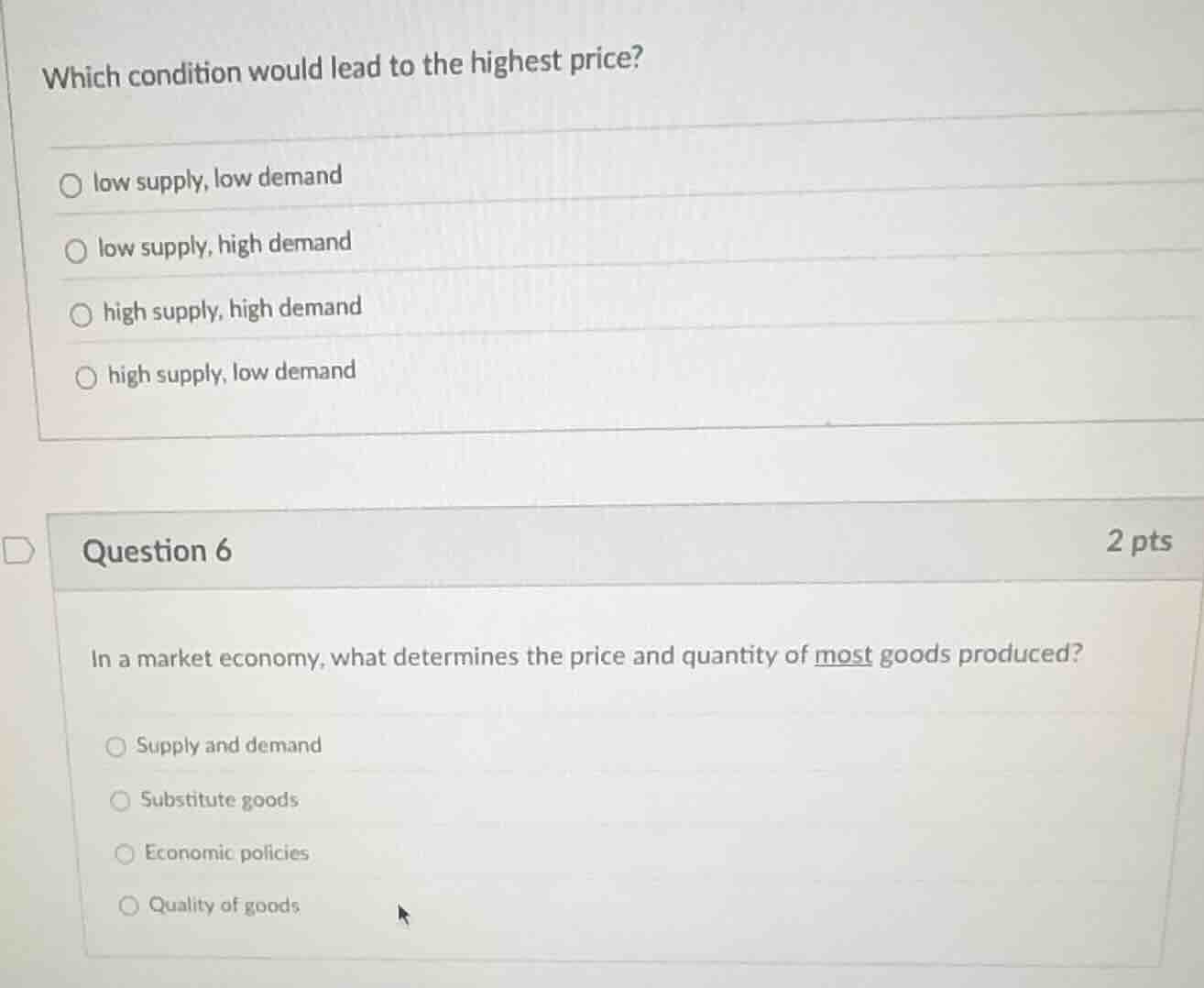
which condition would lead to the highest price?
low supply, low demand
low supply, high demand
high supply, high demand
high supply, low demand
question 6
2 pts
in a market economy, what determines the price and quantity of most goods produced?
supply and demand
substitute goods
economic policies
quality of goods
First Question (Which condition would lead to the highest price?)
To determine the condition for the highest price, we analyze supply - demand relationships. When supply is low (limited quantity available) and demand is high (many people want the good), competition among buyers for the scarce good drives prices up.
- For "low supply, low demand": Low demand means few buyers, so prices won't be pushed up, and low supply's upward pressure is offset by low demand.
- For "low supply, high demand": Limited supply and high buyer interest create strong upward price pressure.
- For "high supply, high demand": High supply means more goods available, so the upward pressure from high demand is reduced.
- For "high supply, low demand": Low demand and high supply lead to downward price pressure.
In a market economy, the interaction of supply (quantity producers are willing to sell at different prices) and demand (quantity consumers are willing to buy at different prices) determines the equilibrium price and quantity.
- "Substitute goods" affect demand for a particular good but don't determine overall price - quantity of most goods.
- "Economic policies" can influence the market but are not the primary determinant of price - quantity for most goods in a market economy; they are more of a regulatory or influencing factor.
- "Quality of goods" affects demand for a specific good's quality - tier but not the general price - quantity of most goods.

Snap & solve any problem in the app
Get step-by-step solutions on Sovi AI
Photo-based solutions with guided steps
Explore more problems and detailed explanations
low supply, high demand