QUESTION IMAGE
Question
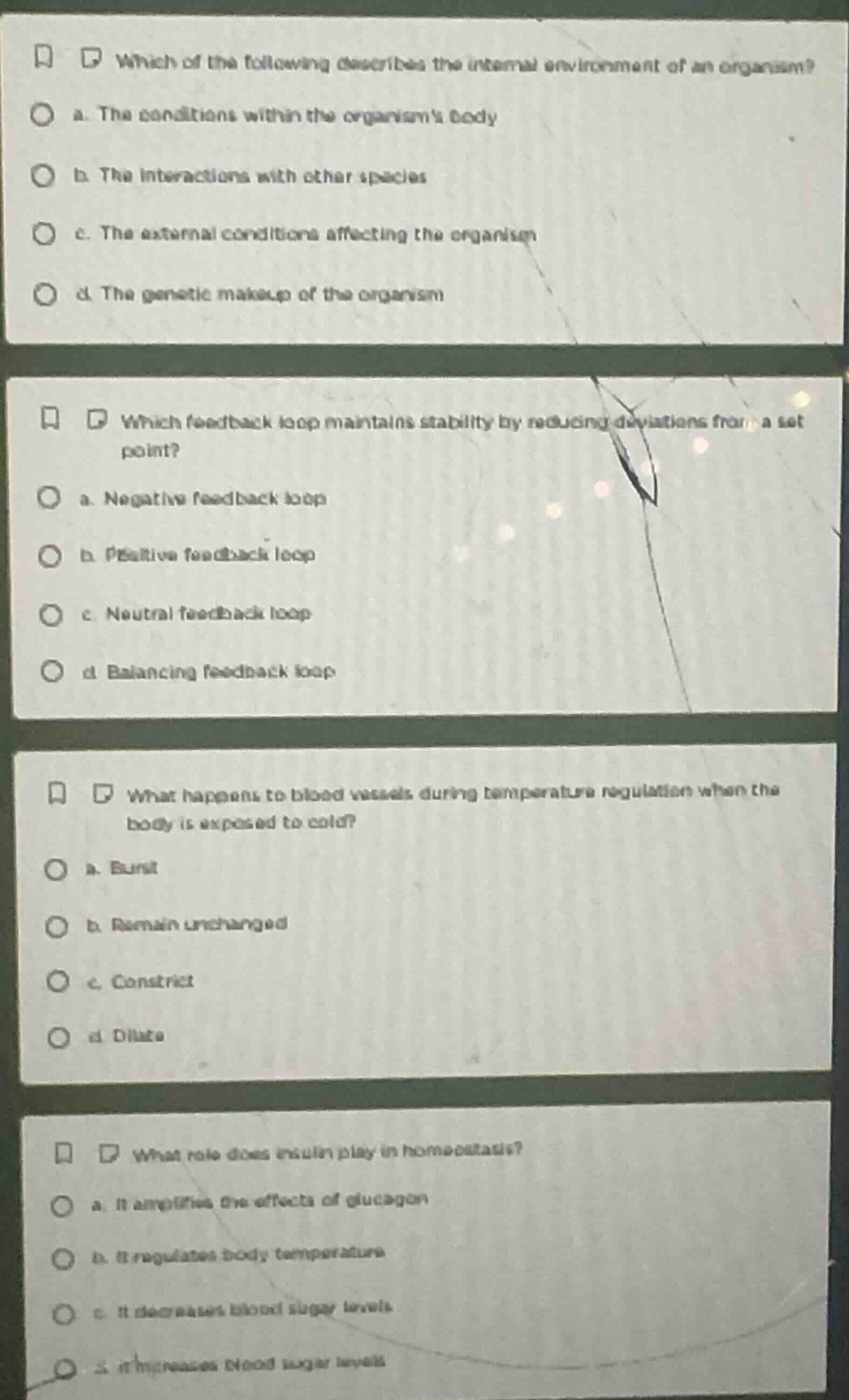
which of the following describes the internal environment of an organism?
a. the conditions within the organisms body
b. the interactions with other species
c. the external conditions affecting the organism
d. the genetic makeup of the organism
which feedback loop maintains stability by reducing deviations from a set point?
a. negative feedback loop
b. positive feedback loop
c. neutral feedback loop
d. balancing feedback loop
what happens to blood vessels during temperature regulation when the body is exposed to cold?
a. burst
b. remain unchanged
c. constrict
d. dilate
what role does insulin play in homeostasis?
a. it amplifies the effects of glucagon
b. it regulates body temperature
c. it decreases blood sugar levels
d. it increases blood sugar levels
- The internal environment refers to the conditions inside an organism's body, distinguishing it from external factors, species interactions, and genetics.
- Negative feedback loops counteract deviations from a set point to maintain stability, unlike positive loops that amplify changes.
- In cold conditions, blood vessels constrict to reduce heat loss from the body's surface.
- Insulin acts to lower blood glucose levels by promoting glucose uptake and storage, a key part of blood sugar homeostasis.

Snap & solve any problem in the app
Get step-by-step solutions on Sovi AI
Photo-based solutions with guided steps
Explore more problems and detailed explanations
- a. The conditions within the organism's body
- a. Negative feedback loop
- c. Constrict
- c. It decreases blood sugar levels