QUESTION IMAGE
Question
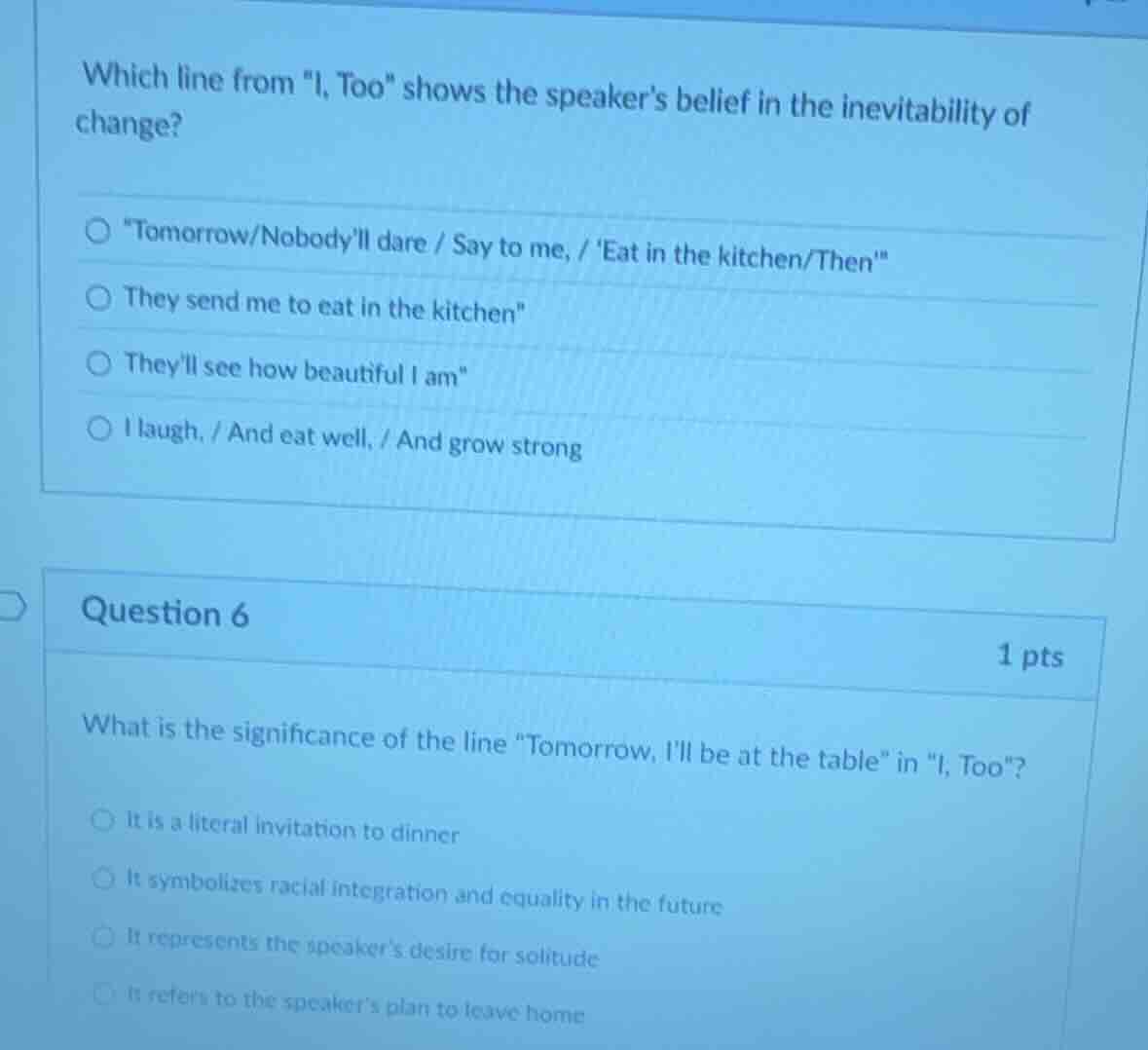
which line from \i, too\ shows the speakers belief in the inevitability of change?
\tomorrow/nobodyll dare / say to me, / eat in the kitchen/then\
they send me to eat in the kitchen\
theyll see how beautiful i am\
i laugh, / and eat well, / and grow strong
question 6
1 pts
what is the significance of the line \tomorrow, ill be at the table\ in \i, too\?
it is a literal invitation to dinner
it symbolizes racial integration and equality in the future
it represents the speakers desire for solitude
it refers to the speakers plan to leave home
First Question (Which line shows belief in inevitability of change?):
To determine the line showing the speaker’s belief in the inevitability of change, we analyze each option:
- Option 1: "Tomorrow/Nobody’ll dare / Say to me, / ‘Eat in the kitchen/Then’" uses "tomorrow" to imply a future where the current (discriminatory) action (sending to eat in kitchen) will stop, showing a belief that change is inevitable.
- Option 2: "They send me to eat in the kitchen" describes the current situation, not change.
- Option 3: "They’ll see how beautiful I am" focuses on being seen, not change’s inevitability.
- Option 4: "I laugh, / And eat well, / And grow strong" shows self - care, not belief in change.
In "I, Too", the line "Tomorrow, I’ll be at the table" is symbolic:
- Option 1: It is not a literal dinner invitation, as the poem deals with racial themes.
- Option 2: "At the table" symbolizes inclusion. In the context of racial discrimination (where the speaker was sent to the kitchen before), being at the table tomorrow symbolizes racial integration and equality in the future.
- Option 3: "Solitude" is incorrect; the line is about joining, not being alone.
- Option 4: The line is not about leaving home.

Snap & solve any problem in the app
Get step-by-step solutions on Sovi AI
Photo-based solutions with guided steps
Explore more problems and detailed explanations
A. "Tomorrow/Nobody’ll dare / Say to me, / ‘Eat in the kitchen/Then’"