QUESTION IMAGE
Question
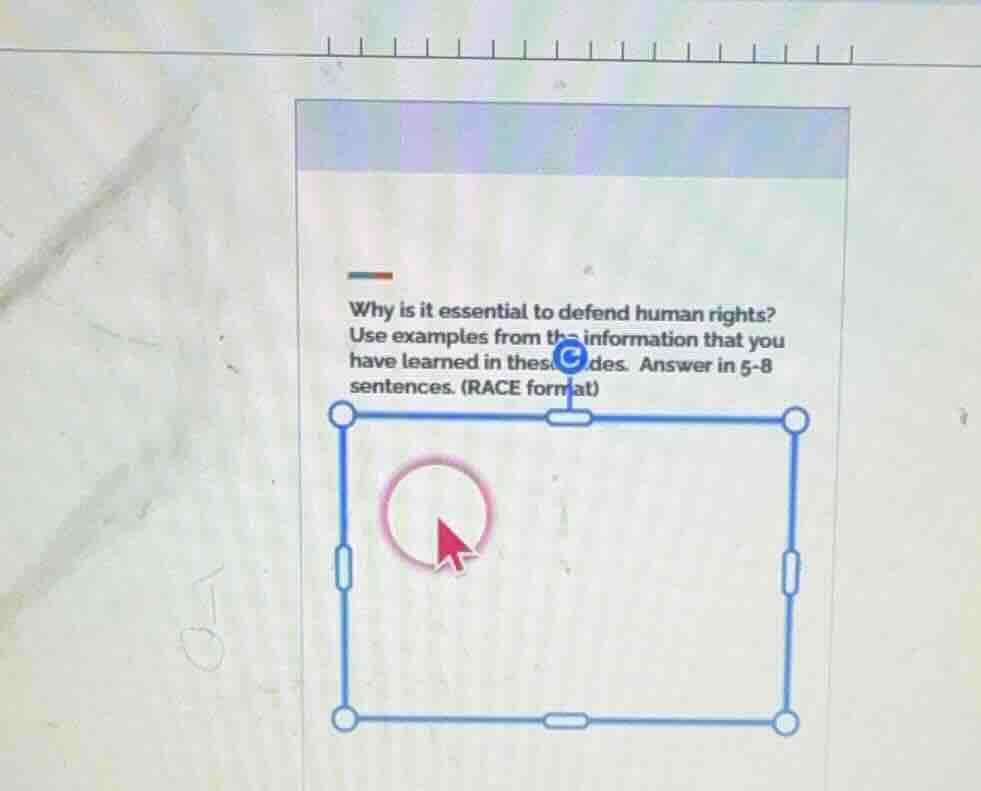
why is it essential to defend human rights?
use examples from the information that you
have learned in these codes. answer in 5-8
sentences. (race format)
Using the RACE format (Restate, Answer, Cite, Explain): First, restate the core question about the necessity of defending human rights. Then, answer that defending human rights is essential to uphold human dignity, prevent systemic harm, and maintain a functional, equitable society. Cite examples like the Universal Declaration of Human Rights' protection against torture (Article 5) – without this defense, marginalized groups (e.g., political dissidents in oppressive regimes) face arbitrary harm. Also, reference the right to fair labor (Article 23): defending this stops exploitation of low-wage workers in unregulated industries, ensuring basic living standards. Explain that when human rights are defended, it fosters trust between citizens and governing bodies, reduces social unrest, and creates a framework where all people can contribute to their communities without fear of persecution or deprivation.

Snap & solve any problem in the app
Get step-by-step solutions on Sovi AI
Photo-based solutions with guided steps
Explore more problems and detailed explanations
Defending human rights is fundamentally essential to uphold inherent human dignity, prevent systemic harm, and sustain equitable, stable societies. Restating the question: the core need to protect human rights lies in safeguarding the basic entitlements that allow all people to live freely and securely. For example, the Universal Declaration of Human Rights’ Article 5 prohibits torture and cruel treatment; without defenses of this right, marginalized groups like political dissidents in authoritarian contexts face arbitrary, life-altering harm with no recourse. Additionally, upholding the right to fair labor (Article 23) defends low-wage workers from exploitation in unregulated industries, ensuring they earn enough to access food, shelter, and healthcare. When human rights are actively defended, it builds trust between communities and governing systems, reduces social unrest, and creates a framework where every person can participate in society without fear of persecution or deprivation. In short, defending human rights is not just a moral obligation, but a practical necessity for functional, compassionate societies.