QUESTION IMAGE
Question
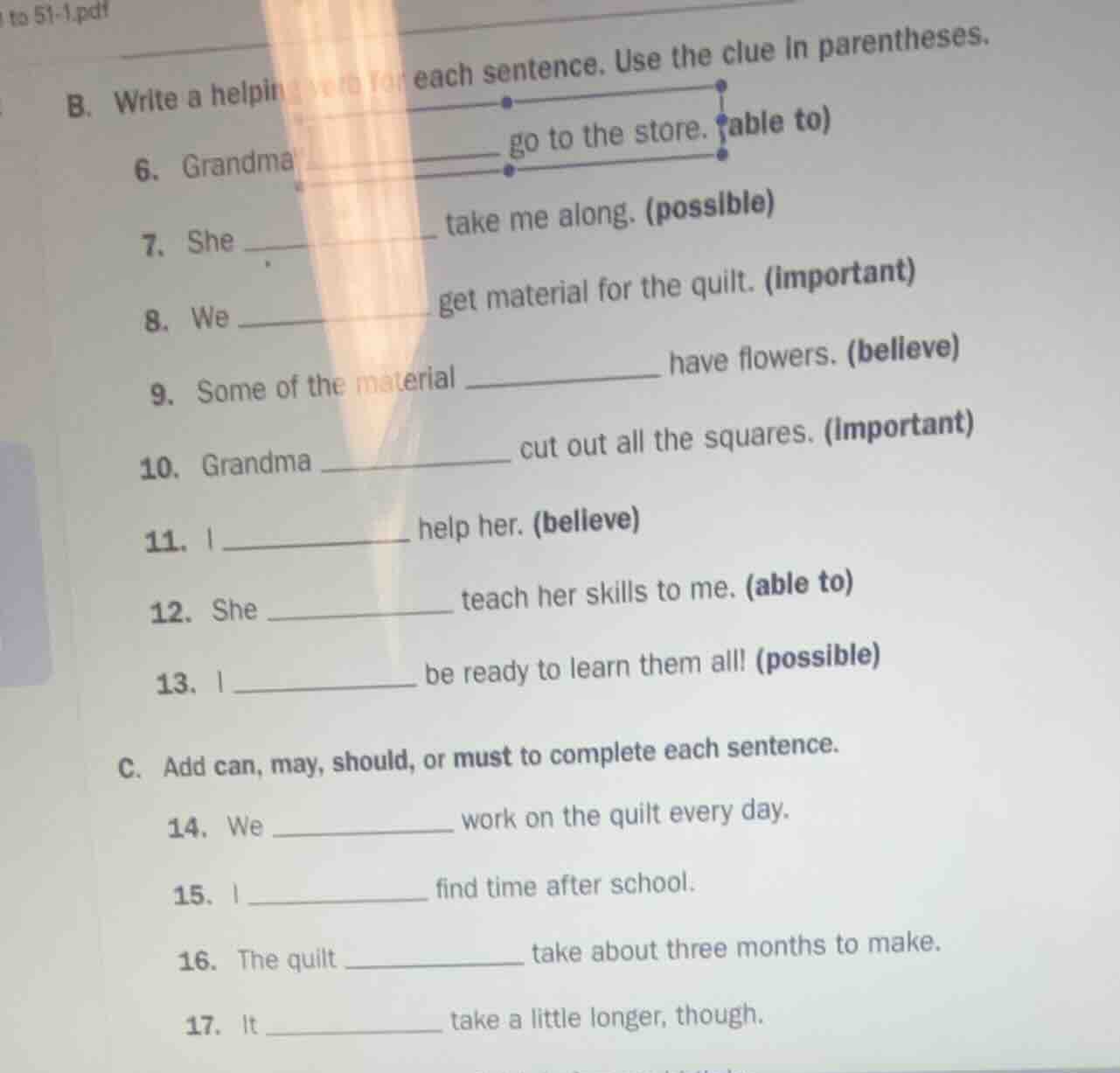
b. write a helping verb for each sentence. use the clue in parentheses.
- grandma ______ go to the store. (able to)
- she ______ take me along. (possible)
- we ______ get material for the quilt. (important)
- some of the material ______ have flowers. (believe)
- grandma ______ cut out all the squares. (important)
- i ______ help her. (believe)
- she ______ teach her skills to me. (able to)
- i ______ be ready to learn them all! (possible)
c. add can, may, should, or must to complete each sentence.
- we ______ work on the quilt every day.
- i ______ find time after school.
- the quilt ______ take about three months to make.
- it ______ take a little longer, though.
Brief Explanations
Se completan las oraciones usando verbos auxiliares que coincidan con el significado de la pista en paréntesis, o los verbos modalidades indicados en la sección C.
- Para "able to" se usa "can" (capacidad).
- Para "possible" se usa "may" (posibilidad).
- Para "important" se usa "must" (necesidad/obligación por importancia).
- Para "believe" se usa "may" (suposición creíble).
En la sección C, se elige el verbo modal que ajuste el sentido lógico de la oración.

Snap & solve any problem in the app
Get step-by-step solutions on Sovi AI
Photo-based solutions with guided steps
Explore more problems and detailed explanations
Sección B
- Grandma can go to the store. (able to)
- She may take me along. (possible)
- We must get material for the quilt. (important)
- Some of the material may have flowers. (believe)
- Grandma must cut out all the squares. (Important)
- I may help her. (believe)
- She can teach her skills to me. (able to)
- I may be ready to learn them all! (possible)
Sección C
- We should work on the quilt every day.
- I can find time after school.
- The quilt will/may take about three months to make.
- It may take a little longer, though.