QUESTION IMAGE
Question
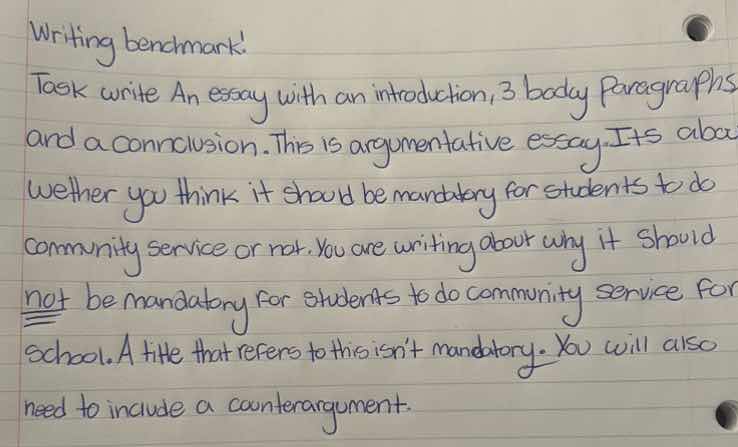
writing benchmark!
task write an essay with an introduction, 3 body paragraphs and a conclusion. this is argumentative essay. its about wether you think it should be mandatory for students to do community service or not. you are writing about why it should not be mandatory for students to do community service for school. a title that refers to this isnt mandatory. you will also need to include a counterargument.
This is an argumentative essay prompt arguing against mandatory student community service, requiring an introduction, 3 body paragraphs, a conclusion, and a counterargument. Below is a structured essay meeting these requirements:
- Introduction: Frame the debate around mandatory community service, state the thesis that it should not be mandatory because it undermines the voluntary spirit, creates inequities, and distracts from core academics.
- Body Paragraph 1: Argue that mandatory service erodes the intrinsic value of volunteering; when forced, students lose the empathy and personal growth that come from choosing to help others.
- Body Paragraph 2: Highlight systemic inequities: students with caregiving responsibilities, part-time jobs, or limited transportation cannot fulfill requirements equally, penalizing marginalized groups.
- Body Paragraph 3: Explain that mandatory service takes time away from studying, extracurriculars, and mental health rest, harming academic performance and overall student well-being.
- Counterargument: Acknowledge the opposing view that mandatory service builds character and real-world skills, but refute it by noting that voluntary service delivers these benefits more authentically, and schools can offer optional, supported service programs instead.
- Conclusion: Restate the thesis, summarize key points, and end with a call for schools to prioritize voluntary, inclusive service opportunities over mandates.

Snap & solve any problem in the app
Get step-by-step solutions on Sovi AI
Photo-based solutions with guided steps
Explore more problems and detailed explanations
Against Mandatory Student Community Service: Protecting Authenticity and Equity
Community service is a powerful way to foster empathy, build skills, and connect students to their local communities. However, making community service a mandatory requirement for high school graduation undermines the very purpose of volunteering, creates unfair barriers for marginalized students, and distracts from the core goal of K-12 education: academic growth and personal well-being. For these reasons, student community service should remain a voluntary, encouraged opportunity rather than a non-negotiable mandate.
The most critical flaw of mandatory community service is that it erodes the intrinsic value of helping others. Volunteering thrives on the choice to dedicate time and energy to a cause one cares about; when that choice is removed, service becomes just another chore to check off a list. Studies on youth volunteering show that forced service leads to resentment, not engagement: students may rush through hours to meet requirements, rather than investing in meaningful work that builds empathy. A student forced to clean a park once a month is unlikely to develop a long-term commitment to environmental stewardship, but a student who chooses to organize a park cleanup because they care about local green spaces will gain far more personal and community-focused growth.
Mandatory community service also exacerbates systemic inequities among students. Not all students have the flexibility to take on unpaid work outside of school hours. Students from low-income households often work part-time jobs to support their families, leaving no extra time for service. Students with caregiving responsibilities for younger siblings or disabled family members cannot step away to volunteer. Even students with access to transportation may struggle to find opportunities that fit their schedules, while wealthier students can easily secure well-connected, high-profile service roles through family networks. In the end, mandatory service penalizes students who are already facing the greatest barriers, creating an unfair standard that punishes them for their circumstances rather than rewarding their effort.
Finally, mandatory community service distracts from the core mission of schools: to support students' academic success and mental health. High school students already face heavy workloads, standardized testing pressures, and extracurricular demands. Adding mandatory service hours forces students to sacrifice study time, sleep, or personal rest, which can harm their grades and overall well-being. For example, a student staying up late to finish a paper after a three-hour service shift is more likely to burn out than to gain meaningful skills. Schools should prioritize reducing student stress, not adding another mandatory task that stretches students too thin.
Critics of this position argue that mandatory community service helps students build real-world skills and exposes them to career paths they might not otherwise consider. It is true that service can offer valuable learning experiences, but these benefits are far more impactful when students choose to participate voluntarily. Schools can still encourage service by offering extra credit, recognition programs, or connected service-learning courses tied to academic subjects, without forcing all students to comply. Voluntary programs allow students to pursue opportunities that align with their interests, leading to more authentic skill-building and engagement.
Mandatory community service misses the mark on its intended goals: it replaces authentic empathy with resentment, creates unfair barriers for marginalized students, and distracts from academic and mental health priorities. Instead of forcing service on students, schools should invest in creating accessible, meaningful voluntary service opportunities that empower students to choose to give back. In doing so, they will foster genuine community engagement, equity, and personal growth—without sacrificing the well-being of the students they aim to support.