QUESTION IMAGE
Question
wt-cftr
i ii iii iv v vi
defect types
no protein no traffic no function less function less protein less stable
mutation examples
g542x
r553x
w1282x
g85e
δi507
δf508
n1303k
v520f
s549r
g551d
r117h
r334w
s1235r
a455e
1680-886a>g
2657+5g>a
rδf508
q1412x
required approaches
rescue protein synthesis correct protein folding restore channel conductance restore channel conductance maturation / correct misplicing promote protein stability
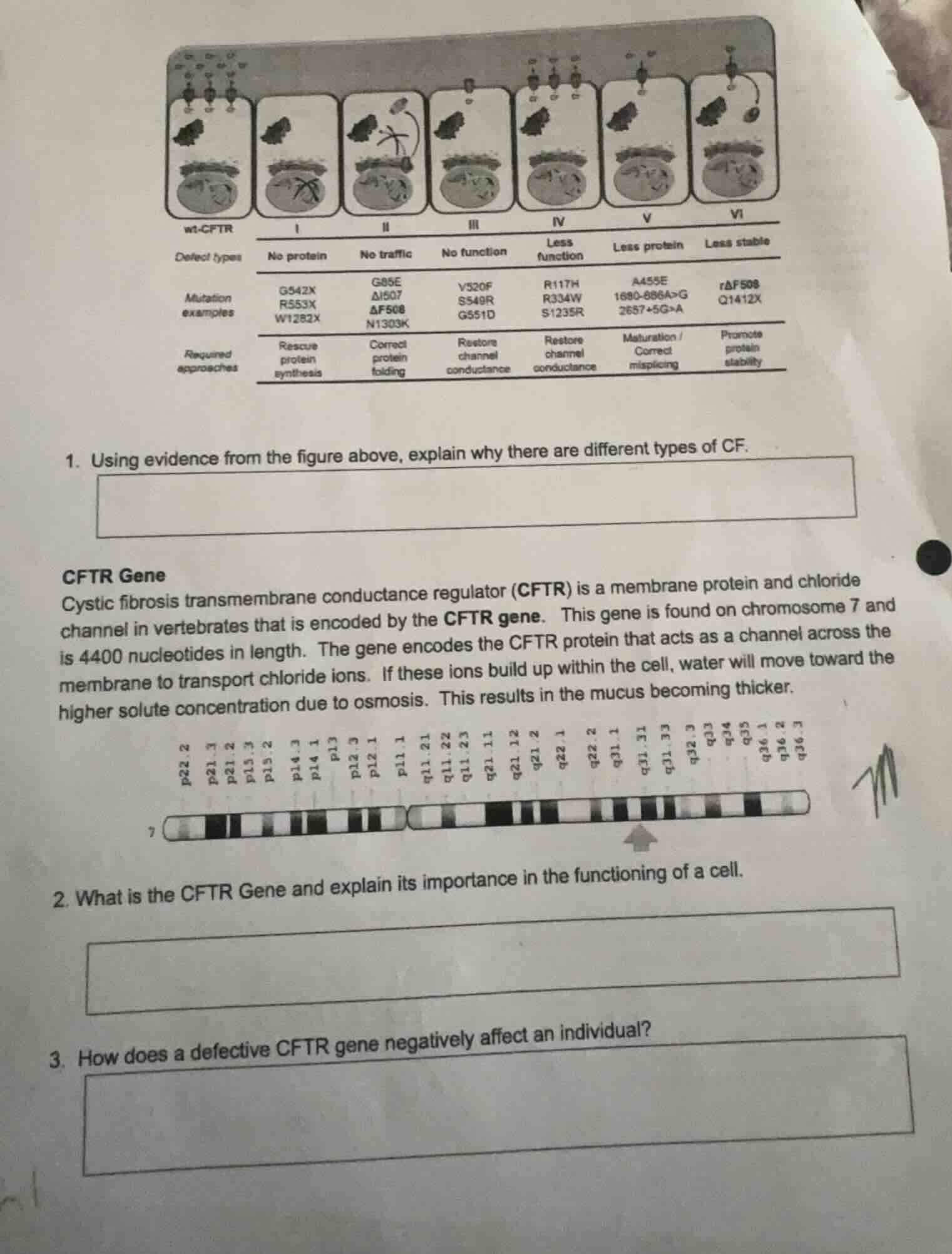
- using evidence from the figure above, explain why there are different types of cf.
cftr gene
cystic fibrosis transmembrane conductance regulator (cftr) is a membrane protein and chloride channel in vertebrates that is encoded by the cftr gene. this gene is found on chromosome 7 and is 4400 nucleotides in length. the gene encodes the cftr protein that acts as a channel across the membrane to transport chloride ions. if these ions build up within the cell, water will move toward the higher solute concentration due to osmosis. this results in the mucus becoming thicker.
- what is the cftr gene and explain its importance in the functioning of a cell.
- how does a defective cftr gene negatively affect an individual?
- For the first question: The figure shows distinct CFTR mutation classes with different defects (no protein, no trafficking, loss of function, reduced function, reduced protein, reduced stability). Each mutation type disrupts the CFTR protein at a different stage of its production, trafficking, or activity, leading to varying impairments in chloride channel function, which causes different forms of cystic fibrosis (CF).
- For the second question: The CFTR gene is a 4400-nucleotide gene on chromosome 7 that encodes the CFTR protein, a membrane chloride channel. It regulates chloride ion transport across cell membranes; this controls water movement via osmosis, maintaining thin, functional mucus in tissues like the lungs and digestive tract.
- For the third question: A defective CFTR gene makes non-functional/impaired CFTR protein. This halts proper chloride transport, so water does not move out of cells. Mucus thickens, clogging airways (causing breathing infections), blocking pancreatic ducts (preventing nutrient absorption), and disrupting other organ functions, leading to chronic illness and reduced organ function.

Snap & solve any problem in the app
Get step-by-step solutions on Sovi AI
Photo-based solutions with guided steps
Explore more problems and detailed explanations
- Different CF types arise from distinct CFTR gene mutations that disrupt the CFTR protein at different stages: some prevent protein synthesis, block its traffic to the cell membrane, eliminate its channel function, reduce its function, lower protein levels, or reduce protein stability. Each unique defect causes a different level of impairment to chloride transport, resulting in varied CF presentations.
- The CFTR (Cystic Fibrosis Transmembrane Conductance Regulator) gene is a 4400-nucleotide gene located on human chromosome 7. It encodes the CFTR protein, a transmembrane chloride channel. Its importance lies in regulating chloride ion movement across cell membranes: proper chloride transport controls osmotic water flow, keeping mucus thin and functional to protect and lubricate organs like the lungs, pancreas, and digestive tract.
- A defective CFTR gene produces a non-functional or impaired CFTR protein, which fails to properly transport chloride ions across cell membranes. Without normal chloride movement, water does not move into the extracellular space, causing mucus to become thick and sticky. This thick mucus clogs airways, leading to chronic lung infections and breathing difficulties; blocks pancreatic ducts, preventing digestive enzymes from reaching the intestines and causing nutrient malabsorption; and can damage other organs like the liver and reproductive system, leading to chronic, life-limiting health issues.