QUESTION IMAGE
Question
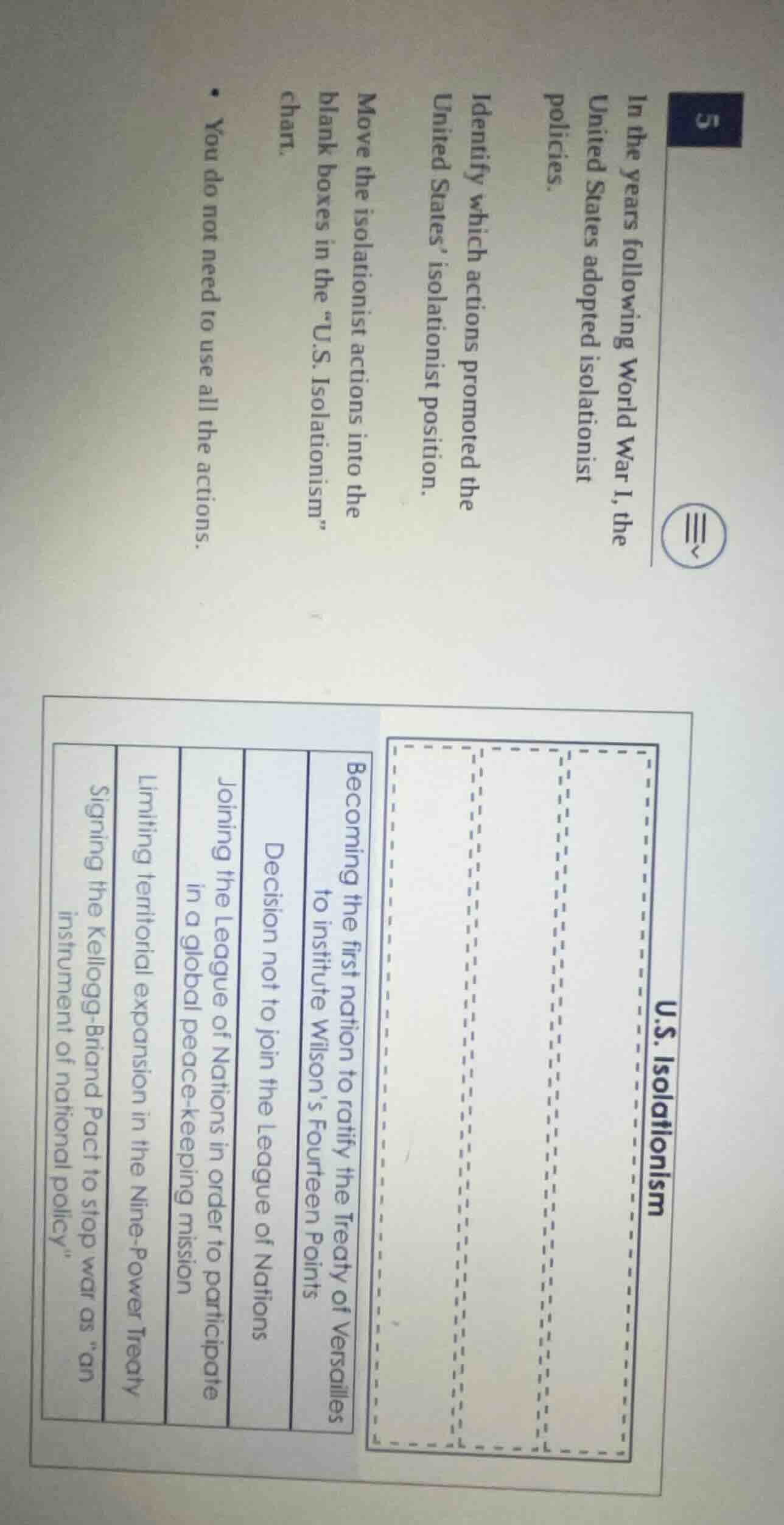
in the years following world war i, the united states adopted isolationist policies. identify which actions promoted the united states’ isolationist position. move the isolationist actions into the blank boxes in the “u.s. isolationism” chart. • you do not need to use all the actions. actions: - becoming the first nation to ratify the treaty of versailles to institute wilson’s fourteen points - decision not to join the league of nations - joining the league of nations in order to participate in a global peace - keeping mission - limiting territorial expansion in the nine - power treaty - signing the kellogg - briand pact to stop war as “an instrument of national policy”
To determine U.S. isolationist actions post - WWI:
- Decision not to join the League of Nations: The League of Nations was a major international organization for collective security. The U.S. not joining it showed a desire to stay out of European - led international entanglements, a key isolationist move.
- Limiting territorial expansion in the Nine - Power Treaty: This treaty was about respecting China's sovereignty and limiting imperialist expansion in Asia. By participating, the U.S. showed a focus on non - interventionist and non - expansionist foreign policy, in line with isolationism.
- Signing the Kellogg - Briand Pact to stop war as “an instrument of national policy”: This pact aimed to outlaw war as a means of national policy. It was a move towards promoting peace through non - military means and avoiding getting involved in military conflicts abroad, which fits isolationism.
Actions like “Becoming the first nation to ratify the Treaty of Versailles to institute Wilson’s Fourteen Points” and “Joining the League of Nations in order to participate in a global peace - keeping mission” are not isolationist. The Treaty of Versailles ratification and League participation would involve the U.S. more in European and international affairs, which goes against isolationism.

Snap & solve any problem in the app
Get step-by-step solutions on Sovi AI
Photo-based solutions with guided steps
Explore more problems and detailed explanations
- Decision not to join the League of Nations
- Limiting territorial expansion in the Nine - Power Treaty
- Signing the Kellogg - Briand Pact to stop war as “an instrument of national policy”