QUESTION IMAGE
Question
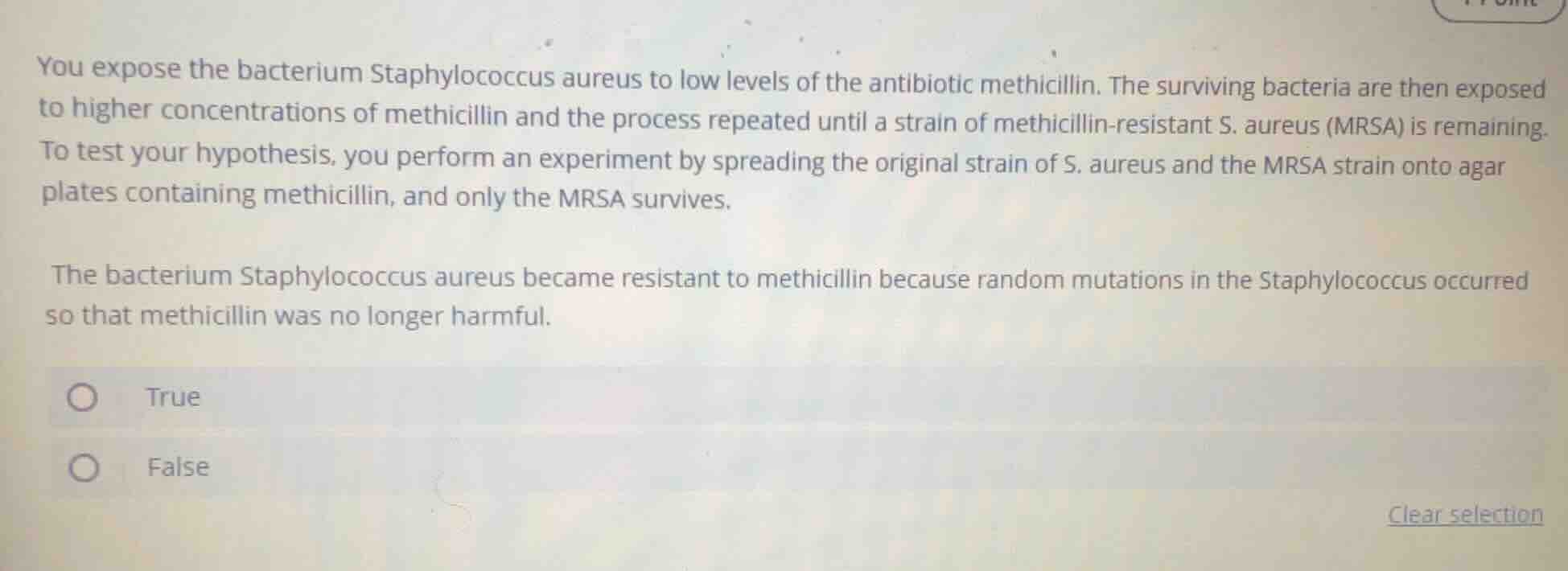
you expose the bacterium staphylococcus aureus to low levels of the antibiotic methicillin. the surviving bacteria are then exposed to higher concentrations of methicillin and the process repeated until a strain of methicillin - resistant s. aureus (mrsa) is remaining. to test your hypothesis, you perform an experiment by spreading the original strain of s. aureus and the mrsa strain onto agar plates containing methicillin, and only the mrsa survives. the bacterium staphylococcus aureus became resistant to methicillin because random mutations in the staphylococcus occurred so that methicillin was no longer harmful. true false clear selection
Random mutations in Staphylococcus aureus can create genetic variations that make some bacteria unaffected by methicillin. The stepwise exposure to increasing methicillin concentrations acts as a selective pressure: only bacteria with mutations conferring resistance survive and reproduce, leading to the MRSA strain. The experimental result (only MRSA survives on methicillin plates) aligns with this mechanism.

Snap & solve any problem in the app
Get step-by-step solutions on Sovi AI
Photo-based solutions with guided steps
Explore more problems and detailed explanations
True