QUESTION IMAGE
Question
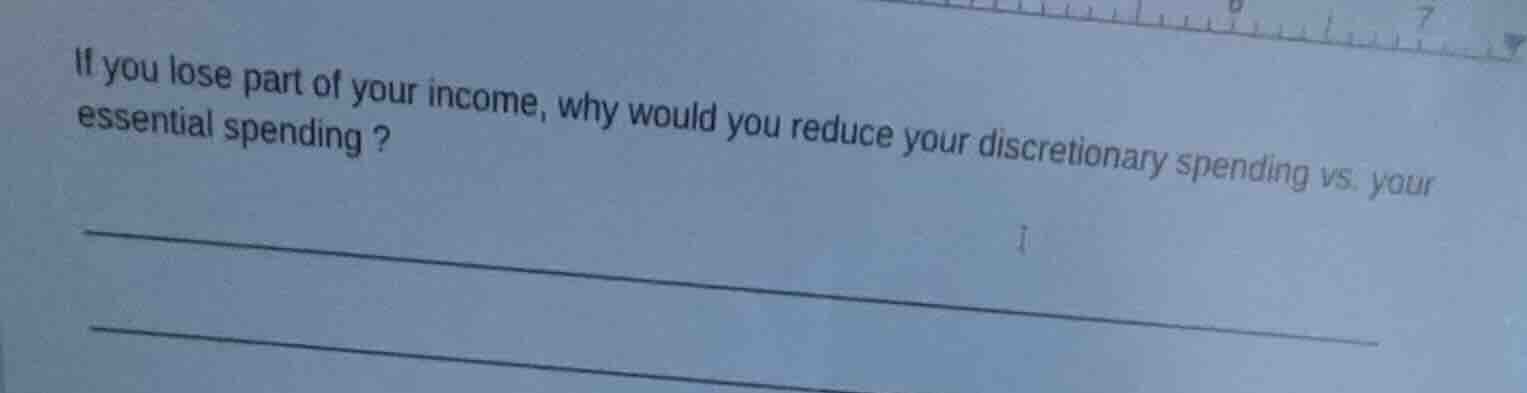
if you lose part of your income, why would you reduce your discretionary spending vs. your essential spending ?
Essential spending covers non-negotiable needs like housing, food, and healthcare required for basic survival and stability. Discretionary spending refers to non-optional, wants-based costs such as entertainment, luxury purchases, or hobbies. When income drops, prioritizing essential spending ensures basic needs are met first, as cutting these would lead to immediate harm or instability. Discretionary spending can be reduced without threatening core well-being, making it the logical first adjustment to align spending with reduced income.

Snap & solve any problem in the app
Get step-by-step solutions on Sovi AI
Photo-based solutions with guided steps
Explore more problems and detailed explanations
You would reduce discretionary spending first because these are non-optional, want-based expenses (like entertainment or luxury items) that do not support basic survival. Essential spending (such as housing, food, and healthcare) covers critical needs required for daily living and stability, so cutting these would cause immediate hardship or harm to your well-being. Reducing discretionary spending allows you to maintain your necessary quality of life while adapting to lower income.