QUESTION IMAGE
Question
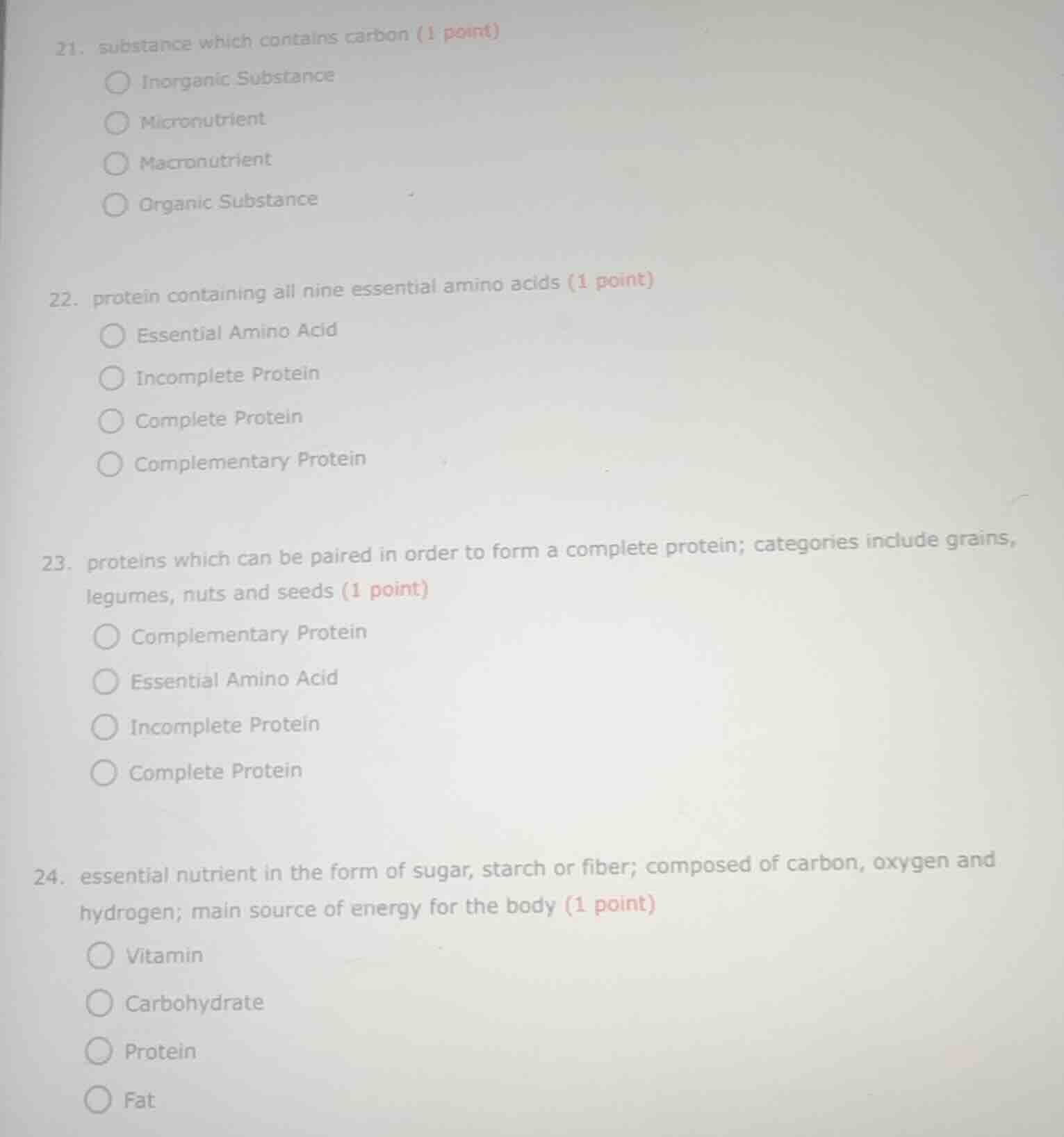
- substance which contains carbon (1 point)
inorganic substance
micronutrient
macronutrient
organic substance
- protein containing all nine essential amino acids (1 point)
essential amino acid
incomplete protein
complete protein
complementary protein
- proteins which can be paired in order to form a complete protein; categories include grains, legumes, nuts and seeds (1 point)
complementary protein
essential amino acid
incomplete protein
complete protein
- essential nutrient in the form of sugar, starch or fiber; composed of carbon, oxygen and hydrogen; main source of energy for the body (1 point)
vitamin
carbohydrate
protein
fat
Brief Explanations
- Organic substances are defined as compounds that contain carbon (with exceptions like carbon dioxide, which are inorganic, but the core defining trait of organic materials is carbon content).
- A complete protein is one that naturally contains all nine essential amino acids required for human health.
- Complementary proteins are incomplete proteins from different food groups (like grains and legumes) that can be combined to provide all essential amino acids, acting as a complete protein.
- Carbohydrates are organic nutrients made of carbon, hydrogen, and oxygen, existing as sugars, starches, or fiber, and are the body's primary energy source.

Snap & solve any problem in the app
Get step-by-step solutions on Sovi AI
Photo-based solutions with guided steps
Explore more problems and detailed explanations
- D. Organic Substance
- C. Complete Protein
- A. Complementary Protein
- B. Carbohydrate