QUESTION IMAGE
Question
effects of cannabis on
the body & brain
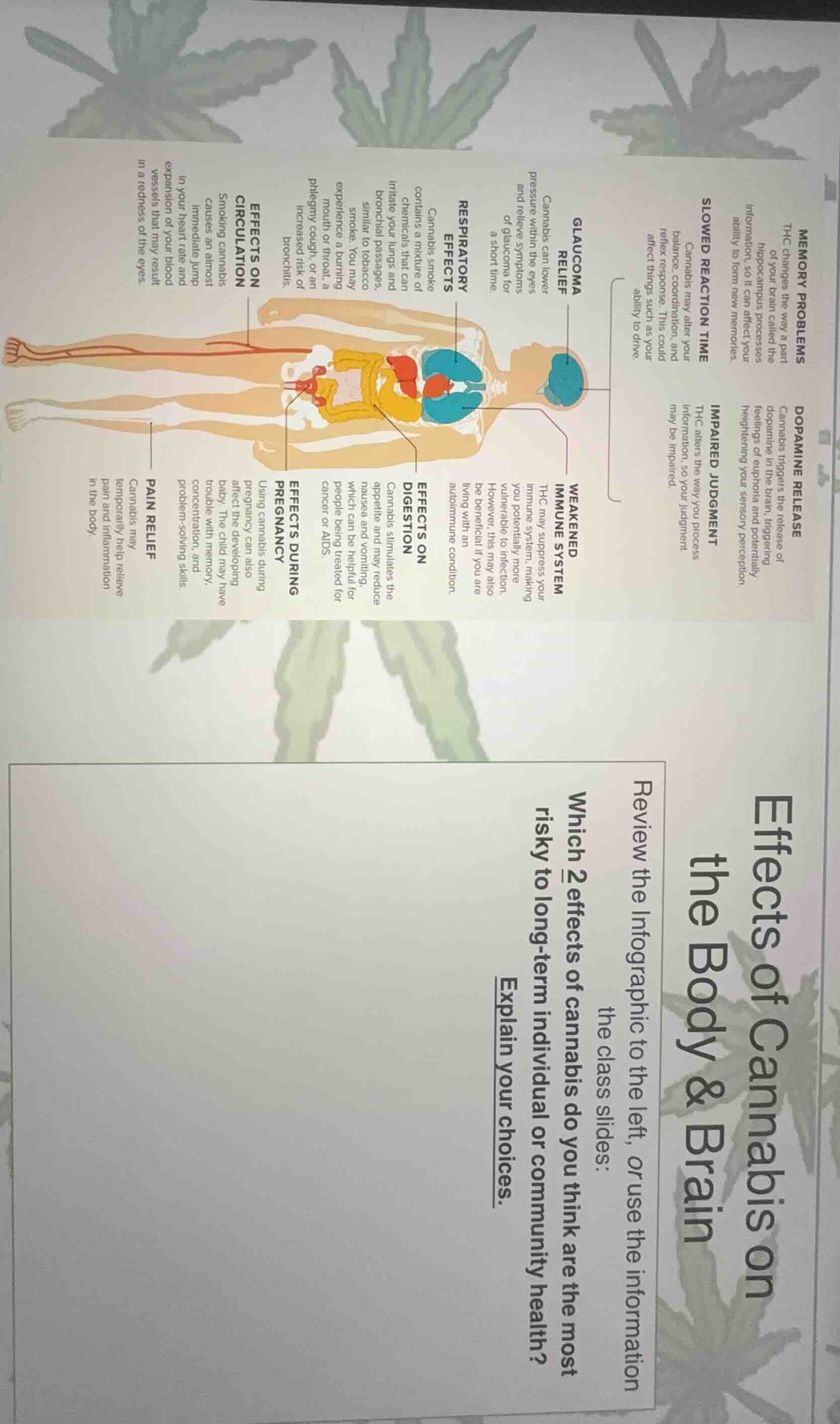
review the infographic to the left, or use the information
the class slides:
which 2 effects of cannabis do you think are the most
risky to long - term individual or community health?
explain your choices.
memory problems
thc changes the way a part
of your brain processes
information, so it can affect your
ability to form new memories.
slowed reaction time
cannabis may alter your
balance, coordination, and
reflex response. this could
affect things such as your
ability to drive.
dopamine release
cannabis triggers the release of
dopamine in the brain, triggering
feelings of euphoria and potentially
heightening your sensory perception.
impaired judgment
thc alters the way you process
information, so your judgment
may be impaired.
weakened
immune system
thc may suppress your
immune system, making
you potentially more
vulnerable to infection.
however, this may also
be beneficial if you are
living with an
autoimmune condition.
digestion
effects on
cannabis stimulates the
appetite and may reduce
nausea and vomiting,
which can be helpful for
people being treated for
cancer or aids.
effects during
pregnancy
using cannabis during
pregnancy can also
affect the developing
baby. the child may have
trouble with memory,
concentration, and
problem - solving skills.
pain relief
cannabis may
temporarily help relieve
pain and inflammation
in the body.
circulation
effects on
smoking cannabis
causes an almost
immediate jump
in your heart rate and
expansion of your blood
vessels that may result
in a redness of the eyes.
respiratory
effects
cannabis smoke
contains a mixture of
chemicals that can
irritate your lungs and
bronchial passages.
smoke. you may
experience a burning
phlegmy cough, or an
increase in the risk of
bronchitis.
glaucoma
relief
cannabis can lower
pressure within the eyes
and relieve symptoms
of glaucoma for
a short time.
- Weakened Immune System: Long-term suppression of the immune system (noted in the infographic as THC suppressing immune function) makes individuals far more vulnerable to infections and reduces the body's ability to fight off illnesses. For communities, this can lead to higher rates of contagious disease spread, increased strain on healthcare systems, and reduced overall public health resilience over time.
- Respiratory Effects: Cannabis smoke irritates lung passages and raises the risk of bronchitis (and similar tobacco-smoke related issues) with long-term use. For individuals, this leads to chronic respiratory impairment; for communities, this increases the prevalence of chronic lung conditions, elevates healthcare costs, and reduces workforce productivity due to ongoing illness.

Snap & solve any problem in the app
Get step-by-step solutions on Sovi AI
Photo-based solutions with guided steps
Explore more problems and detailed explanations
- Weakened Immune System: Long-term THC exposure suppresses the immune system, making individuals more vulnerable to infections. For communities, this drives higher rates of transmissible diseases, strains healthcare resources, and lowers overall public health stability.
- Respiratory Effects: Chronic cannabis smoke exposure irritates lung tissue and increases bronchitis risk. For individuals, this causes long-term respiratory impairment; for communities, it raises rates of chronic lung conditions, increases healthcare burdens, and reduces workforce productivity.