QUESTION IMAGE
Question
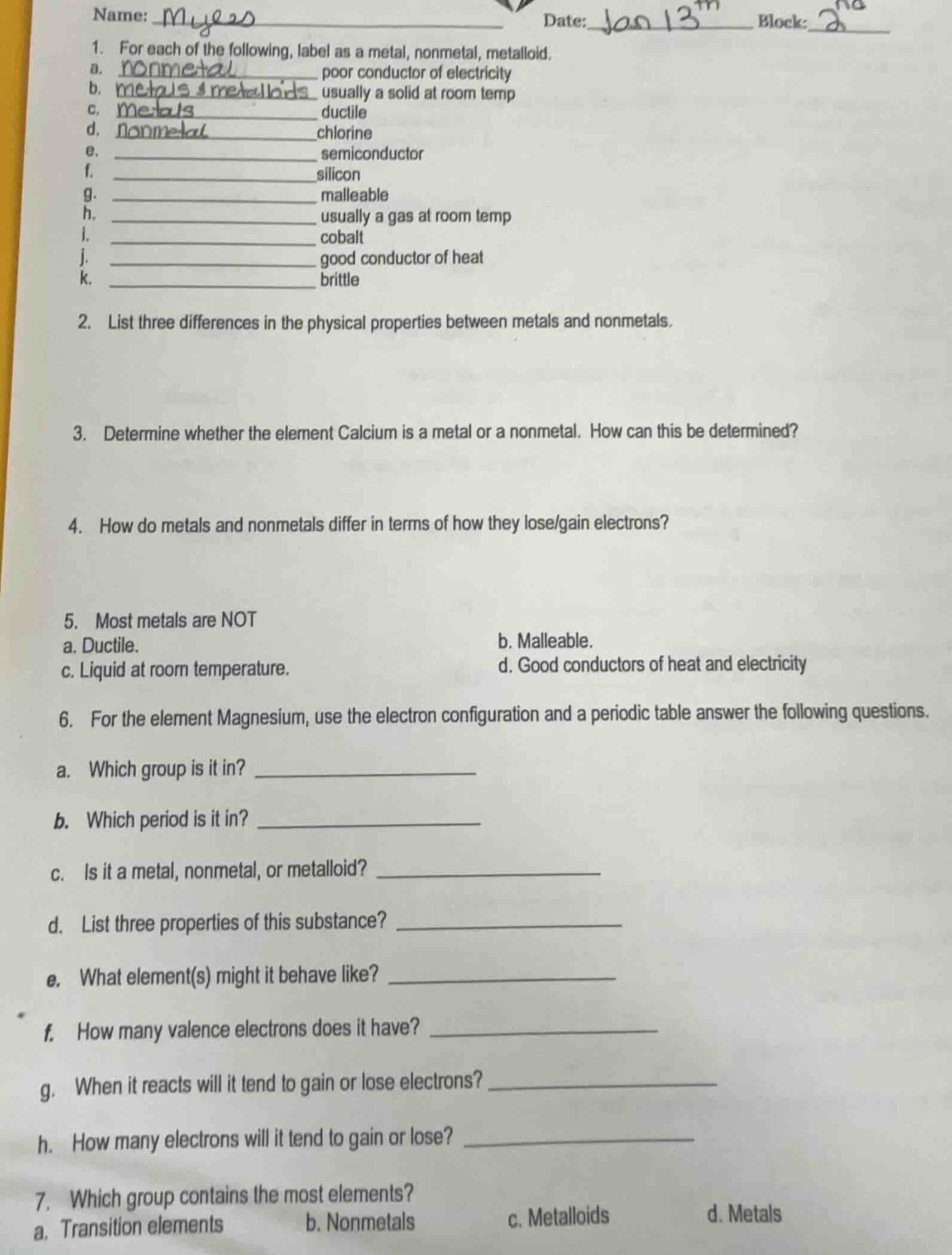
name: myles date: jan 13th block: 2nd
- for each of the following, label as a metal, nonmetal, metalloid.
a. nonmetal poor conductor of electricity
b. metals & metalloids usually a solid at room temp
c. metals ductile
d. nonmetal chlorine
e. __________ semiconductor
f. __________ silicon
g. __________ malleable
h. __________ usually a gas at room temp
i. __________ cobalt
j. __________ good conductor of heat
k. __________ brittle
- list three differences in the physical properties between metals and nonmetals.
- determine whether the element calcium is a metal or a nonmetal. how can this be determined?
- how do metals and nonmetals differ in terms of how they lose/gain electrons?
- most metals are not
a. ductile. b. malleable.
c. liquid at room temperature. d. good conductors of heat and electricity
- for the element magnesium, use the electron configuration and a periodic table answer the following questions.
a. which group is it in? __________
b. which period is it in? __________
c. is it a metal, nonmetal, or metalloid? __________
d. list three properties of this substance? __________
e. what element(s) might it behave like? __________
f. how many valence electrons does it have? __________
g. when it reacts will it tend to gain or lose electrons? __________
h. how many electrons will it tend to gain or lose? __________
- which group contains the most elements?
a. transition elements b. nonmetals c. metalloids d. metals
Question 1
a.
Nonmetals are generally poor conductors of electricity (except for some like graphite).
Most metals and metalloids are solids at room temperature (only a few metals like mercury are liquid, and most nonmetals are gases or solids, but metals are predominantly solid).
Ductility (ability to be drawn into wires) is a characteristic property of metals.

Snap & solve any problem in the app
Get step-by-step solutions on Sovi AI
Photo-based solutions with guided steps
Explore more problems and detailed explanations
nonmetal