QUESTION IMAGE
Question
possible points: 28.57
determine if each observation below provides evidence of a chemical change.
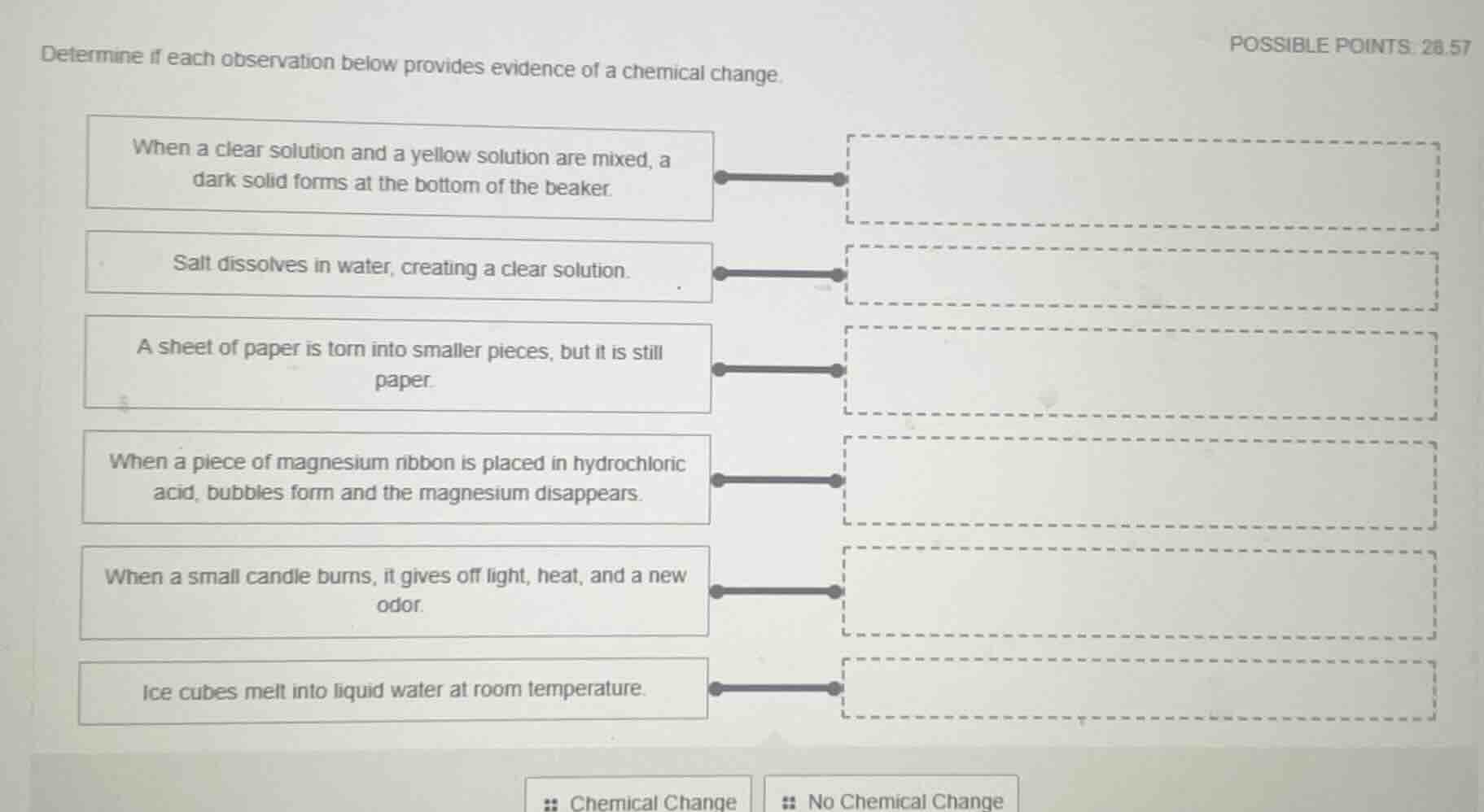
when a clear solution and a yellow solution are mixed, a dark solid forms at the bottom of the beaker.
salt dissolves in water, creating a clear solution.
a sheet of paper is torn into smaller pieces, but it is still paper.
when a piece of magnesium ribbon is placed in hydrochloric acid, bubbles form and the magnesium disappears.
when a small candle burns, it gives off light, heat, and a new odor.
ice cubes melt into liquid water at room temperature.
:: chemical change :: no chemical change
Brief Explanations
- Chemical Change: Occurs when new substances form. The dark solid precipitate, gas bubbles from magnesium + acid, and new products (carbon dioxide, water) from candle burning all indicate new substances are created.
- No Chemical Change: Only physical state/shape changes occur. Salt dissolving, paper tearing, and ice melting do not produce new substances, just altered form/state of the original material.

Snap & solve any problem in the app
Get step-by-step solutions on Sovi AI
Photo-based solutions with guided steps
Explore more problems and detailed explanations
- When a clear solution and a yellow solution are mixed, a dark solid forms at the bottom of the beaker. → Chemical Change
- Salt dissolves in water, creating a clear solution. → No Chemical Change
- A sheet of paper is torn into smaller pieces, but it is still paper. → No Chemical Change
- When a piece of magnesium ribbon is placed in hydrochloric acid, bubbles form and the magnesium disappears. → Chemical Change
- When a small candle burns, it gives off light, heat, and a new odor. → Chemical Change
- Ice cubes melt into liquid water at room temperature. → No Chemical Change