QUESTION IMAGE
Question
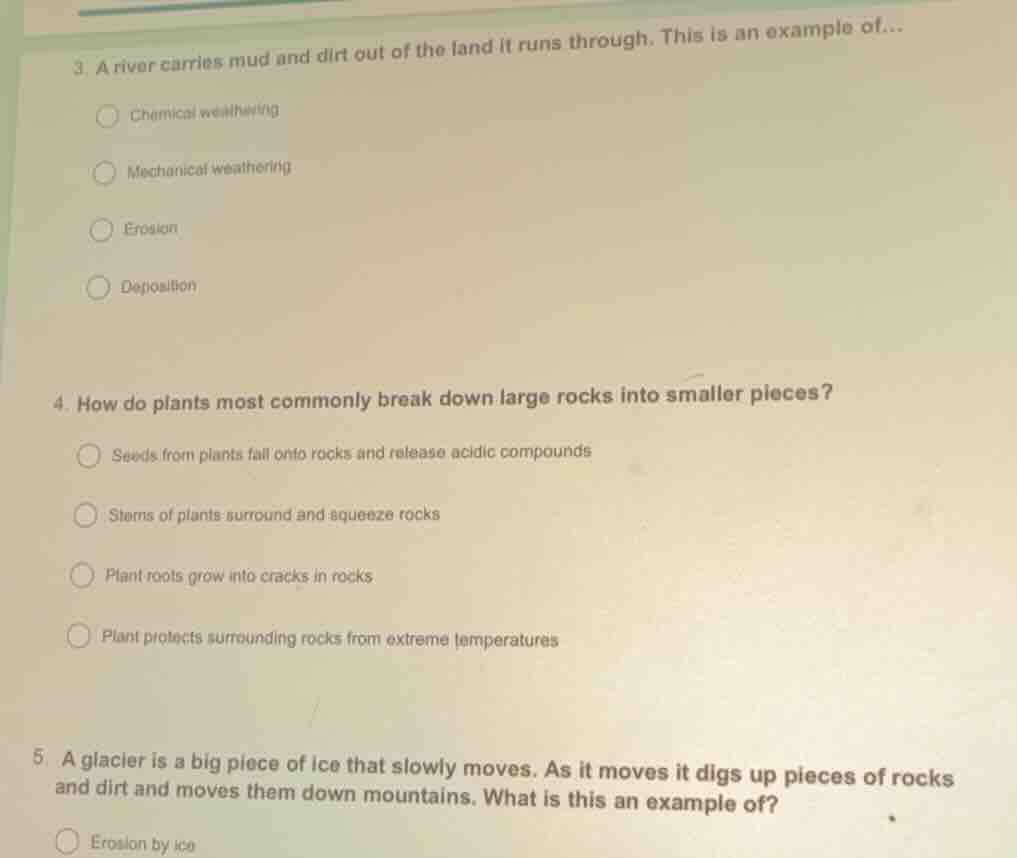
- a river carries mud and dirt out of the land it runs through. this is an example of...
chemical weathering
mechanical weathering
erosion
deposition
- how do plants most commonly break down large rocks into smaller pieces?
seeds from plants fall onto rocks and release acidic compounds
stems of plants surround and squeeze rocks
plant roots grow into cracks in rocks
plant protects surrounding rocks from extreme temperatures
- a glacier is a big piece of ice that slowly moves. as it moves it digs up pieces of rocks and dirt and moves them down mountains. what is this an example of?
erosion by ice
Brief Explanations
- Chemical/mechanical weathering breaks rock in place; deposition drops sediment. Erosion moves sediment, which matches the river carrying mud.
- Plant roots growing into rock cracks expand as they grow, prying rocks apart, which is the most common mechanical way plants break rocks. Acidic compounds are less common, stems don't squeeze rocks, and protection doesn't break rocks.
- The glacier moves rock/dirt down mountains, which is the movement of sediment by ice, fitting erosion by ice.

Snap & solve any problem in the app
Get step-by-step solutions on Sovi AI
Photo-based solutions with guided steps
Explore more problems and detailed explanations
- Erosion
- Plant roots grow into cracks in rocks
- Erosion by ice