QUESTION IMAGE
Question
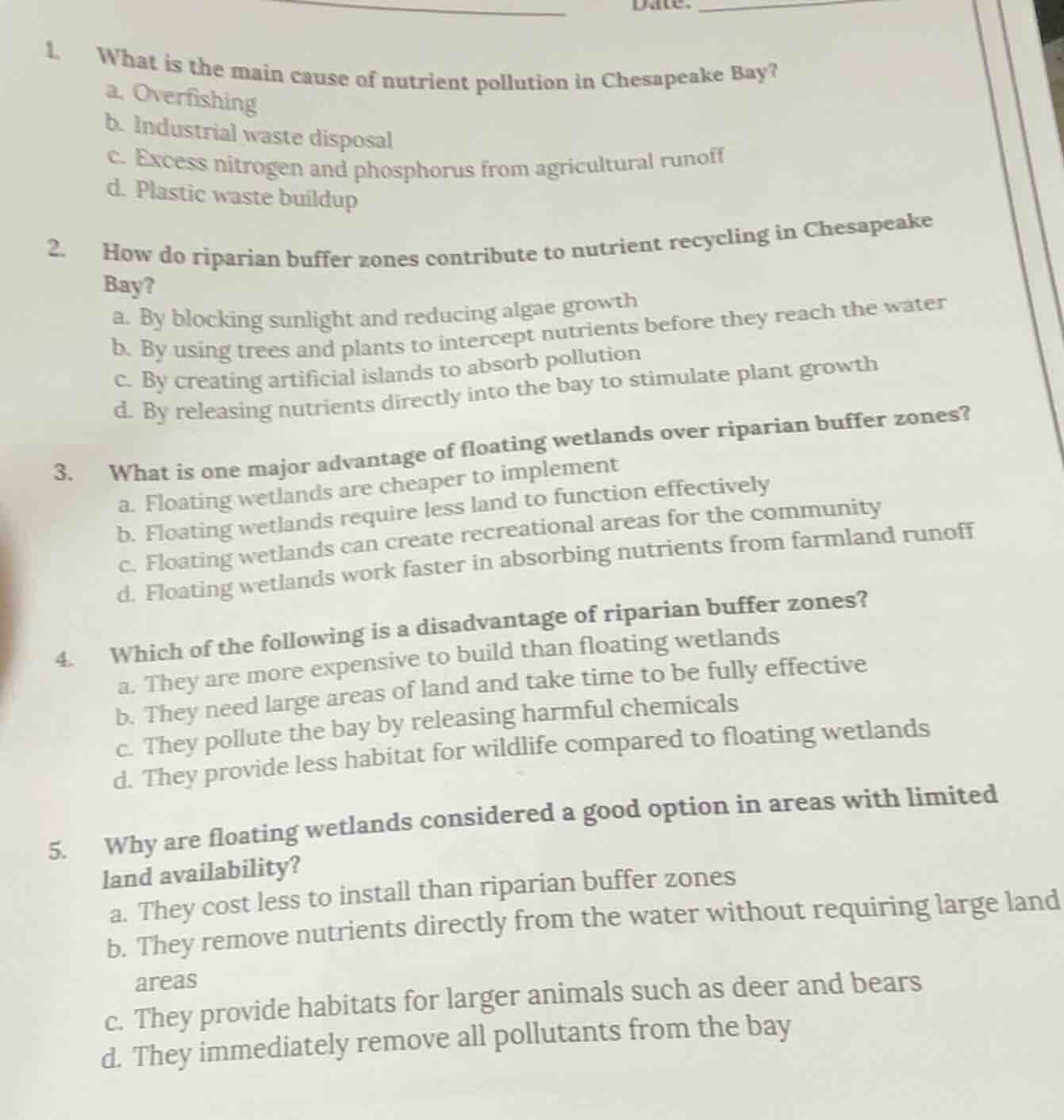
- what is the main cause of nutrient pollution in chesapeake bay?
a. overfishing
b. industrial waste disposal
c. excess nitrogen and phosphorus from agricultural runoff
d. plastic waste buildup
- how do riparian buffer zones contribute to nutrient recycling in chesapeake bay?
a. by blocking sunlight and reducing algae growth
b. by using trees and plants to intercept nutrients before they reach the water
c. by creating artificial islands to absorb pollution
d. by releasing nutrients directly into the bay to stimulate plant growth
- what is one major advantage of floating wetlands over riparian buffer zones?
a. floating wetlands are cheaper to implement
b. floating wetlands require less land to function effectively
c. floating wetlands can create recreational areas for the community
d. floating wetlands work faster in absorbing nutrients from farmland runoff
- which of the following is a disadvantage of riparian buffer zones?
a. they are more expensive to build than floating wetlands
b. they need large areas of land and take time to be fully effective
c. they pollute the bay by releasing harmful chemicals
d. they provide less habitat for wildlife compared to floating wetlands
- why are floating wetlands considered a good option in areas with limited land availability?
a. they cost less to install than riparian buffer zones
b. they remove nutrients directly from the water without requiring large land areas
c. they provide habitats for larger animals such as deer and bears
d. they immediately remove all pollutants from the bay
Question 1
Nutrient pollution in Chesapeake Bay is mainly caused by excess nitrogen and phosphorus. Agricultural runoff is a major source of these nutrients. Overfishing affects ecosystems but not nutrient pollution directly. Industrial waste disposal and plastic waste buildup are different types of pollution. So option c is correct.
Riparian buffer zones use trees and plants to intercept nutrients (like from runoff) before they enter the water, aiding nutrient recycling. Blocking sunlight reduces algae but isn't about recycling. Creating artificial islands isn't their role, and they don't release nutrients to stimulate growth. So option b is correct.
Floating wetlands don't need large land areas as they float on water, unlike riparian buffer zones which need land along water bodies. There's no evidence they're cheaper, create recreational areas, or work faster. So option b is correct.

Snap & solve any problem in the app
Get step-by-step solutions on Sovi AI
Photo-based solutions with guided steps
Explore more problems and detailed explanations
c. Excess nitrogen and phosphorus from agricultural runoff