QUESTION IMAGE
Question
experimental adjustment using the beer-lambert law
determination of percent copper
a quality assurance chemist runs an analysis to determine the
percent copper in a sample of brass used for plumbing
fixtures. she dissolves the sample using nitric acid and runs a
spectrophotometric analysis against a calibration of blue
copper(ii) nitrate solutions.
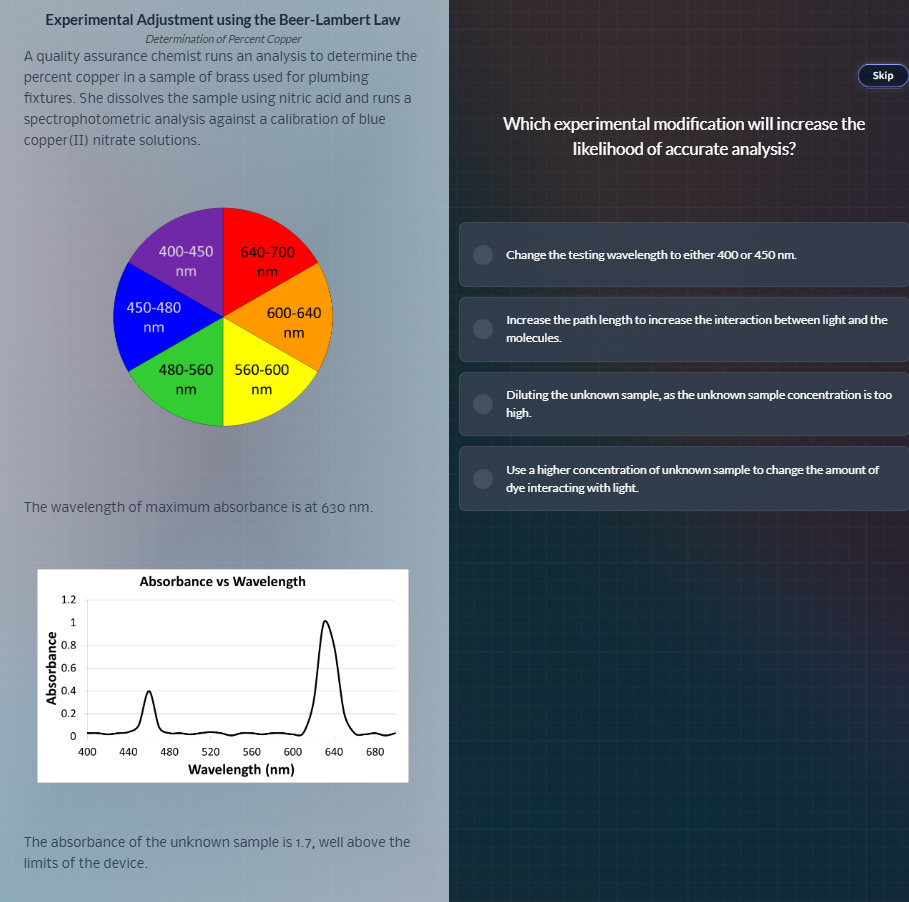
400-450 nm
450-480 nm
480-560 nm
560-600 nm
600-640 nm
640-700 nm
the wavelength of maximum absorbance is at 630 nm.
absorbance vs wavelength
the absorbance of the unknown sample is 1.7, well above the
limits of the device.
which experimental modification will increase the
likelihood of accurate analysis?
change the testing wavelength to either 400 or 450 nm.
increase the path length to increase the interaction between light and the
molecules.
diluting the unknown sample, as the unknown sample concentration is too
high.
use a higher concentration of unknown sample to change the amount of
dye interacting with light.
Beer-Lambert Law accuracy relies on absorbance within the device's linear range (here, the unknown's 1.7 is too high). Using λ_max (630 nm, not 400/450 nm) is ideal for sensitivity. Increasing path length or sample concentration would raise absorbance further, worsening the issue. Diluting the sample will bring its absorbance into the device's valid range, enabling accurate analysis.

Snap & solve any problem in the app
Get step-by-step solutions on Sovi AI
Photo-based solutions with guided steps
Explore more problems and detailed explanations
Diluting the unknown sample, as the unknown sample concentration is too high.