QUESTION IMAGE
Question
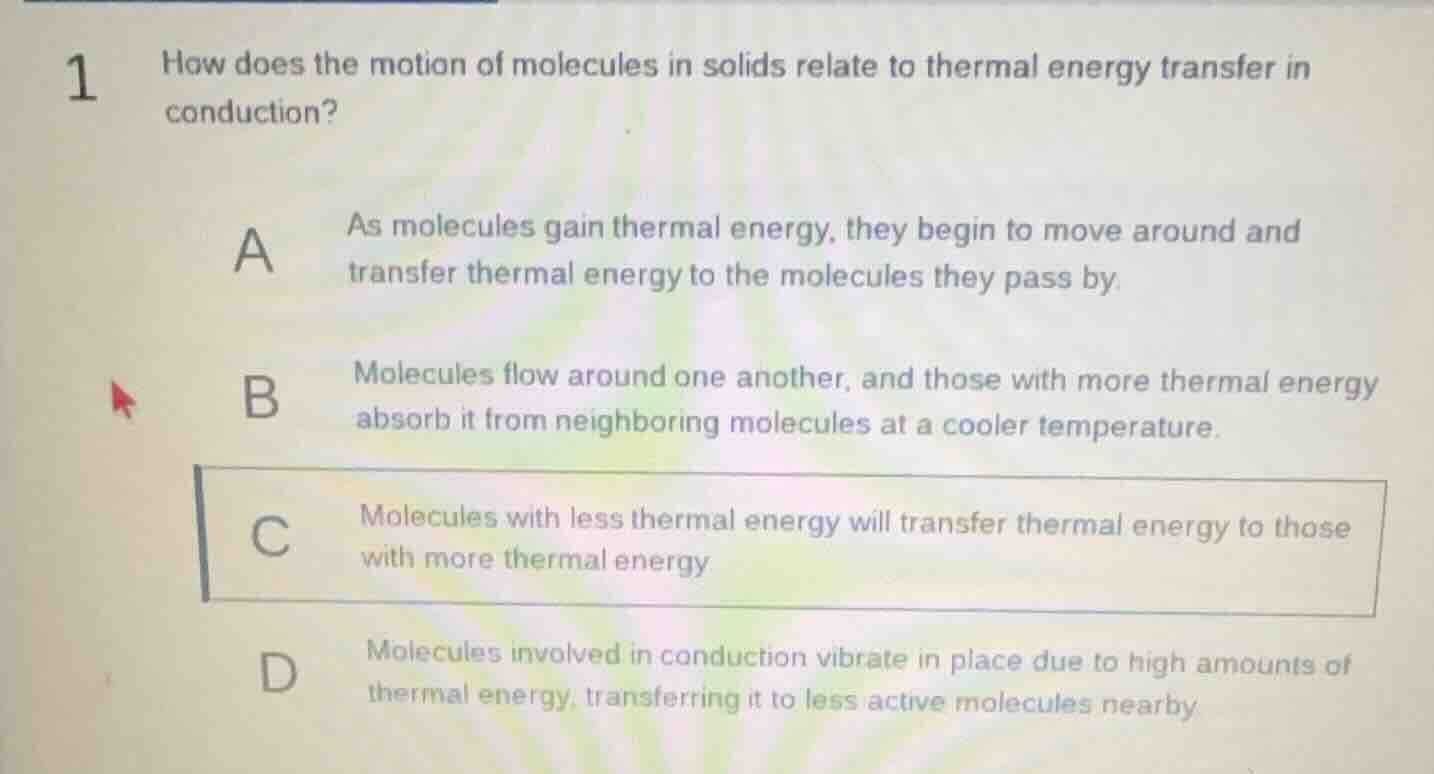
1 how does the motion of molecules in solids relate to thermal energy transfer in conduction? a as molecules gain thermal energy, they begin to move around and transfer thermal energy to the molecules they pass by. b molecules flow around one another, and those with more thermal energy absorb it from neighboring molecules at a cooler temperature. c molecules with less thermal energy will transfer thermal energy to those with more thermal energy d molecules involved in conduction vibrate in place due to high amounts of thermal energy, transferring it to less active molecules nearby
To solve this, we analyze each option:
- Option A: In solids, molecules don't "move around" freely (they vibrate in place), so this is incorrect.
- Option B: Molecules in solids don't "flow around one another", and thermal energy is transferred from higher to lower energy (not the other way as stated here), so incorrect.
- Option C: Thermal energy transfers from higher to lower energy molecules, not the reverse, so incorrect.
- Option D: In conduction in solids, molecules vibrate in place. When they have more thermal energy (vibrate more), they transfer energy to neighboring (less active) molecules, which matches the concept of conduction.

Snap & solve any problem in the app
Get step-by-step solutions on Sovi AI
Photo-based solutions with guided steps
Explore more problems and detailed explanations
D. Molecules involved in conduction vibrate in place due to high amounts of thermal energy, transferring it to less active molecules nearby